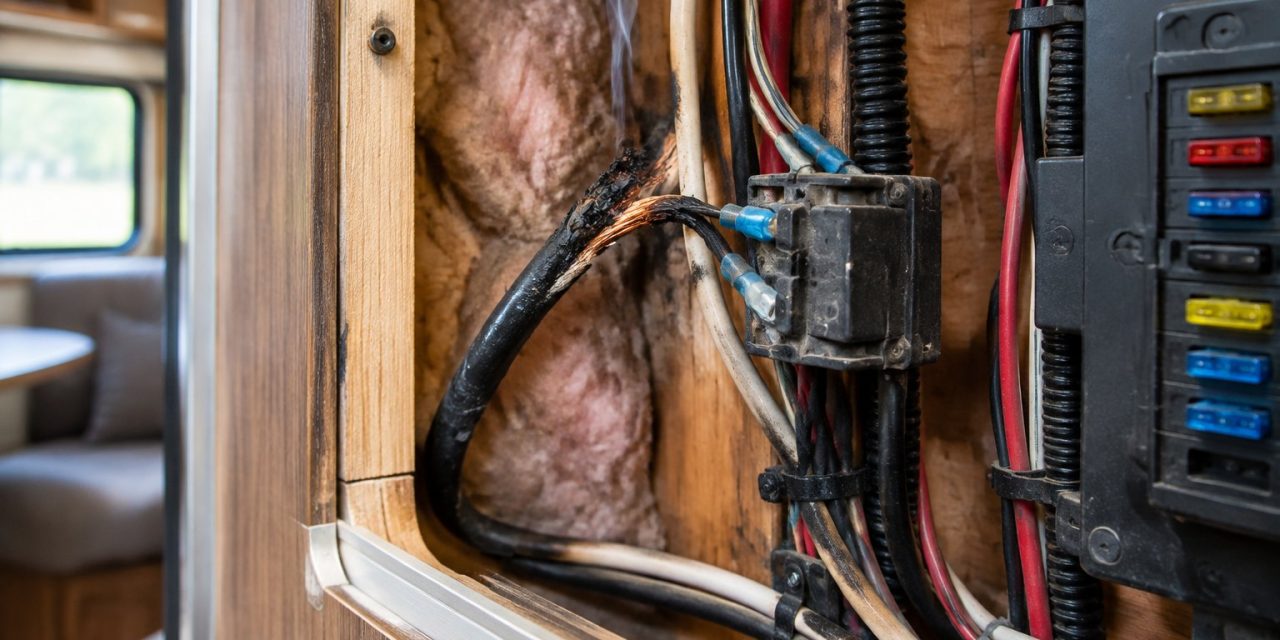
A loose wire connection can quietly heat up inside your RV while every breaker stays on. The hidden RV wiring danger that starts fires is a loose, high-resistance connection: a joint where metal no longer clamps tightly, so normal current turns that one small spot into a heater that can scorch insulation and ignite nearby wood or plastic.
This is a different problem from plugging in too much at once. An overloaded circuit pulls more current than the wire should carry. A loose connection can fail while pulling a perfectly normal load.
The stakes are real. The National Fire Protection Association estimates that nearly 2,000 RV fires occur annually. Once you know where loose connections hide and what they look and smell like, you can catch many of them early and hand the hands-on work to the right person.
Why Can a Loose Connection Overheat Without Tripping a Breaker?
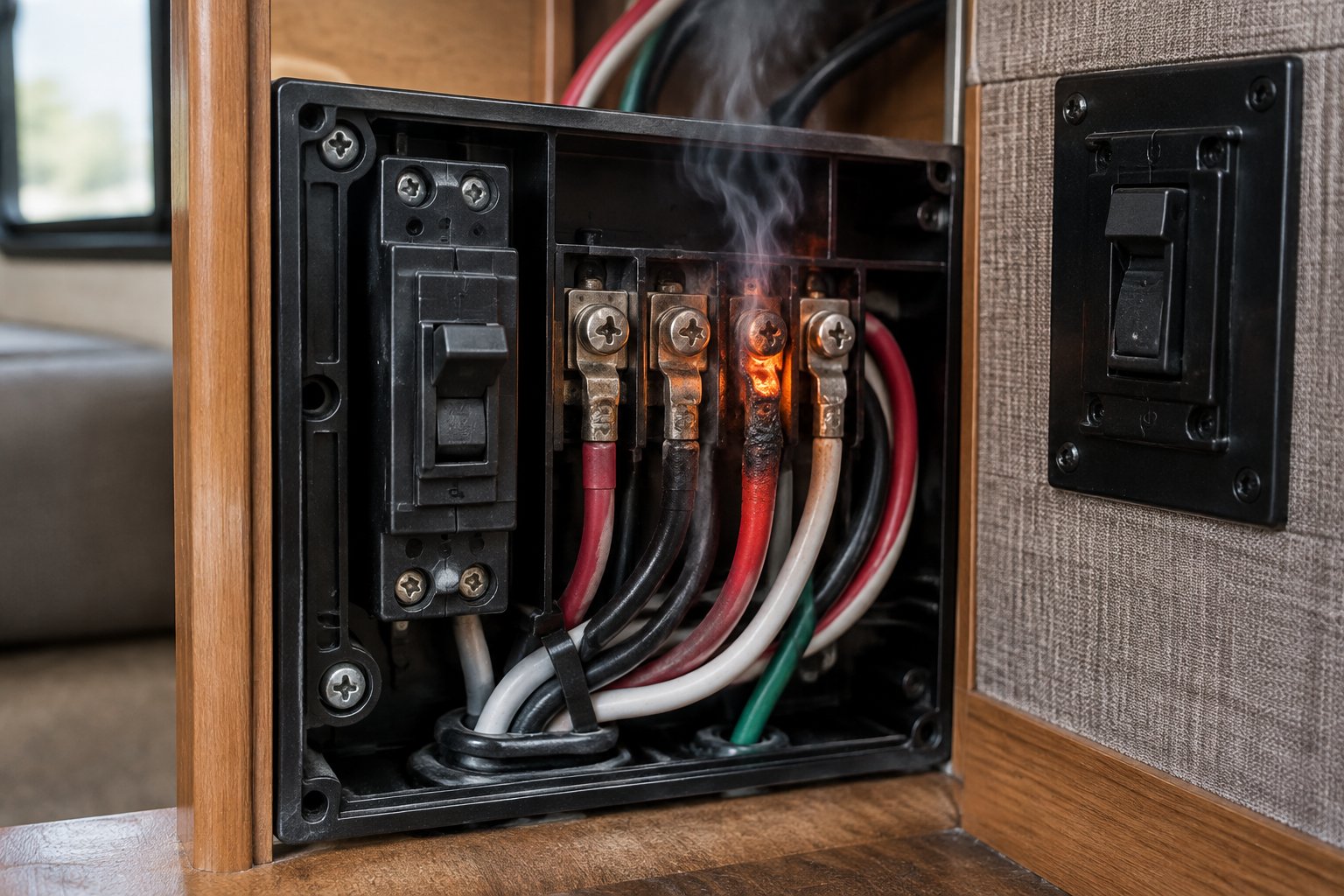
A loose connection overheats because the heat is made in one tiny spot, while your breaker only watches the total current flowing through the whole circuit. Faulty wiring of this kind can keep the current looking normal, and road travel keeps working those joints looser over time.
How Electrical Resistance Creates Heat at a Bad Connection
Think of resistance as friction for electricity. A tight joint lets current pass easily. A loose or dirty joint squeezes the same current through fewer contact points, and that squeeze makes heat.
The numbers are surprising. A loose joint with just 0.1 ohm of resistance carrying 15 amps turns about 22 watts into heat, close to a small soldering iron, packed into a spot smaller than your fingertip. A sound joint gives off only a fraction of a watt.
That heat feeds itself. It oxidizes the metal surfaces, and oxide conducts worse than bare metal, so the joint runs hotter. Eventually the connection can glow or arc, which means current jumps across a tiny gap and chars the plastic around it.
Why Breakers May Not Detect Localized Overheating
Your breaker trips for two things: a sustained overload or a sudden huge fault current, like a short circuit. A loose connection usually causes neither. The current through the breaker stays about the same as the normal load.
Standard UL 489 breakers are designed to protect conductors from overloads and short circuits, not to detect arcing faults. Arc-fault breakers (AFCIs) catch many arcing problems, yet they may miss a connection that overheats or glows without arcing.
So keep the two dangers separate in your mind:
| Problem | What’s happening | Will a breaker catch it? |
|---|---|---|
| Overloaded circuit | Too much total current on the wire | Usually, if sized correctly |
| Loose connection | Normal current, heat at one bad joint | Often no |
How Road Vibration and Corrosion Make Connections Worse
Your RV is a house that rides through a small earthquake every time you drive. The National Park Service notes that bouncing down the road can loosen electrical connections, which can produce heat and fire.
Heat cycles add to it. Each time a heater, microwave, or air conditioner turns on and off, the wire, screw, and terminal expand and shrink by different amounts, and the joint creeps looser.
Moisture does its part too. Battery bays, exterior inlets, and damp storage compartments grow corrosion, which raises resistance just like a loose screw does.
Where Can Dangerous Wiring Connections Hide in an RV?
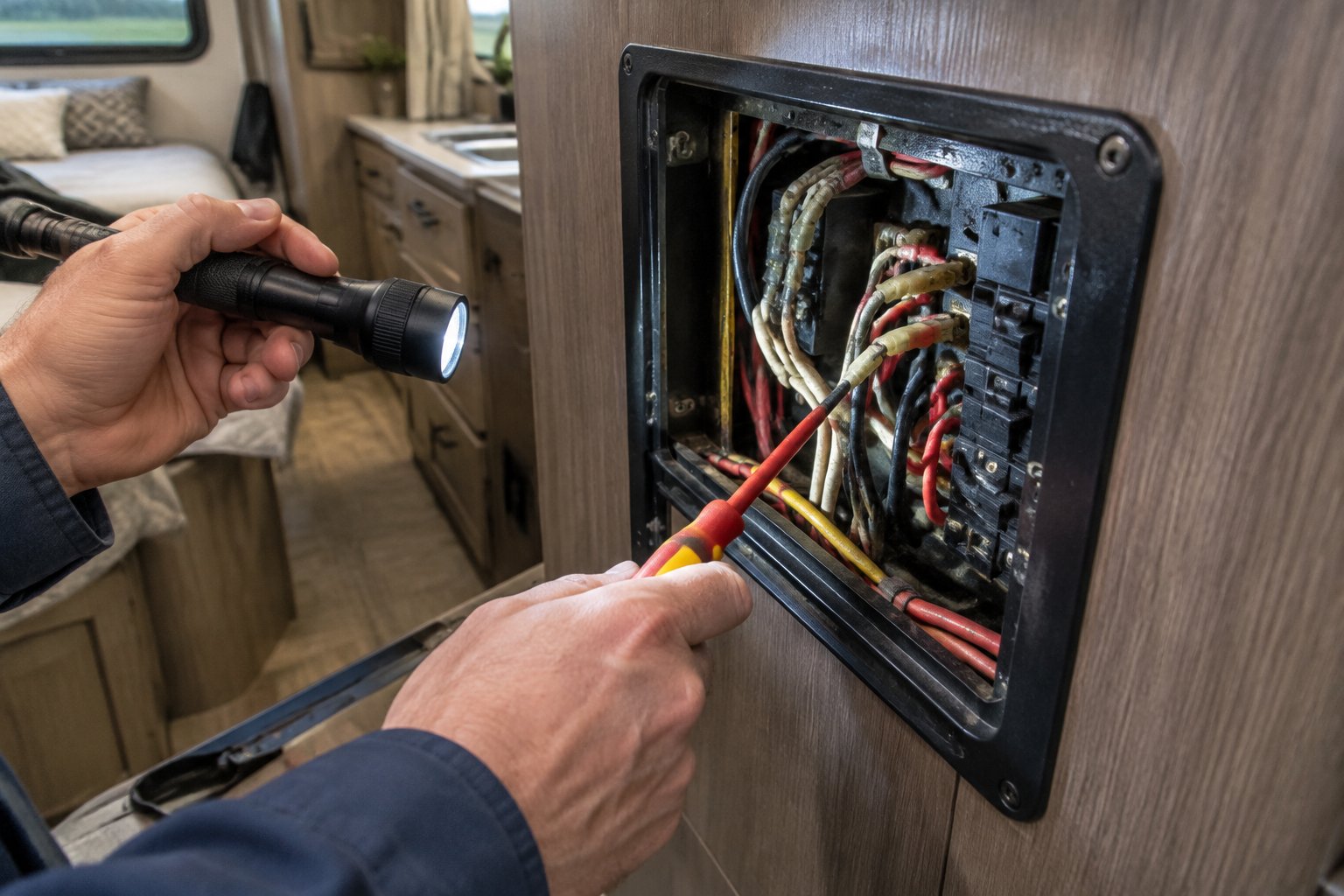
Loose connections hide anywhere wires join something else, and RVs pack those joints into tight, hidden spaces. The biggest trouble spots are the shore power path from pedestal to panel and the high-current 12-volt wiring around your batteries. Layouts differ between rigs, so use your owner’s manual to find where these parts sit in yours.
Shore Power Plugs, Adapters, and Inlets
Your shore power cord carries the full load of your rig through a few metal blades. That makes it a common place for faulty wiring heat to show up.
Experienced RVers note that burned plugs are very common for 30-amp connections, often from plugging and unplugging with power on or from a loose pedestal outlet. Every adapter you add (like a 50-to-30 dogbone) is two more connections that can loosen.
Watch these spots:
- The plug blades and the cord end that meets the pedestal
- Any adapters or extension cords between pedestal and RV
- The inlet on the side of your RV, if you have a detachable cord
- Worn campground pedestals with loose or scorched outlets
Outlets, Junction Boxes, and Breaker Panels
Inside the walls, RV outlets work differently from many home outlets. Many RVs leave the factory with press-fit (Wirecon) outlets that grip the wire without a screw terminal, and over time that grip can turn into heat and melted plastic. A space heater running for hours on one of these outlets is a classic stress test.
Junction boxes behind cabinets and the distribution panel (the box with your breakers and fuses) hold dozens of screw terminals. Any one under-tightened screw can cook itself slowly.
Battery Terminals, Inverters, and Aftermarket Wiring
Low voltage does not mean low risk. Your 12-volt system can move very high current through battery cables, inverters, and converters. The Park Service warns that many RV fires are caused by a 12-volt short and recommends checking those connections before every trip.
Pay extra attention to:
- Battery posts and cable lugs, especially with corrosion
- Inverter and converter cable connections
- Solar, lithium battery, or inverter upgrades someone added later
- Splices made with wire nuts or tape instead of proper crimp connectors
Aftermarket work deserves a professional look, since you can’t see how well it was done.
What Warning Signs Mean You Should Stop Using the Circuit?
Any burning smell, scorch mark, buzz, or flickering power on a circuit means you stop using it now and get it checked. These signs point to heat at a connection, and heat is how an RV fire starts. Resetting breakers or swapping in bigger fuses hides the warning without touching the cause.
Burning Odors, Discoloration, Buzzing, and Intermittent Power
Use your senses from a safe distance. Common signs of a loose connection include:
- Smell: hot or burning plastic, sometimes described as fishy
- Sight: brown or black marks, scorching, or melted plastic on a plug, outlet, or cord end
- Sound: buzzing, crackling, or sizzling from an outlet or the panel
- Power: lights that flicker or dim when a load starts, or an outlet that works on and off
- Fit: a plug that has to be wiggled to work
Many loose connections give no warning at all, which is why routine inspections help.
When to Disconnect Power and Call an RV Technician
If you see smoke, flames, or sparks, get out first (more on that below). If you notice heat signs without smoke, stop using that outlet or appliance.
Switch off that circuit’s breaker if the panel itself is not hot, buzzing, or smelling burned. If the shore power plug looks scorched, turn the pedestal breaker off before you unplug. Then leave the cover plates and panel closed. Do not touch the suspect connection, open the panel, or try to tighten anything while power is live. Call a qualified RV technician and take photos of any damage.
Why Repeated Breaker Resets and Larger Fuses Are Not Fixes
A breaker that trips again and again is telling you something. It could be overloaded circuits, a failing appliance, or damaged wiring. Resetting it over and over keeps feeding the problem.
Bigger fuses are worse. A fuse is sized to protect its wire. Put in a 30-amp fuse where a 15-amp belongs and the wire can overheat before the fuse ever blows. Always replace a fuse or breaker with the same rating that was installed.
How Can You Reduce Wiring Fire Risks Before Your Next Trip?
You lower your risk most by splitting the job: you handle visual checks and smart power habits, and a qualified technician handles anything behind a cover. That split keeps you safe while still catching faulty wiring before it turns into one of the RV fires you read about.
What Owners Can Check Without Opening Electrical Enclosures
You can do a lot with your eyes and nose. Before each trip, and with power off when handling cords:
- Look over your shore power cord end to end for cuts, flattened spots, or scorched blades.
- Check adapters for discoloration or melted plastic.
- Glance at outlet faces for brown marks or cracks.
- Look at battery terminals for white or green crust, without touching or loosening them.
- Watch for rodent droppings or chewed insulation, especially after storage.
- Inspect the campground pedestal for burn marks before plugging in.
Replace any cord or adapter that shows damage. Fire officials advise you to replace damaged cords immediately.
What a Qualified Technician Should Inspect and Test
Some work belongs behind a technician’s tools. Ask for these during a service visit:
- Torque check of breaker, panel, and outlet terminals with power disconnected
- Battery, inverter, and converter cable connections cleaned and secured
- Review of aftermarket or DIY wiring, including splices
- Replacement of any heat-damaged outlets, plugs, or breakers
- An infrared heat scan under load, which can spot hot connections before you see damage
A yearly check makes sense, plus one after rough roads or any electrical upgrade.
How to Manage Appliance Loads and Choose Properly Rated Cords
Load habits address overloaded circuits, which make weak joints run hotter. Know whether you have 30-amp or 50-amp service, and avoid running the microwave, space heater, and hair dryer together.
Skip household extension cords and power strips for heavy loads. If you must use a cord, choose a heavy-duty outdoor cord sized for the load, and never run it under a rug or mat. A plug-in energy meter helps you see what each device draws.
What Should You Do if Smoke or Flames Appear?
Get everyone out of the RV first, every time. Your belongings, and even your rig, can be replaced. Prevention and alarms buy you warning time, so use it to leave.
Evacuate, Stay Out, and Call Emergency Services
Leave as soon as you see smoke or flames or hear the alarm. Use your planned exit, including emergency windows if the door is blocked. Practice opening those windows before you need them.
Once outside, move well away and call 911. Have your campsite number, road name, or GPS location ready, since campgrounds and rural areas are difficult for responders to locate. Never go back in for pets’ leashes, phones, or anything else.
When an RV Fire Extinguisher Is Appropriate, and When to Retreat
An RV fire extinguisher is for a very small fire, with a clear escape path behind you, after everyone else is out. If the fire is spreading, coming from inside a wall, or from a source you can’t identify, leave.
Keep an ABC-rated extinguisher in the kitchen, one in the bedroom, and one in an outside compartment or tow vehicle. Make sure every adult knows where they are and how to aim at the base of a fire.
Why Smoke, Carbon Monoxide, and Propane Alarms Serve Different Roles
Each alarm watches for a different danger:
| Alarm | What it detects | Where it goes |
|---|---|---|
| Smoke detectors | Smoke from burning materials | Ceiling area, near sleeping spots |
| Carbon monoxide alarm | Invisible CO gas from fuel burning | Living and sleeping areas |
| Propane alarm | A propane gas leak | Near the floor, since propane sinks |
A propane alarm will not warn you about a smoldering outlet. Test all three before each trip. The Park Service notes that in many RV fires investigated, the rig had no smoke detector or a non-working one.
Make Wiring Checks Part of Every RV Trip
A few minutes of looking before each trip is your best defense against a loose connection. These joints heat up at normal current, so your breakers can stay quiet while the damage builds.
Keep your routine simple:
- Before you plug in: check the pedestal, cord, and adapters for scorch marks.
- Before you drive: look at battery terminals and test smoke, CO, and propane alarms.
- While camping: spread out heavy loads and notice any odd smell or flicker.
- Once a year: book a technician to check panel, outlet, and battery connections with power off.
If you ever smell hot plastic or see a brown mark, stop using that circuit, kill its power safely, and call a pro. If there’s smoke, get everyone out and dial 911 with your exact site location ready.