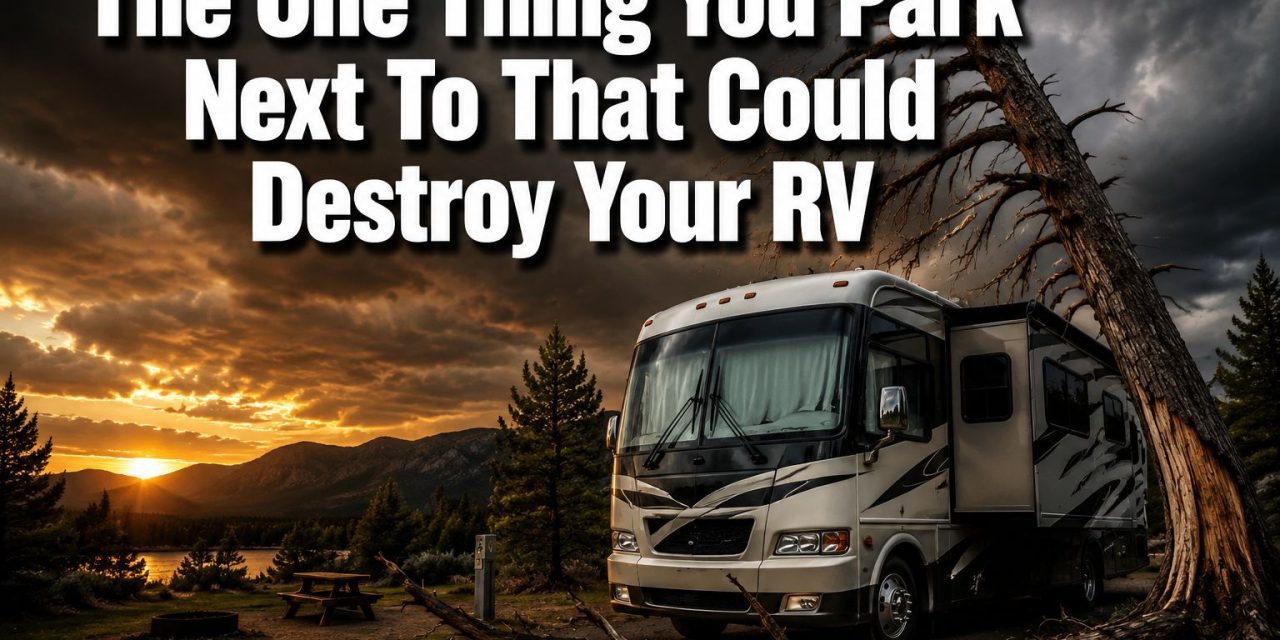
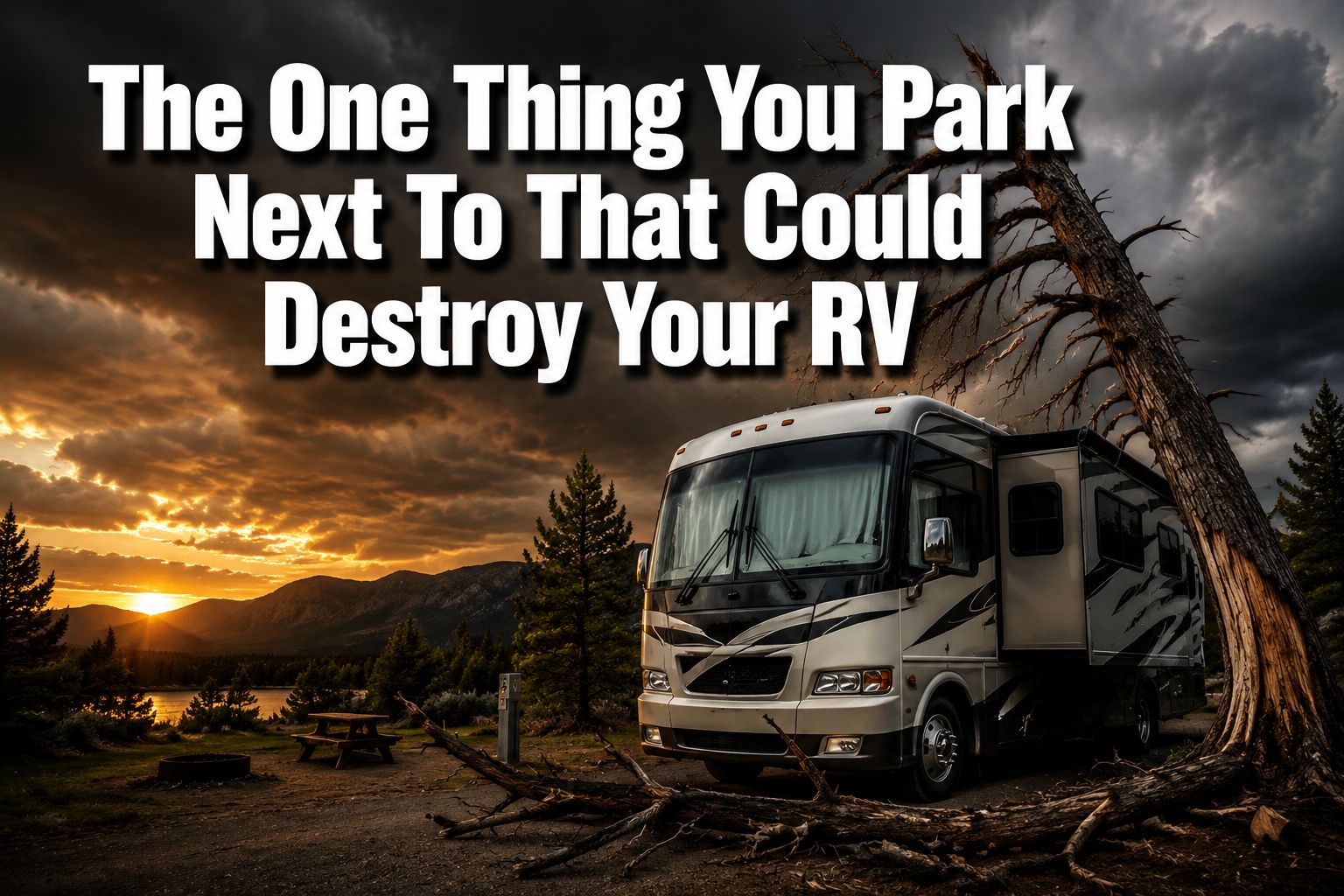
Every year, thousands of RV owners lose their rigs — not on the highway, not from mechanical failure, but from something as simple as where they chose to park. The one thing you park next to that could destroy your RV is often hiding in plain sight, looking completely harmless. Dead trees, dry grass, flood zones, power lines — any one of these neighbors can turn a dream camping trip into a total disaster.
This guide breaks down every dangerous neighbor your RV can have, so you can park smarter, stay safer, and protect your investment for years to come. 🚐💨
Key Takeaways
- 🌳 Dead or unstable trees are the single most overlooked threat to parked RVs — one storm can send a massive branch crashing through your roof
- 🔥 Dry grass and flammable materials under or near your RV can ignite from a hot exhaust pipe or catalytic converter
- 💧 Flood-prone areas near water can swallow an RV overnight with little warning
- ⚡ Overhanging power lines create serious electrical and fire hazards, especially in bad weather
- 🦝 Wildlife activity zones and soft, uneven ground also cause costly, often unexpected damage
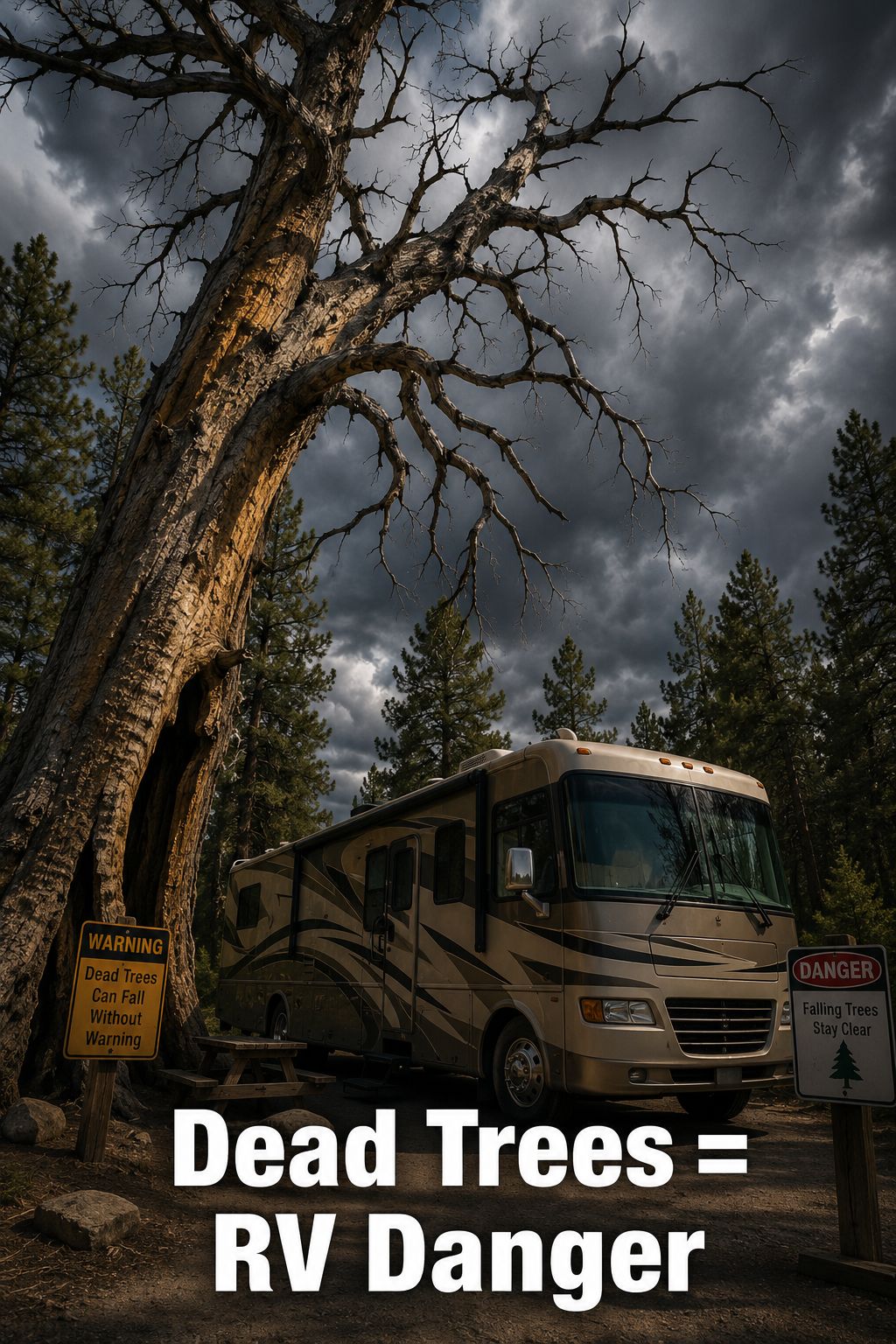
The One Thing You Park Next To That Could Destroy Your RV: Dead Trees
Ask any experienced RVer what the scariest campsite neighbor is, and most will say the same thing: a dead tree. It stands there looking quiet and harmless. But dead trees are ticking time bombs, especially when wind or rain rolls in [3].
Why Dead Trees Are So Dangerous
A dead tree has no living root system holding it firmly in place. Its branches are dry and brittle. When a storm hits — even a mild one — those branches snap and fall. A large branch dropping from 40 feet up hits with enormous force. It can crush a roof, shatter a skylight, or punch right through the side of an RV.
💬 “One falling branch can cause tens of thousands of dollars in damage — and it can happen in minutes.”
Here’s what to look for before you park:
| Warning Sign | What It Means |
|---|---|
| Bark peeling off in large sheets | Tree is dead or dying |
| No leaves in growing season | Tree has lost its life |
| Visible cracks in the trunk | Structural failure risk |
| Leaning toward your parking spot | High collapse danger |
| Mushrooms growing at the base | Root rot — very unstable |
| Large dead branches hanging above | Called “widow-makers” for good reason |
How Far Away Is Safe?
A simple rule: park at least 1.5 times the tree’s height away from it. If the tree is 60 feet tall, stay 90 feet back. That sounds like a lot, but it is the only way to truly stay safe if the whole tree comes down [3].
What About Live Trees?
Live trees are generally safer, but they still drop branches. Check for:
- Large, heavy limbs hanging directly above your RV
- Signs of disease like discolored leaves or oozing sap
- Recent storm damage that has weakened the tree
When in doubt, pick a different spot. No view is worth a crushed roof.
Fire Hazards: The Silent Threat Hiding Under Your Wheels
The one thing you park next to that could destroy your RV might not even be visible at first glance. Dry grass and other flammable materials are a massive fire risk that many RVers completely ignore [1].
How Dry Grass Starts RV Fires
Your RV’s exhaust system gets extremely hot. The catalytic converter, in particular, can reach temperatures above 1,200°F during normal operation. When you park over dry grass or brush, that heat can ignite the vegetation underneath your rig — often while you are asleep or away from the campsite [1].
The scary part? The fire can start quietly, spread under the RV, and reach the fuel tank or propane lines before anyone notices.
💬 “A catalytic converter running at full heat can ignite dry grass in under a minute.”
How to Avoid Fire Hazards When Parking
✅ Always check what is under your RV before you stop
✅ Avoid parking over tall, dry, or dead grass
✅ Keep a fire extinguisher inside and easily accessible
✅ Never park near brush piles or stacked wood
✅ Give your exhaust system time to cool before driving through dry areas
The National Park Service specifically warns RV campers about this exact danger, noting that hot exhaust components are a leading cause of vehicle-related fires in campgrounds [1].
Water and Flooding: When the Ground Fights Back
Parking near a beautiful river or lake sounds like the perfect camping experience. But that gorgeous waterfront spot can become a death trap for your RV when water levels rise unexpectedly [3].
Flash Floods Are Faster Than You Think
Flash floods can raise water levels by several feet in just minutes. Low-lying areas near rivers, streams, and dry creek beds are especially dangerous. Many RVers have woken up to find their campsite — and their rig — completely submerged.
High-risk parking zones to avoid:
- Dry creek beds (they fill up fast in rain)
- Low-lying meadows near rivers
- Areas with visible flood markers or high-water lines on trees
- Campgrounds without clear drainage paths
Poor Drainage Is Also a Problem
Even without a flood, parking in an area with poor drainage causes serious issues. Water pools under and around the RV. This leads to:
- Mold and mildew growth inside walls and flooring
- Rust and corrosion on the frame and underbelly
- Soft ground that causes the RV to sink or tilt [2]
💬 “Water damage is one of the most expensive repairs an RV owner will ever face — and most of it is preventable.”
Soft and Uneven Ground: The Slow Destroyer
This one sneaks up on people. Soft or uneven ground does not look dangerous. But parking on it — especially for extended periods — causes serious damage [2].
What Happens When Your RV Is Not Level
When an RV sits unlevel, bad things happen slowly:
- Refrigerators in RVs need to be level to work properly. Running them off-level damages the cooling unit
- Slide-outs can bind, warp, or fail to retract properly
- Doors and cabinets go out of alignment and stop closing correctly
- Water lines drain improperly, leaving water sitting in places it should not be
- Structural stress builds up on the frame over time
Soft Ground Sinking
After a rain, soft ground can swallow RV leveling jacks and tires. An RV that sinks unevenly puts enormous stress on the frame. In extreme cases, it can even cause structural damage that is nearly impossible to repair affordably [2].
Pro tips for soft ground:
- Carry leveling boards or wheel chocks to distribute weight
- Use stabilizer pads under all jacks
- Check the ground after rain before setting up camp
- If the ground feels spongy, find a different spot
Power Lines: The Overhead Danger Nobody Looks Up For
Most people look left and right before parking. Almost nobody looks up. Overhanging power lines are one of the most dangerous things an RV can be parked near [3].
Why Power Lines Are So Risky
- Storm damage can bring lines down directly onto your RV
- Tall RVs (especially Class A motorhomes) can be close enough to arc electricity
- Downed lines can energize the ground around your rig, making it deadly to step outside
- Tree branches that fall onto power lines can redirect the line toward your campsite
The rule is simple: If you can see power lines from your parking spot, you are probably too close. Always park where lines are not directly overhead or within falling distance.
Wildlife Zones: When Nature Gets Too Close
Camping in nature means sharing space with animals. But some wildlife encounters go far beyond a cute photo opportunity [3].
Animals That Damage RVs
| Animal | Type of Damage |
|---|---|
| Bears | Rip open doors, windows, and storage bays looking for food |
| Rodents | Chew through wiring, insulation, and plumbing |
| Raccoons | Pry open vents and access panels |
| Birds (woodpeckers) | Drill holes in wood trim and siding |
| Squirrels | Nest in engine compartments and chew belts |
How to Reduce Wildlife Risk
✅ Never leave food or scented items outside or in unlocked storage bays
✅ Use bear-proof containers in high-activity zones
✅ Park away from obvious wildlife trails or water sources animals use
✅ Check your engine compartment regularly for nesting
✅ Keep vents covered with appropriate mesh screens
High-Traffic Roads and Industrial Areas: Pollution and Accident Risk
Parking near a busy highway or industrial zone creates a different kind of danger [6].
Traffic Hazards
Passing trucks and vehicles create:
- Wind buffeting that rocks the RV and stresses connections
- Debris and rocks kicked up at high speed that crack windows and dent panels
- Accident risk if a vehicle loses control near your parked rig
The closer your RV is to a high-traffic road, the higher the risk of being struck by a distracted or out-of-control driver [6].
Industrial Pollution
Parking near factories, chemical plants, or industrial facilities exposes your RV to:
- Airborne pollutants that damage paint and seals over time
- Chemical fallout that can stain or corrode surfaces
- Fumes that seep inside and create health risks [4]
High-Crime Areas: Protecting Your Rig from Theft and Vandalism
Your RV is a significant financial investment. Parking it in the wrong neighborhood puts that investment at serious risk [4].
What Makes an Area High-Risk?
- Broken windows or graffiti nearby
- Poor or no lighting at night [5]
- No other campers or vehicles in the area
- Reports of recent break-ins (check local forums and apps)
Smart Security Habits
✅ Research the area before you arrive using RV community apps and forums
✅ Install motion-activated lights around your campsite
✅ Use hitch locks and wheel locks when parked for extended periods
✅ Keep valuables out of sight through windows
✅ Park in well-lit, high-visibility spots whenever possible [5]
💬 “The best security system is choosing the right parking spot in the first place.”
High Wind Exposure: When Open Spaces Become Dangerous
Open fields and exposed hilltops look like great camping spots. But high wind zones are seriously dangerous for RVs [7].
What Wind Does to an RV
- Strong gusts can tip over tall Class A motorhomes and fifth wheels
- Sustained winds stress slide-out mechanisms and seals
- Flying debris becomes a projectile that damages windows, vents, and walls
- Awnings left out in wind can be destroyed in seconds — and take the mounting hardware with them
Wind safety tips:
- Check weather forecasts before choosing an exposed site
- Always retract awnings when wind picks up
- Park with the nose of the RV facing into the wind to reduce surface area
- Use stabilizer jacks to reduce rocking in moderate wind [7]
A Complete RV Parking Safety Checklist
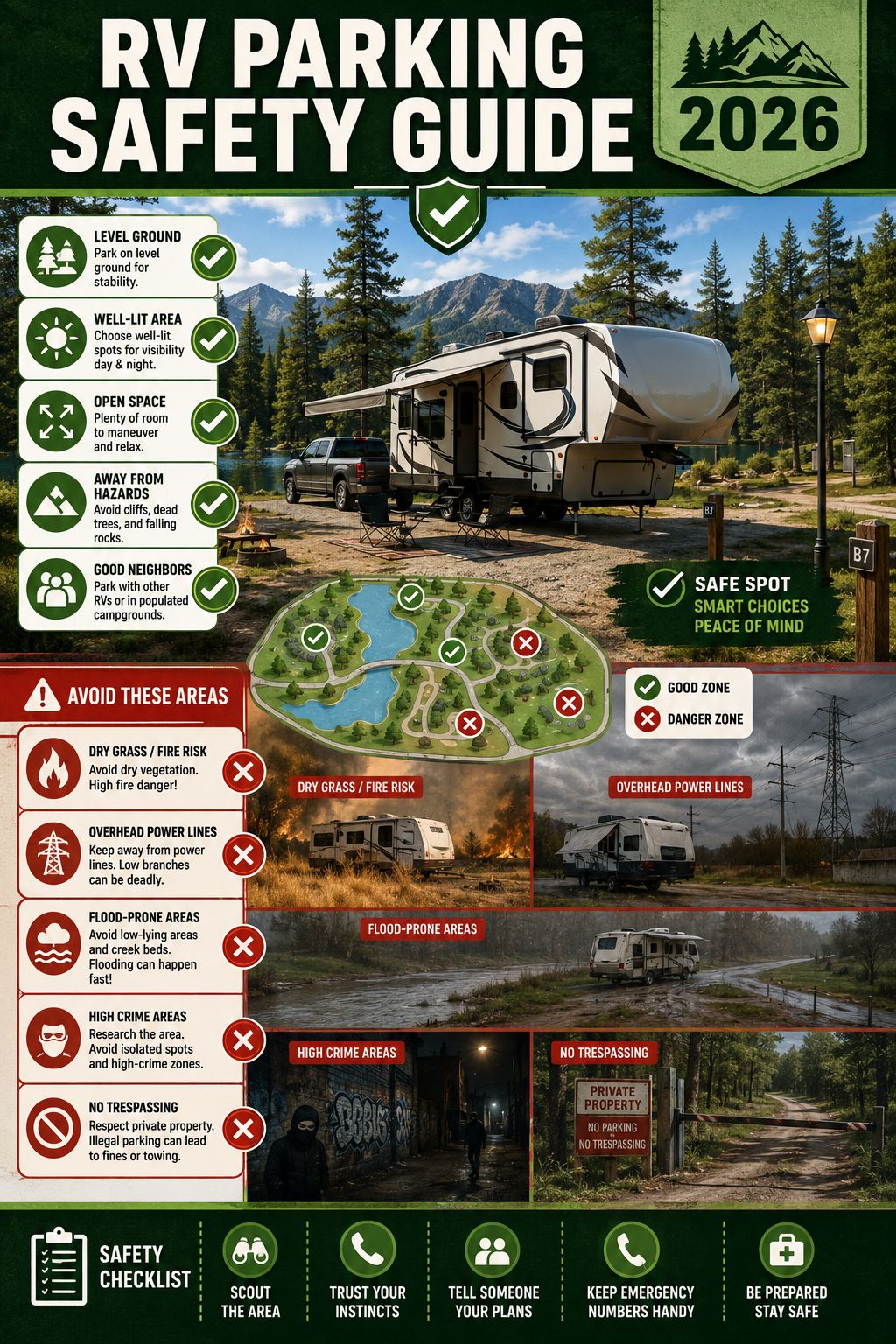
Before settling into any new campsite, run through this quick checklist:
🌳 Trees
- No dead or dying trees within falling distance
- No large hanging branches directly overhead
- No leaning trees pointing toward the RV
🔥 Fire Hazards
- No dry grass or brush under the RV
- No flammable materials stacked nearby
- Fire extinguisher accessible inside
💧 Water and Drainage
- Not in a low-lying flood zone
- Ground has visible drainage slope
- No signs of previous flooding (water lines on trees, debris)
⚡ Power Lines
- No lines directly overhead
- No lines within falling-tree distance
🦝 Wildlife
- No obvious wildlife trails nearby
- Food stored properly
- Vents and access points secured
🚗 Traffic and Crime
- Not directly adjacent to high-speed traffic
- Area is well-lit at night
- No signs of recent vandalism or theft
💨 Wind
- Not on an exposed hilltop or open plain in high-wind forecast
- Awning retracted if wind is expected
Conclusion: Park Smart, Camp Happy
The one thing you park next to that could destroy your RV is rarely something dramatic. It is usually something quiet and easy to overlook — a dead tree, a patch of dry grass, a low-lying meadow, or a dark parking area with no other campers around.
The good news is that every single risk on this list is completely avoidable with a few minutes of careful observation before setting up camp.
Here are your actionable next steps:
- Print or save the checklist above and use it every single time you park in a new spot
- Download an RV community app like Campendium or iOverlander to read recent reviews and safety reports for any campsite
- Invest in basic safety gear: leveling boards, stabilizer pads, a quality fire extinguisher, and hitch locks
- Always look up before you park — power lines and dead branches are easy to miss
- Trust your gut: if a spot feels wrong, it probably is. There is always another campsite
The open road is waiting. Park smart, stay safe, and enjoy every mile of the adventure. 🚐🌄
References
[1] P52 Rv Fire Safety 101 – https://www.nps.gov/articles/p52-rv-fire-safety-101.htm?utm_source=openai
[2] Rv Leveling Mistakes That Can Ruin Your Trip And How To Avoid Them – https://www.campgroundviews.com/rv-leveling-mistakes-that-can-ruin-your-trip-and-how-to-avoid-them/?utm_source=openai
[3] How To Tell If An Rv Park Or Boondocking Spot Is Safe – https://www.campgroundviews.com/basecamp/how-to-tell-if-an-rv-park-or-boondocking-spot-is-safe?utm_source=openai
[4] The 2025 Rv Breakin Theft Risk Map Where Rvers Actually Get Hit And How To Stay Safe – https://www.happycampers.store/blog/the-2025-rv-breakin-theft-risk-map-where-rvers-actually-get-hit-and-how-to-stay-safe/?utm_source=openai
[5] Parking Deck Vs Surface Lot – https://www.lot-guard.com/resources/blog/parking-deck-vs-surface-lot/?utm_source=openai
[6] The Hidden Dangers Of Rvs – https://www.malmlegal.com/blog/the-hidden-dangers-of-rvs/?utm_source=openai
[7] Rv Owners Beware 20 Safety Slip Ups That Could Cost You Big – https://www.motorbiscuit.com/rv-owners-beware-20-safety-slip-ups-that-could-cost-you-big/?utm_source=openai