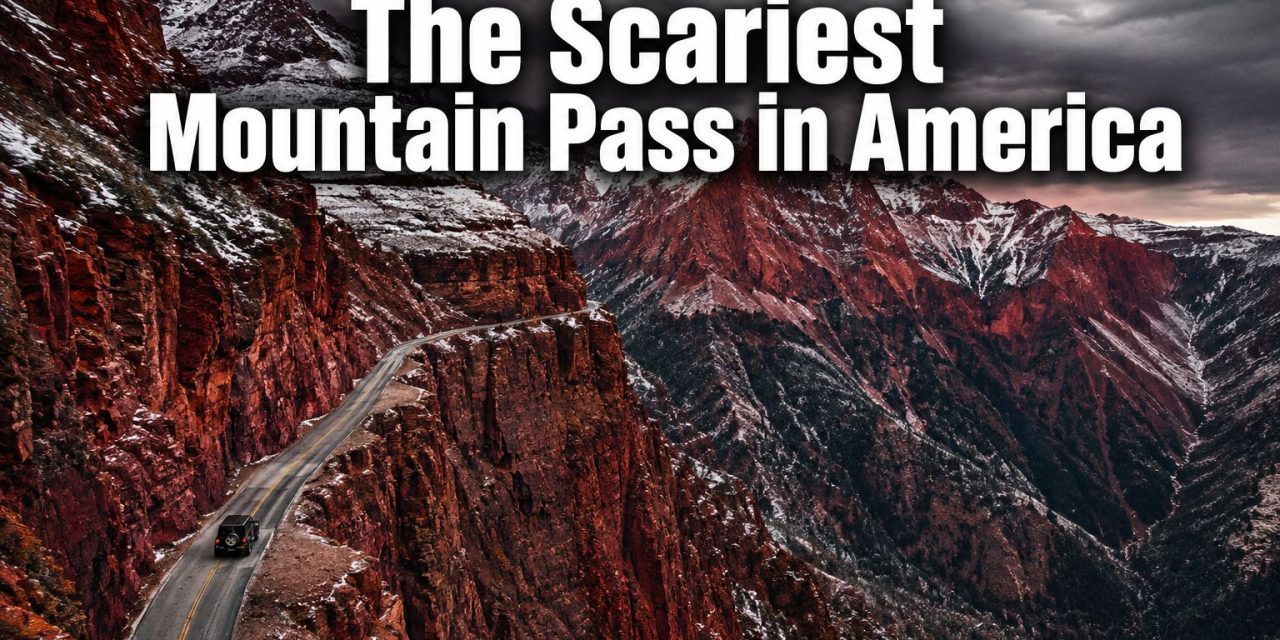
Every year, thousands of RV drivers white-knuckle their way through a stretch of Colorado road where there are no guardrails, sheer drop-offs of hundreds of feet, and avalanches that can bury a vehicle without warning. That road is Red Mountain Pass — widely considered the scariest mountain pass in America. And if you’re rolling through the Southwest in your rig, you need to know what you’re dealing with before you get there.
This guide breaks down exactly why Red Mountain Pass earns its terrifying reputation, what RV drivers need to know, and — most importantly — how to avoid it if you’d rather not test your nerves at 11,000 feet.
Key Takeaways
- 🏔️ Red Mountain Pass sits at 11,018 feet elevation between Ouray and Silverton, Colorado — making it one of the highest paved passes in the state
- ⚠️ The road has steep grades up to 8%, sharp curves, and long stretches with no guardrails
- ❄️ Winter avalanches are common and can close the road without much warning
- 🚐 Large RVs and trailers face serious challenges on this narrow, winding road
- 🗺️ A safer alternate route through Durango and Cortez exists — it’s longer but far less stressful
What Makes Red Mountain Pass the Scariest Mountain Pass in America
Red Mountain Pass sits on US Highway 550 in southwestern Colorado [1]. It connects the charming mountain towns of Ouray to the north and Silverton to the south. The drive is only about 25 miles long. But those 25 miles pack more danger per foot than almost any other paved road in the country.
The Numbers That Should Scare You
| Feature | Detail |
|---|---|
| Elevation | 11,018 feet above sea level |
| Road Grade | Up to 8% in steep sections |
| Guardrails | Absent in many critical spots |
| Road Width | Narrow, often barely two lanes |
| Season Risk | Year-round, worst in winter |
The pass is part of a stretch of road nicknamed the “Million Dollar Highway” — a name that sounds glamorous until you realize the road was originally built as a wagon trail in the late 1800s to serve Colorado’s booming mining industry [2]. Back then, it wasn’t designed for 40-foot Class A motorhomes.
Why No Guardrails?
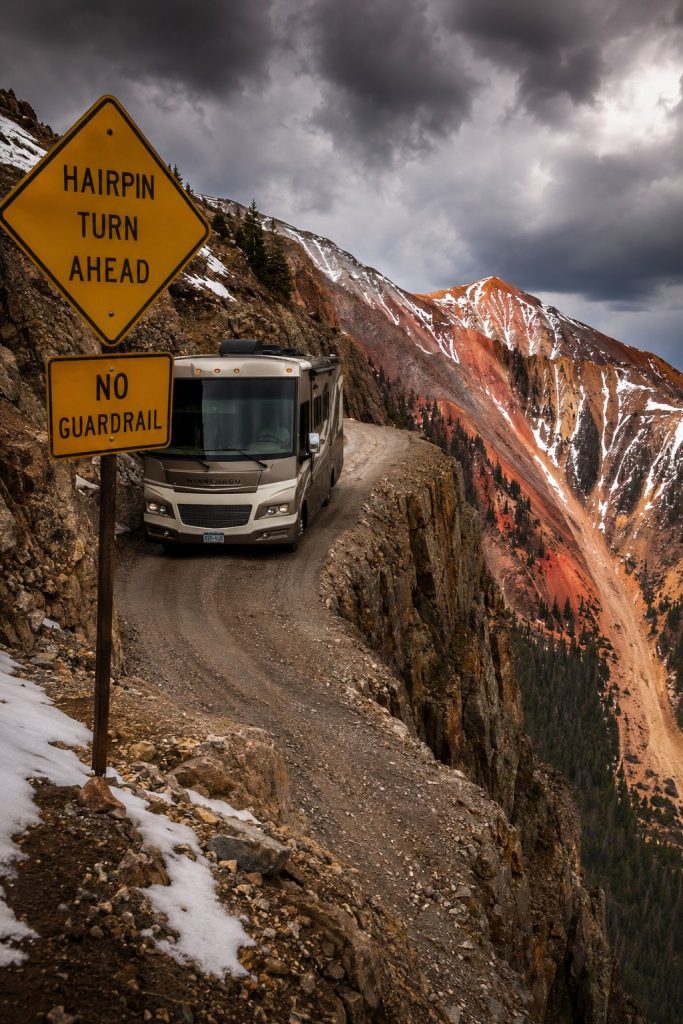
This is the question every first-time driver asks. The short answer: there’s nowhere to put them. In many sections, the road is carved directly into the cliff face. The mountain is on one side. A straight drop is on the other. Adding guardrails would require major reconstruction — and in some spots, it’s simply not possible with the current road design [1].
💬 “Many drivers report the drive as both breathtaking and nerve-wracking, emphasizing the need for full attention and caution while navigating the pass.” — DangerousRoads.org [1]
The Avalanche Problem
Winter turns Red Mountain Pass into something truly frightening. The steep mountain terrain creates perfect conditions for avalanches, which happen regularly in this area [1]. The Colorado Department of Transportation (CDOT) monitors the area closely, but closures can still happen fast. One moment the road is open. The next, it’s buried under tons of snow and ice.
The road is generally kept open year-round, but winter closures do happen — sometimes with little warning [1]. For RV travelers, getting caught in a closure means turning around on a narrow mountain road. That’s not a fun situation in a 35-foot motorhome.
Understanding the Real Risks for RV Drivers
Here’s the honest truth: Red Mountain Pass is not designed for large RVs. The road was built more than a century ago for much smaller vehicles. Today’s big rigs face challenges the original road builders never imagined.
Width and Turning Radius Issues
The road is narrow. Very narrow. In some sections, two normal-sized cars can barely pass each other. When one of those “cars” is a 40-foot motorhome with a toad (towed vehicle) attached, the math gets scary fast. Tight switchbacks and hairpin curves require careful maneuvering — and there’s very little room for error.
Brake Fade on Steep Descents
An 8% grade doesn’t sound like much. But on a heavy RV, it means your brakes are working extremely hard for long stretches. Brake fade — when brakes overheat and lose effectiveness — is a real danger on mountain descents like this one [1]. Experienced mountain drivers know to use engine braking and low gears. But even experienced drivers can get caught off guard on Red Mountain Pass.
Emergency Services Are Far Away
The pass is remote. Really remote. If something goes wrong — a mechanical failure, a slide-off, a medical emergency — help is not close by [1]. Emergency response times in this area are significantly longer than in urban or suburban settings. For RV travelers, this means being extra prepared with emergency supplies, a satellite communicator, and a solid plan before heading out.
Weather Changes Fast
At 11,018 feet, the weather can flip from sunny to dangerous in minutes. Summer thunderstorms bring lightning and sudden rain that makes the road slick. Winter brings snow, ice, and whiteout conditions. Even in spring and fall, surprise snowstorms are common at this elevation.
Before you go, always check:
- ✅ Current road conditions from CDOT
- ✅ Weather forecast for the next 24 hours
- ✅ Avalanche risk level (in winter)
- ✅ Road closure alerts
Who Should (and Shouldn’t) Attempt Red Mountain Pass
Not every RV driver should tackle this road. Here’s a simple breakdown:
✅ You Might Be Okay If…
- You’re driving a smaller Class B or Class C motorhome (under 25 feet)
- You have significant mountain driving experience
- You’re traveling in summer during clear weather
- You’ve checked road conditions and they’re good
- You’re comfortable with no guardrails and steep drop-offs
❌ Think Twice If…
- You’re driving a large Class A or fifth wheel over 30 feet
- You’re towing a vehicle behind your motorhome
- It’s winter or early spring
- You have anxiety about heights or narrow roads
- This is your first mountain driving experience
- Your brakes haven’t been recently serviced
🚨 Pro Tip: If you’re unsure, skip it. The scenery is beautiful, but no view is worth risking your rig, your passengers, or your life.
The Scariest Mountain Pass in America (And How to Avoid It) — Your Alternate Route
Good news: there’s a perfectly good alternate route that avoids Red Mountain Pass entirely. It’s longer, but it’s safer, easier on your rig, and honestly still quite scenic.
The Safe Way: Durango and Cortez Route
Instead of taking US-550 through Red Mountain Pass, you can route through Durango and Cortez to the south. Here’s how it works:
From Ouray heading to Silverton (or vice versa):
- Head south from Ouray on US-550 to Ridgway
- Take CO-62 west toward Placerville
- Head south on CO-145 through Telluride and Dolores
- Connect to US-160 east through Cortez and Durango
- Take US-550 north from Durango up to Silverton
Yes, it’s longer — probably 2 to 3 extra hours depending on your pace. But you’ll be on wider roads, lower elevations, and you won’t be white-knuckling it around blind curves with no guardrails.
Comparing the Two Routes
| Factor | Red Mountain Pass | Durango/Cortez Route |
|---|---|---|
| Distance | ~25 miles | ~150+ miles |
| Drive Time | 1-2 hours | 3-5 hours |
| Max Elevation | 11,018 feet | Much lower |
| Road Width | Very narrow | Standard highway |
| Guardrails | Often absent | Present |
| RV Friendly | No | Yes |
| Stress Level | 😱😱😱😱😱 | 😊 |
Other Options Worth Knowing
- US-160 over Wolf Creek Pass (10,850 feet) — still high, but wider and better maintained for RVs
- CO-145 through Telluride — beautiful scenery, more manageable road
- Staying in Ouray OR Silverton — instead of trying to drive between both towns, consider making one your base and day-tripping
If You Decide to Drive Red Mountain Pass Anyway
Some RV travelers are determined to experience this road firsthand. That’s a valid choice — just go in with eyes wide open. Here are the most important safety tips:
Before You Leave
- 🔧 Check your brakes — have them inspected before any mountain trip
- 📱 Download offline maps — cell service is spotty or nonexistent
- 🛰️ Bring a satellite communicator (like a Garmin inReach) for emergencies
- ⛽ Fill up your tank in Ouray or Silverton before heading out
- 🌤️ Check the forecast — only go in clear, dry weather
On the Road
- 🐢 Go slow — there’s no rush on this road
- 🔇 No distractions — no phone, no loud music, full attention on the road
- 🚗 Use lower gears on descents to save your brakes
- 🔔 Honk before blind curves — other drivers need to know you’re coming
- 🅿️ Use pullouts — let faster traffic pass rather than feeling pressured to speed up
- 🚫 Never stop on the road — find a designated pullout for photos
Know When to Turn Around
This is critical. If you start the drive and conditions feel wrong — weather rolling in, road feels too narrow for your rig, brakes feeling soft — turn around. There is no shame in turning back. The road will be there another day.
The History Behind the Fear: Why This Road Exists
Understanding why Red Mountain Pass is so dangerous actually starts with understanding why it was built in the first place.
In the late 1800s, silver and gold mining was booming in the San Juan Mountains of Colorado [2]. Towns like Silverton and Ouray were thriving mining communities. The problem? They were separated by some of the most rugged terrain in North America.
So workers carved a wagon trail through the mountains — blasting through rock, building along cliff edges, doing whatever it took to connect these remote mining towns [2]. Safety wasn’t the top priority. Getting ore out of the mountains was.
That wagon trail eventually became US Highway 550 — the Million Dollar Highway. The name comes from various legends: some say it cost a million dollars per mile to build, others say the road fill contained a million dollars in gold ore. Nobody knows for sure [2].
What everyone does know is that the road was never designed for modern vehicles. It was designed for horses and small wagons. Today, it carries everything from motorcycles to semi-trucks — and yes, RVs — across terrain that was considered nearly impassable just 150 years ago.
What Other RV Travelers Say About Red Mountain Pass
The RV community has strong opinions about this road. Here’s a sampling of what experienced travelers report:
Those who drove it say:
- “The views are absolutely stunning — but my hands were shaking the whole time”
- “I’m an experienced mountain driver and it still made me nervous”
- “My 32-foot motorhome barely fit in some sections — never again”
- “We turned around halfway through — no regrets”
Those who took the alternate route say:
- “The Durango route added time but we arrived relaxed and enjoyed the scenery”
- “Totally worth going around — the stress savings alone made it worth it”
- “We’ll see the pass from a viewpoint next time instead of driving it”
The consensus in the RV community is clear: if you have a large rig or any doubt, take the alternate route. The pass will still be there to admire from a safe viewpoint.
Planning Your Southwest Colorado RV Trip Around the Pass
Red Mountain Pass doesn’t have to ruin your Colorado adventure. With smart planning, you can see the best of the San Juan Mountains without the white-knuckle drama.
Great Alternatives to Driving the Pass
- 🚗 Drive to the Ouray Overlook — get stunning views of the canyon without going over the pass
- 🚌 Take a jeep tour — local guides offer jeep excursions on the Million Dollar Highway in smaller, more appropriate vehicles
- 🚂 Ride the Durango & Silverton Narrow Gauge Railroad — a historic train that runs between Durango and Silverton through gorgeous mountain scenery (no driving required!)
- 🏕️ Camp in Ouray or Silverton separately — both towns have great RV parks and tons to explore without needing to cross the pass
Conclusion
Red Mountain Pass is genuinely one of the most dramatic and dangerous roads in the United States. At 11,018 feet, with no guardrails, grades up to 8%, and avalanche risk in winter, it deserves its reputation as the scariest mountain pass in America [1]. For RV travelers especially, the risks are real and significant.
Here’s what to do next:
- Assess your rig — be honest about whether your vehicle is appropriate for this road
- Check conditions — visit CDOT’s website before any mountain drive
- Plan the alternate route — map out the Durango/Cortez route as your default plan
- Consider the train — the Durango & Silverton Railroad gives you the scenery without the stress
- Share this guide — pass it along to fellow RV travelers heading to Colorado
The San Juan Mountains are breathtaking. The goal is to enjoy them — not to white-knuckle your way through them. Travel smart, travel safe, and enjoy every mile of your adventure. 🏔️🚐
References
[1] 175 Red Mountain Pass Usa – https://www.dangerousroads.org/north-america/usa/175-red-mountain-pass-usa.html?utm_source=openai
[2] Million Dollar Highway – https://www.visitouray.com/million-dollar-highway?utm_source=openai