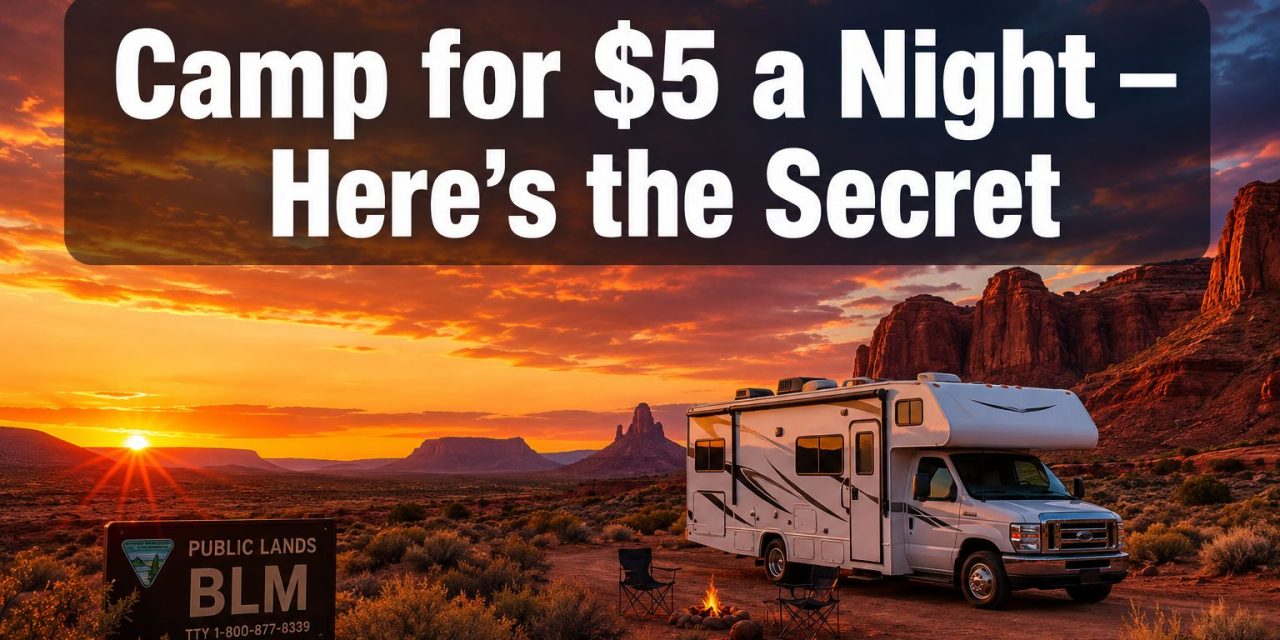
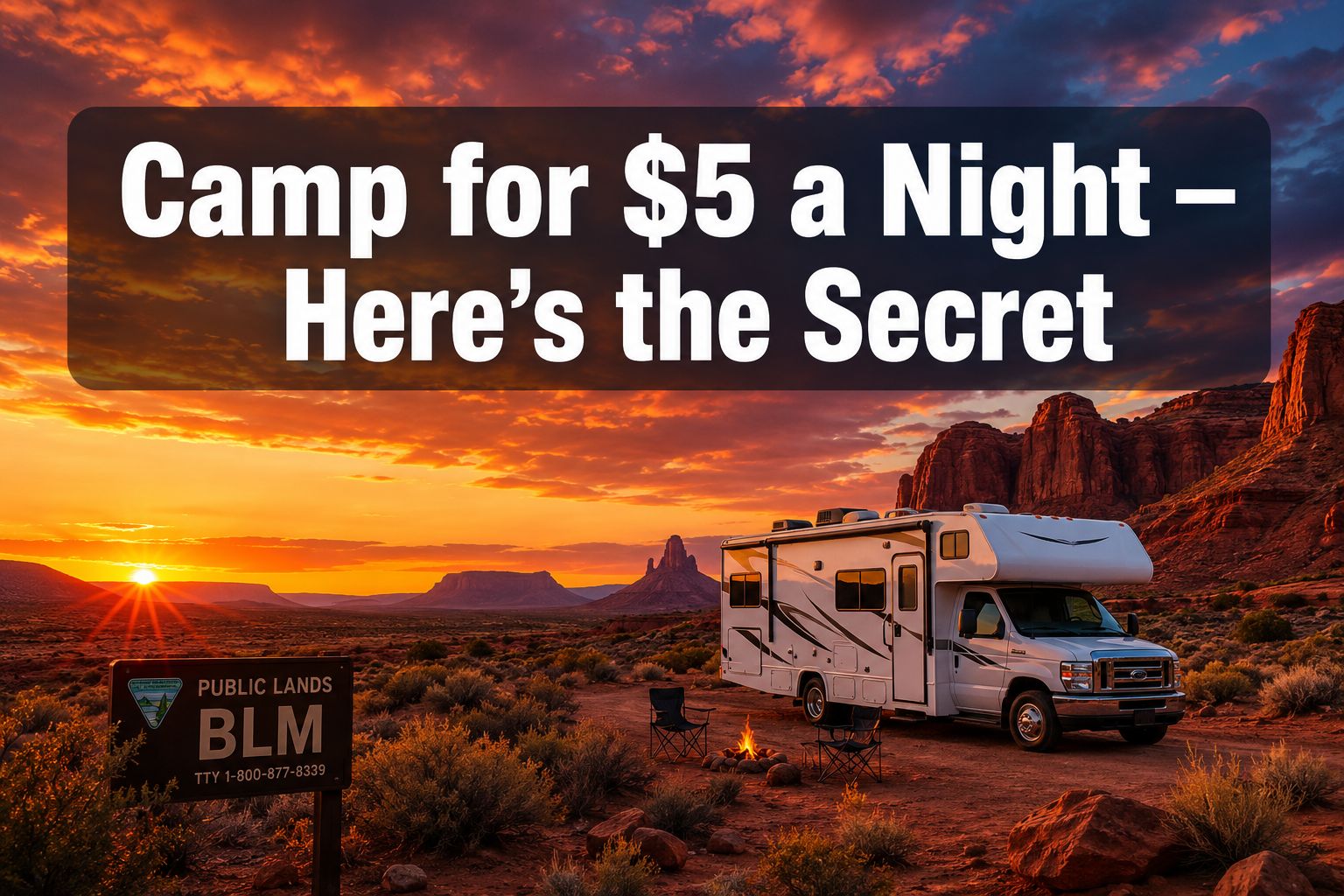
Only 12% of RV travelers know that millions of acres of public land across the United States are available for camping at little to no cost — and the ones who do know are sleeping under the stars for almost nothing while everyone else pays $60, $80, or even $100 a night. The secret to booking campgrounds for $5 a night is not a trick or a loophole. It is a system. And once you learn it, your RV lifestyle will never look the same.
This guide breaks down every strategy, tool, and tip that savvy RV travelers use to slash their camping costs to almost zero. Whether you are a full-timer or a weekend warrior, these methods work in 2026 — and they are easier to use than most people think.
Key Takeaways
- 🏕️ BLM land and national forests offer free or very low-cost camping across millions of acres of public land
- 📅 Timing is everything — camping in shoulder seasons can cut site fees by 30–50%
- 📱 Free apps like Campendium and iOverlander help you find cheap or free campsites fast
- 🔔 Cancellation alerts can unlock sold-out spots at popular campgrounds
- 💳 Membership programs like Harvest Hosts can bring your nightly cost down to almost nothing
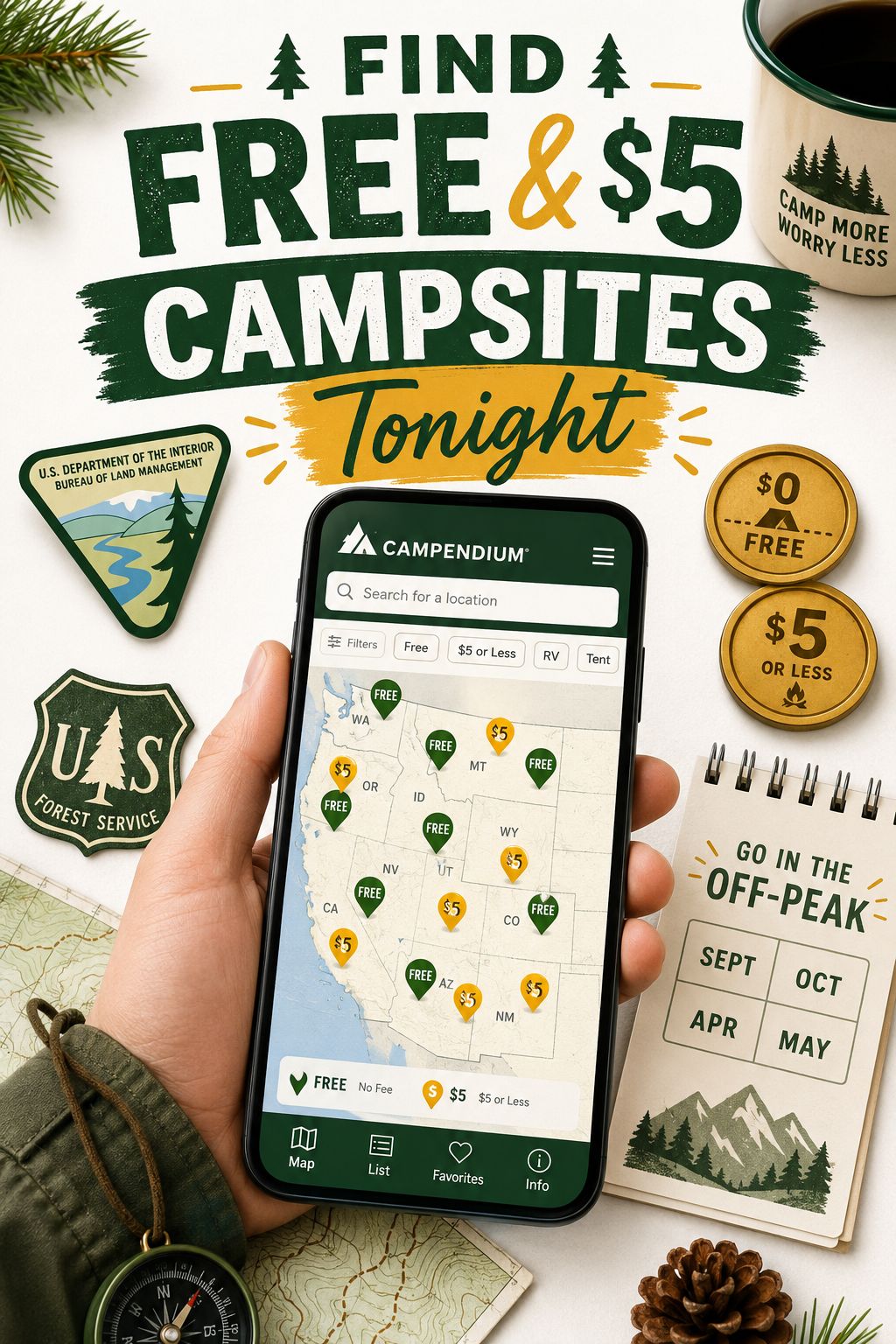
What Is the Secret to Booking Campgrounds for $5 a Night?
The secret is not one single thing. It is a combination of knowing where to look, when to go, and how to book. Most RVers default to private campgrounds and RV parks because they are easy to find. But easy does not mean cheap.
Here is the truth: the United States has over 640 million acres of public land. Much of it is managed by the Bureau of Land Management (BLM) and the U.S. Forest Service. A huge portion of that land is open to camping — often for free or for just a few dollars a night. [1]
💬 “The campers paying $5 a night are not doing anything special. They just know where to look.”
Let’s break down every piece of this puzzle.
Public Land Camping: The Biggest Secret of All
BLM land is the crown jewel of budget camping. Dispersed camping on BLM land is typically free. That means $0 per night. You can camp almost anywhere on BLM land as long as you follow the rules — usually a 14-day limit before you need to move on. [1]
National forests are another goldmine. Many national forest campgrounds charge between $10 and $30 per night. Some are first-come, first-served, which means no reservation needed. Just show up on a weekday and you have a great shot at snagging a spot. [1]
Here is a quick comparison of public land camping options:
| Land Type | Typical Cost | Reservations Needed? | Stay Limit |
|---|---|---|---|
| BLM Dispersed | Free | No | 14 days |
| National Forest Campground | $10–$30/night | Sometimes | Varies |
| State Park Campground | $15–$40/night | Yes (recommended) | Varies |
| Private RV Park | $40–$100+/night | Yes | Flexible |
State parks sit in the middle. They cost more than BLM land but way less than private parks. Fees usually run between $15 and $40 per night, depending on the amenities and location. [2]
Boondocking: Camping for Free (Yes, Really)
Boondocking means camping without hookups — no water, no electric, no sewer. It sounds rough, but for self-contained RVs, it is a total game-changer. 🚐
When you boondock on BLM land or in a national forest, your nightly cost is literally zero. Smart RVers mix boondocking nights with occasional paid campground stays. This lets them dump tanks, fill water, and recharge batteries without paying for hookups every single night. [3]
The math is simple:
- 20 nights boondocking = $0
- 10 nights at a $30 campground = $300
- Average per night over 30 days = $10
That is the real secret to booking campgrounds for $5 a night — average your costs across free and paid nights.
Timing: When You Camp Matters as Much as Where
Here is something most new RVers do not know: the same campsite can cost twice as much depending on when you book it.
Camping during shoulder seasons — April through May and September through October — can reduce site fees by 30–50%. A site that costs $40 per night in July might drop to just $20–$28 in October. [3]
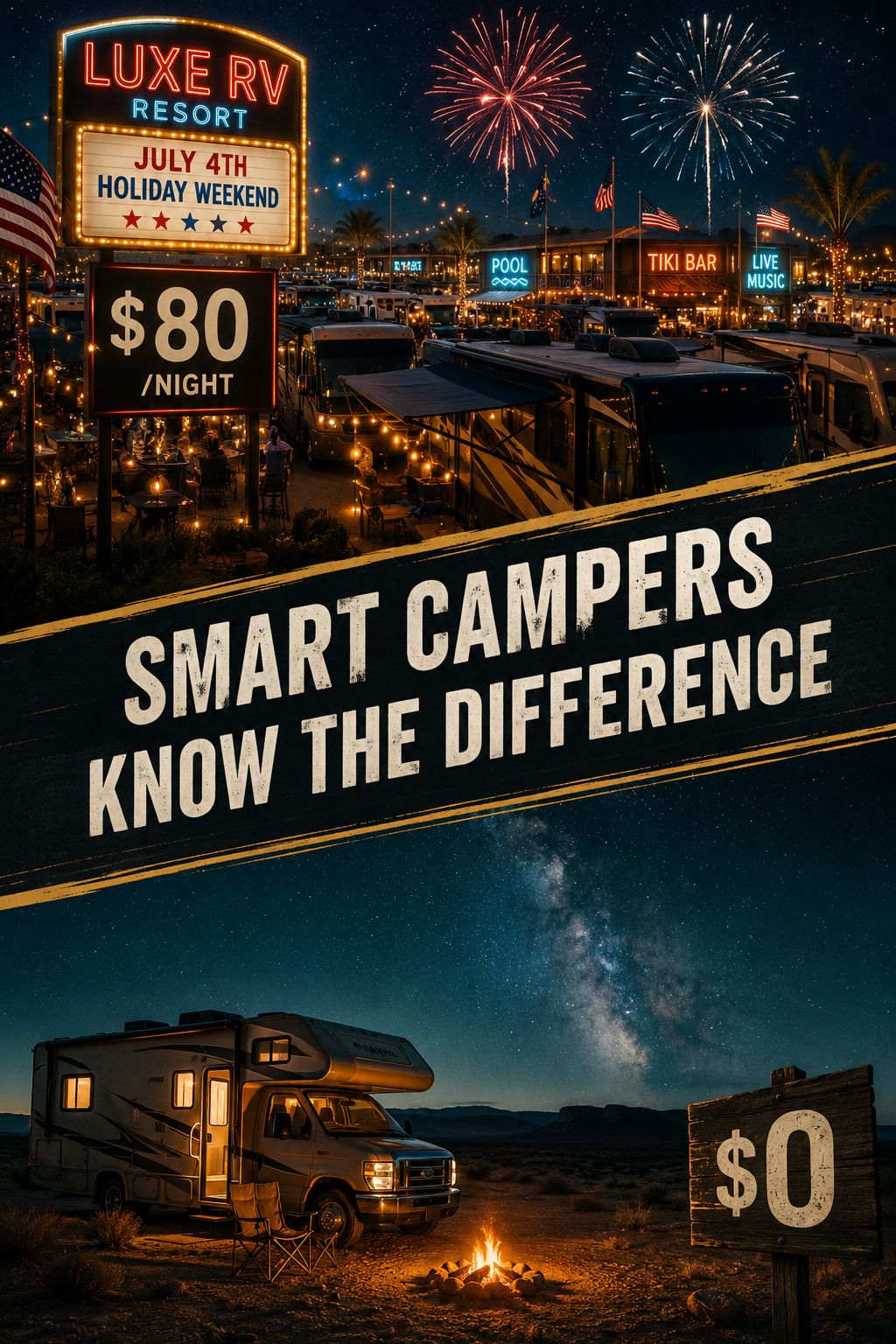
Holidays are the worst time to camp on a budget. Memorial Day, Fourth of July, and Labor Day weekends bring peak prices and packed campgrounds. Avoid them if saving money is the goal. [3]
Here is a simple seasonal guide:
| Season | Cost Level | Crowd Level | Best For Budget? |
|---|---|---|---|
| Peak (June–August) | 💰💰💰 High | Very Crowded | ❌ No |
| Shoulder (April–May, Sept–Oct) | 💰💰 Medium | Moderate | ✅ Yes |
| Off-Season (Nov–March) | 💰 Low | Light | ✅ Best |
| Holidays (any season) | 💰💰💰💰 Highest | Extremely Crowded | ❌ Avoid |
Extended Stays: The Weekly and Monthly Discount Trick
Many campgrounds reward loyalty with big discounts for longer stays. A site that costs $40 per night might drop to $175 for a full week — that works out to just $25 per night. Monthly rates can be even better, ranging from $450 to $750 for 30 nights, which brings the nightly cost down to $15–$25. [3]
If you are a full-time RVer or plan to stay in one area for a while, always ask about weekly and monthly rates. Many campgrounds do not advertise these deals upfront. Just ask.
The Secret to Booking Campgrounds for $5 a Night Using Apps and Tools
Technology has made finding cheap campsites easier than ever. There are several free and low-cost apps that do the heavy lifting for you.
The Best Apps for Finding Cheap Campsites
Here are the top tools every budget RVer should have on their phone:
🟢 Campendium
- Shows free and low-cost campsites across the US
- Includes user reviews and photos
- Great for finding BLM and national forest spots
🟢 iOverlander
- Community-driven app with global coverage
- Excellent for off-the-beaten-path spots
- Free to use
🟢 RV LIFE (formerly RV Trip Wizard)
- Helps plan routes with campsite stops
- Filters by price, hookups, and amenities
- Subscription-based but worth it for full-timers
🟢 Recreation.gov
- Official booking site for federal campgrounds
- Shows availability calendars and fees
- Essential for national park and forest reservations [4]
These tools can help locate free or low-cost camping options, including public lands and lesser-known campgrounds, with up-to-date information on availability and amenities. [3]
Cancellation Alerts: The Sneaky Strategy That Works
Popular campgrounds — especially in national parks — book up months in advance. But here is the thing: people cancel all the time. And when they do, those spots open back up.
Services like Campnab and Recreation.gov alerts notify you the moment a cancellation happens. You can set up free alerts or pay for priority notifications during peak cancellation windows. [5]
This strategy works especially well for:
- National park campgrounds
- Highly rated state park sites
- Popular holiday weekends (when last-minute cancellations spike)
💬 “Set your alerts and check your phone. Cancellations happen more than people think — especially 2 to 3 days before the reservation date.”
Booking Strategy: How to Reserve Before Everyone Else
For popular campgrounds, timing your reservation matters a lot. Most federal campgrounds open their booking window six months in advance. That means if you want a July 4th site, you need to be booking in early January. [4]
Pro tips for snagging reservations:
- ✅ Know the exact date the reservation window opens for your target campground
- ✅ Set a phone alarm for the morning it opens
- ✅ Have backup dates and locations ready
- ✅ Be flexible — weekday arrivals are almost always easier to book
- ✅ Check Recreation.gov at midnight when new windows open [4]
Being flexible with dates is one of the most powerful tools in a budget camper’s kit. If you can shift your trip by even two or three days, you dramatically increase your chances of finding a spot. [4]
Membership Programs: Pay Once, Camp Cheap All Year
Some of the smartest RVers use membership programs to dramatically lower their per-night costs.
Here are the most popular options:
🍷 Harvest Hosts
- Annual fee: ~$99/year
- Offers stays at wineries, farms, breweries, and attractions
- Stays are typically free for members
- Custom: support the host by buying their products [1]
🏕️ Passport America
- 50% discount at thousands of campgrounds
- Annual fee: ~$44/year
- Great for full-timers who move around a lot
🌲 Thousand Trails
- Membership gives access to a network of campgrounds
- Pay upfront, then camp for free within the network
- Best for RVers who camp frequently in specific regions
When you spread an annual membership fee across dozens of camping nights, the per-night savings are huge. A $99 Harvest Hosts membership used 20 times in a year means you are paying about $5 per stay — which is exactly the secret to booking campgrounds for $5 a night. [1]
Location Flexibility: The Underrated Money-Saver
One of the simplest ways to cut camping costs is to stay just outside popular destinations instead of right in the middle of them.
For example:
- Instead of camping in Moab, Utah (expensive, crowded), camp in nearby Monticello or Blanding for a fraction of the price [3]
- Instead of a national park campground, use a national forest just outside the park boundary
- Instead of a lakefront site, take a site one row back — often 20–30% cheaper
This strategy works because the scenery and access are nearly identical, but the price tag is completely different.
First-Come, First-Served Sites: The Early Bird Wins
Many national forest campgrounds do not take reservations at all. They operate on a first-come, first-served basis. Fees typically run from $10 to $30 per night. [1]
How to win at first-come, first-served camping:
- Arrive on a Sunday through Wednesday — weekends fill up fast
- Get there before noon if possible
- Scout the campground layout when you arrive so you know which sites open up first
- Have a backup plan if the campground is full
This approach takes a little more flexibility, but it is one of the most reliable ways to find cheap sites without planning months ahead.
Putting It All Together: A Sample $5-a-Night RV Month
Here is what a real budget camping month might look like using all of these strategies:
| Week | Strategy Used | Nightly Cost |
|---|---|---|
| Week 1 | BLM dispersed camping (boondocking) | $0/night |
| Week 2 | National forest first-come site | $15/night |
| Week 3 | State park with weekly rate discount | $20/night |
| Week 4 | Harvest Hosts winery stay | ~$5/night (membership cost) |
| Monthly Average | Mix of all strategies | ~$10/night |
With smart planning, many RVers consistently bring their average down to $5–$15 per night across a full month. The key is mixing free nights with occasional paid stays and using every tool available.
Quick Checklist: The Secret to Booking Campgrounds for $5 a Night
Use this checklist before every trip:
- 🗺️ Check BLM and national forest maps for dispersed camping areas
- 📱 Download Campendium and iOverlander
- 📅 Plan travel during shoulder seasons when possible
- 🔔 Set cancellation alerts on Recreation.gov and Campnab
- 💳 Consider a Harvest Hosts or Passport America membership
- 📍 Look for campgrounds just outside popular destinations
- 🕐 Book federal sites the moment the reservation window opens
- 💬 Always ask about weekly and monthly discounts
Conclusion
The secret to booking campgrounds for $5 a night is not magic — it is a mix of knowledge, timing, and the right tools. Millions of acres of public land are waiting. Cancellation alerts can unlock sold-out spots. Shoulder season travel cuts costs in half. Membership programs spread fees across dozens of free nights. And boondocking brings the nightly average down to almost nothing.
Here are your next steps:
- Download Campendium or iOverlander today and explore free campsites near your next destination
- Check BLM.gov to find dispersed camping areas along your planned route
- Sign up for a Harvest Hosts trial if you want unique, low-cost stays at farms and wineries
- Set a Recreation.gov alert for any campground on your wish list
- Plan your next trip during April, May, September, or October to take advantage of shoulder season pricing
The RVers paying $5 a night are not lucky. They are prepared. Now you are too. 🚐🌄
References
[1] Costs – https://rvparkway.com/costs?utm_source=openai
[2] Strategies Affordable Camping – https://www.gorving.com/tips-inspiration/expert-advice/strategies-affordable-camping?utm_source=openai
[3] How To Find Affordable Rv Campgrounds A Complete Guide For Budget Savvy Travelers – https://www.harvesthosts.com/blog/how-to-find-affordable-rv-campgrounds-a-complete-guide-for-budget-savvy-travelers?utm_source=openai
[4] Recreation Gov Reservation Strategy – https://www.trailsteadguide.com/guides/recreation-gov-reservation-strategy?utm_source=openai
[5] outdoorithm – https://outdoorithm.com/?utm_source=openai