
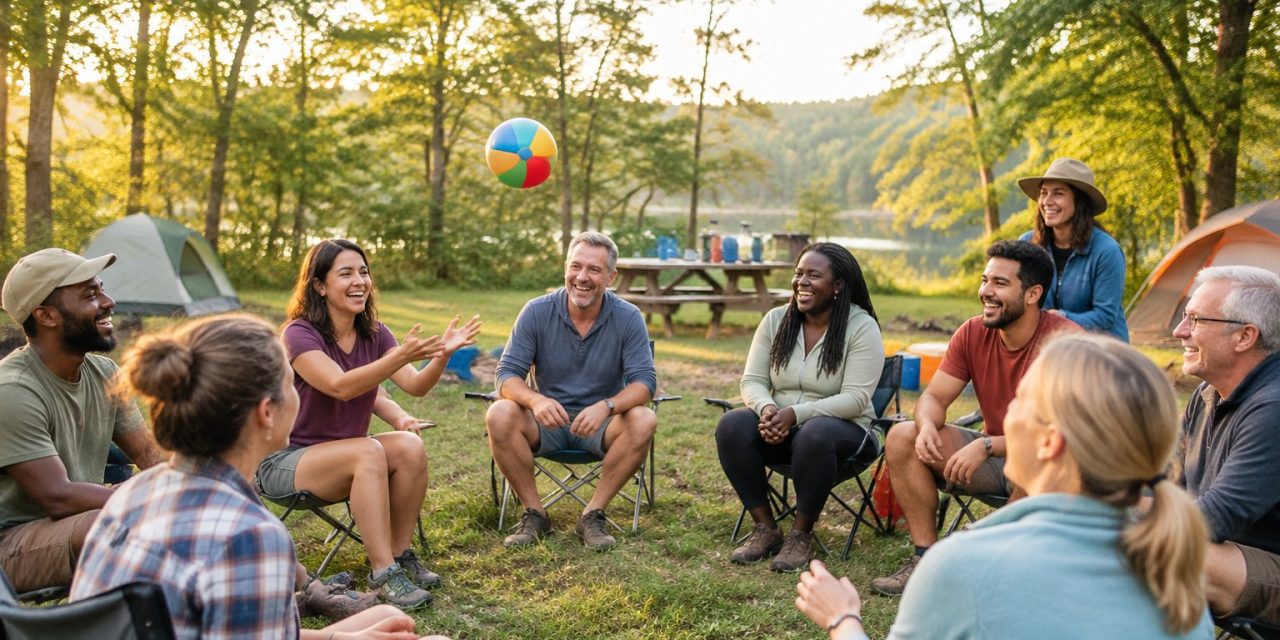
There’s a specific kind of magic that happens when two camping parties who’ve never met end up laughing together over a beanbag toss or a half-finished scavenger hunt list. We’ve watched it happen more times than we can count, and it never gets old.
The games that spark that magic share a few traits: low stakes, easy entry points, and rules simple enough to explain in thirty seconds flat. A quick round of cornhole with rotating partners, Human Bingo, or a nature scavenger hunt turns neighboring campsites into new friend groups faster than almost any other campground activity, because they hand strangers an instant reason to talk without anyone having to engineer a conversation.
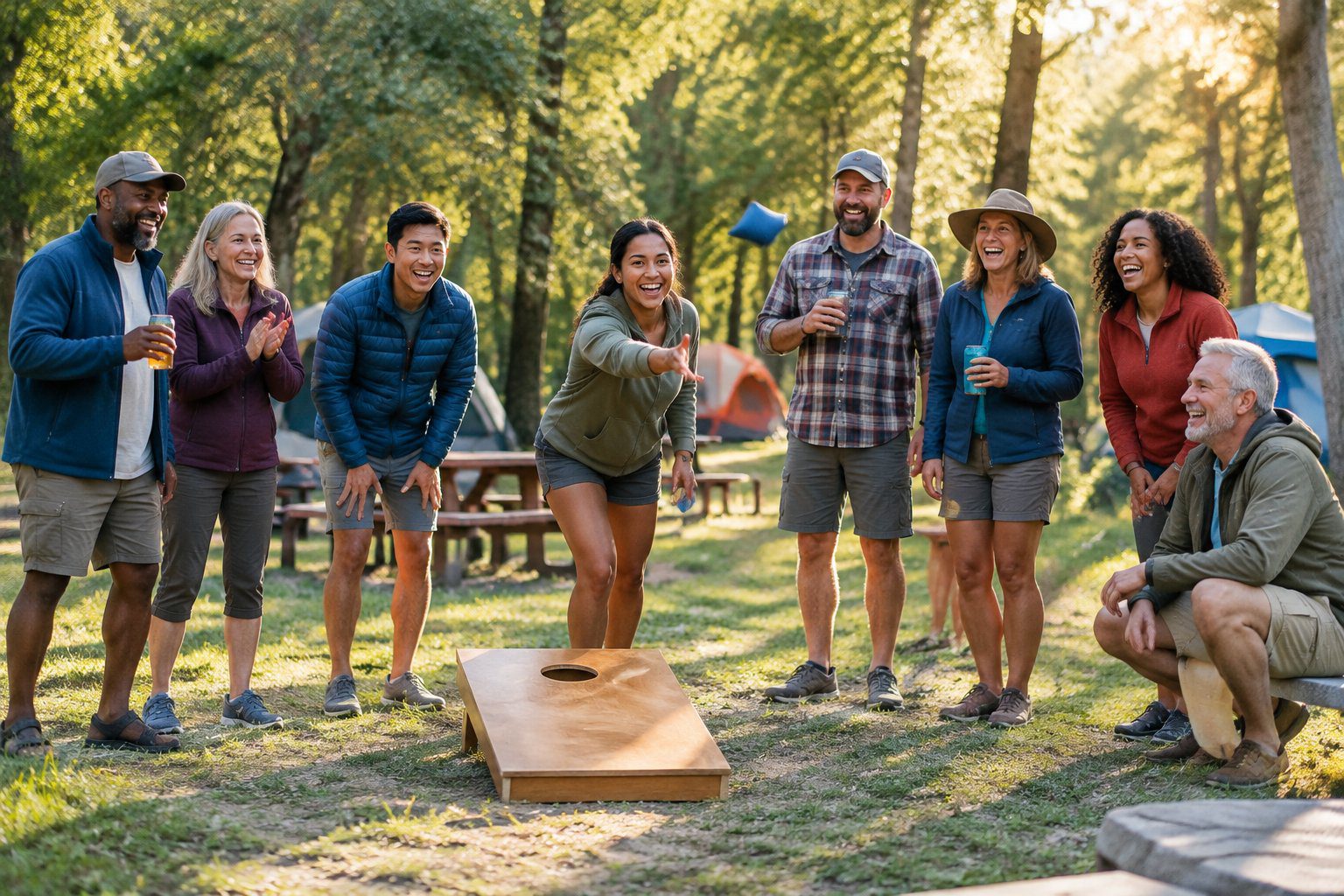
This list ranks 20 campground games by how fast they break the ice, how easily a newcomer can jump in mid-round, and whether you’ll need an open field or just the space around your picnic table. We’ve sorted out which ones work in a tight site and which ones need a designated clearing, plus how to keep things friendly during quiet hours.
Quick picks:
- Best true icebreaker: Human Bingo turns small talk into a built-in mission.
- Best for tight campsites: Two Truths and a Lie needs zero equipment or space.
- Best for large groups: Capture the Flag scales to any number of willing legs.
- Best for mixed ages: Beach Ball Name Toss keeps kids and grandparents equally involved.
1) Human Bingo
Human Bingo gets strangers talking faster than almost anything else on this list because the entire point is walking up to people you don’t know. Print or sketch a grid with prompts like “has been camping more than 10 times,” “can start a fire without matches,” or “brought a dog named after a food.” Campers mingle around the site, asking questions until someone fills a row.
The built-in icebreaker here does the heavy lifting for you. Nobody has to think of something clever to say; the card already gave them a question. Newcomers can hop in at any point, mid-game, since there’s no turn order to interrupt.
Keep cards light and specific to camping life rather than generic trivia. A grid with 16 to 25 squares works well for a weekend-sized crowd, and you can hand out blank cards for people to fill in their own prompts if you run out of copies.
2) Team Nature Scavenger Hunt
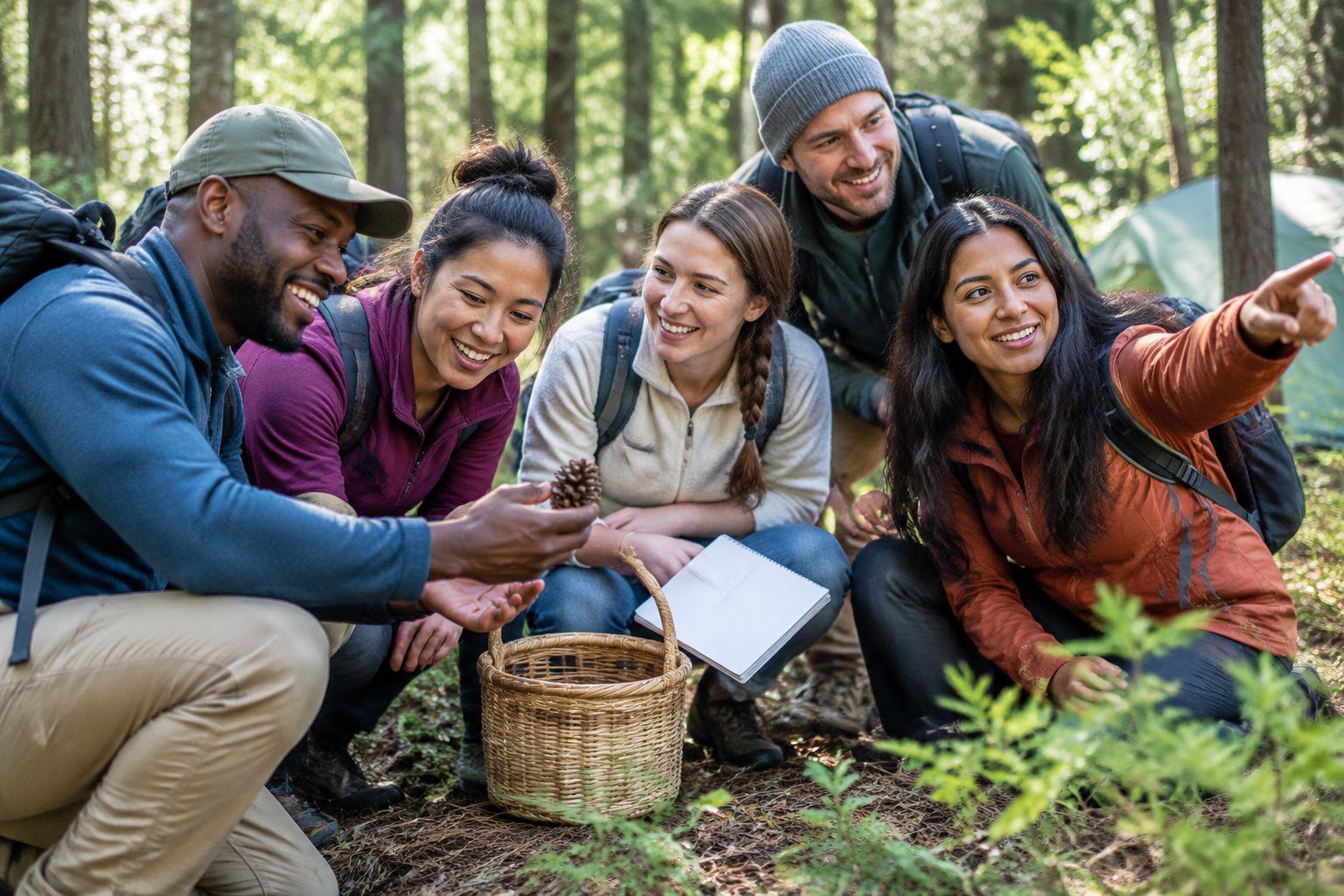
A team scavenger hunt works because it pairs strangers up with a shared task instead of a shared spotlight. Mix campers from different sites into teams of three or four, hand each group a list of items (a pinecone, something red, an animal track, a feather), and set a 20-minute timer.
Shy campers tend to loosen up on a scavenger hunt faster than on games that put them on display. There’s no performance pressure, just a shared goal and some wandering around the woods together.
Anyone can join a team after the hunt starts since the boundaries stay loose and teams naturally spread out and regroup. Keep the search radius inside the campground’s marked trails so nobody wanders into another party’s site uninvited.
3) Cornhole With Rotating Partners
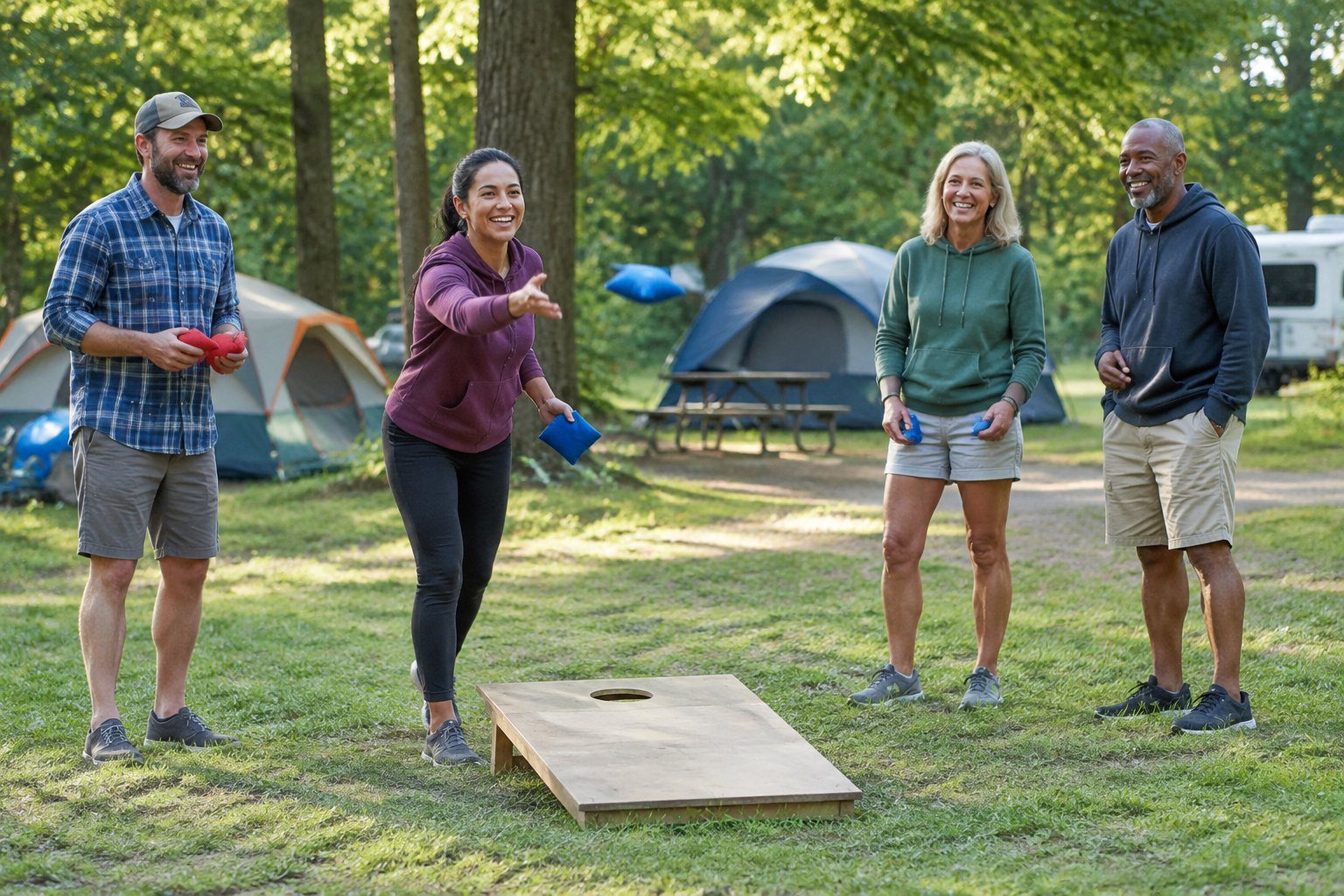
Rotating partners turns cornhole from a two-team rivalry into a mixer. Instead of the same duo playing all afternoon, swap one player out after every game, so each round pairs a different stranger with a different teammate.
This small tweak matters more than it sounds. Static teams finish their games and wander off; rotating teams keep introducing new faces to each other every ten minutes.
Set boards 27 feet apart for adults and halve that for kids under eight. A bag through the hole scores 3 points, one resting on the board scores 1, and most groups play to 21 using cancellation scoring. Cornhole sets fold flat and fit in a cargo area