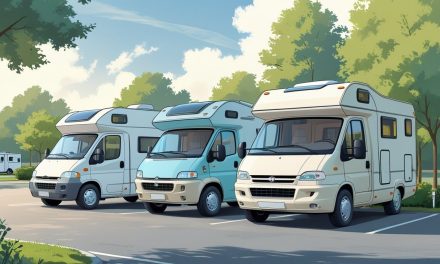
You’ve seen the massive Class A motorhomes gliding down the highway, looking like luxury apartments on wheels. They’re impressive, expensive, and… maybe not the best choice anymore? More RVers in 2026 are making the unexpected move to downsize, swapping their high-priced palaces for smaller, used rigs bought off Facebook Marketplace.
The result? Happier campers, fatter wallets, and more freedom on the open road. In this Wild RV Life journey, a couple trades their 2026 Brinkley G3250 for a budget-friendly used RV—and they couldn’t be more content with the decision.
Let’s dive into why this downsizing trend is taking over the RV community and why you might want to consider it too.
Would you like to save this article?
1. Your Wallet Will Thank You (Like, A LOT)
Let’s talk money, honey. The average RV owner with a financed travel trailer spends between $800 to $1,800 per month in total ownership costs. That’s mortgage-level cash flowing out the door! Full-time RVers in motorhomes? They’re shelling out $2,500 to $8,000+ monthly depending on their rig.
When you downsize to a cheaper used RV, you’re not just saving on the purchase price. You’re cutting insurance premiums, slashing fuel costs, reducing maintenance bills, and lowering registration fees. It’s like giving yourself a raise without asking your boss.
Here’s a quick comparison:
| Expense Category | Large New RV | Smaller Used RV |
|---|---|---|
| Monthly Payment | $800-$2,000 | $0-$500 |
| Insurance | $200-$400 | $75-$150 |
| Fuel (per trip) | $300-$600 | $100-$250 |
| Storage | $150-$300 | $50-$100 |
You’ll wonder why you didn’t make the switch sooner. Instead of stressing over that monster payment, you could be stashing cash for more camping adventures, better campground stays, or that fancy espresso machine you’ve been eyeing. The financial freedom alone makes downsizing a no-brainer for budget-conscious adventurers.
2. The Empty Nest Advantage: More Space Than You Actually Need
Remember when the kids were young and you needed that massive rig with bunk beds, toy storage, and enough room for everyone to have their own space? Times have changed. The children have flown the coop—off to college, starting careers, building their own lives.
Now you’re rattling around in an RV designed for six people when it’s just you and your partner. According to MARVAC, one of the top reasons RVers downsize is because the family has gotten smaller. Sure, the kids might join you for an occasional weekend trip, but do you really need 40 feet of living space year-round for that?
Here’s the kicker: a smaller RV actually feels cozier and more intimate. You’re not wandering from one end to the other looking for your spouse. Everything you need is within arm’s reach, and you’ll spend less time cleaning and more time enjoying nature. Plus, you’ll appreciate the simplicity of a space that’s just right for two.
3. Maneuverability: Because Parking Shouldn’t Require a PhD
If you’ve ever tried to park a 38-foot motorhome at a grocery store or squeeze into a tight campground spot, you know the struggle is real. Large RVs are heavy, wide, and come with restricted visibility that would make a submarine captain nervous.
Downsizing means you can actually navigate city streets without breaking into a cold sweat. You’ll fit into regular parking spaces, make tighter turns, and experience less sway on the highway. Running errands becomes possible—not a logistical nightmare requiring scouting missions and backup cameras.
You might even enjoy driving again. Instead of white-knuckling the steering wheel every time you need to make a lane change, you’ll cruise confidently knowing your smaller rig can handle whatever the road throws at you. Campground hosts will stop giving you that worried look when you check in, too.
4. Facebook Marketplace Gold: The Used RV Market Is Booming
Here’s a little secret: smart RV buyers in 2026 are actively avoiding new RVs and hunting for well-maintained used ones instead. Why? Because used RV sales saw positive year-over-year growth of 1.57% in February 2026, while new RV sales continue to struggle.
The used market is a treasure trove of value. People are selling quality rigs at amazing prices because they’re upgrading, downsizing themselves, or getting out of the RV lifestyle. Facebook Marketplace has become the go-to platform for finding these deals—no dealership markup, no pushy salespeople, just person-to-person transactions.
The best part? Depreciation has already happened. New RVs lose value faster than you can say “buyer’s remorse,” dropping 20-30% the moment they roll off the lot. When you buy used, someone else already absorbed that financial hit. You’re getting a proven rig at a fraction of its original cost, and if you take care of it, it’ll hold its value much better than a new model would.
5. Go Green Without Trying: The Eco-Friendly Side Effect
Smaller RV = smaller carbon footprint. It’s really that simple. When you downsize, you automatically reduce your environmental impact without sacrificing the RV lifestyle you love.
Think about it: smaller holding tanks mean less waste, lower fuel consumption means fewer emissions, and reduced electricity needs open the door to solar power. Many smaller RVs can run entirely on solar after a modest investment, making you practically off-grid capable.
Mother Nature approves, and so does your conscience. You’ll use less propane for heating, less water overall, and produce less waste. If sustainability matters to you—even a little—downsizing your RV is one of the most practical ways to lighten your environmental load while still exploring this beautiful planet.
6. Simplicity Is the Ultimate Luxury
Here’s something nobody tells you: the more space you have, the more junk you’ll accumulate. It’s like a law of physics specifically designed for RVers. That extra storage compartment? It’ll magically fill itself with stuff you don’t need and won’t miss.
Downsizing forces you to be intentional about what you keep. You’ll keep only what’s essential and important—no room for the “just in case” items that never get used. This isn’t deprivation; it’s liberation.
You’ll discover that experiences matter more than possessions. Without the clutter, you’ll focus on what you’re doing, where you’re going, and who you’re sharing the journey with. Plus, with less weight to haul around, your tow vehicle (or motorhome engine) will perform better and last longer. It’s a win-win situation wrapped in minimalist wisdom.
7. Access to Hidden Gems: Campgrounds the Big Rigs Can’t Reach
Ever see those stunning national forest campgrounds with sites tucked under towering pines, right beside babbling brooks? Yeah, those spots have length restrictions that lock out the behemoths. Many of the most beautiful, affordable, and peaceful campgrounds cap RV length at 25-30 feet.
When you downsize, you unlock access to these hidden gems that big rig owners can only dream about. You’ll camp in places where the crowds don’t go, where nightly rates are half what you’d pay at a commercial RV park, and where the scenery is absolutely breathtaking.
You’ll also have more spontaneity in your travels. That last-minute weekend trip? No problem—there’s almost always room for a smaller rig. That dirt road leading to a gorgeous boondocking spot? You can handle it. The freedom to go wherever your adventure takes you is worth more than all the slideouts and king-size beds in the world.
The Bottom Line: Bigger Isn’t Always Better
The downsizing movement isn’t about sacrifice—it’s about getting more of what actually matters. More money in your pocket, more freedom on the road, more access to incredible places, and more focus on experiences over things.
The Wild RV Life couple proved that happiness doesn’t require a luxury rig. Their Facebook Marketplace find gave them everything they needed and none of what they didn’t. They’re spending less, stressing less, and enjoying more.
Maybe it’s time you considered the same. Your perfect RV might be smaller, cheaper, and more liberating than you ever imagined.
SOURCES
https://www.michiganrvandcampgrounds.org/6-reasons-why-it-may-be-time-to-downsize-your-rv/
https://truervs.com/blog/how-much-does-it-really-cost-to-own-an-rv-2026-breakdown