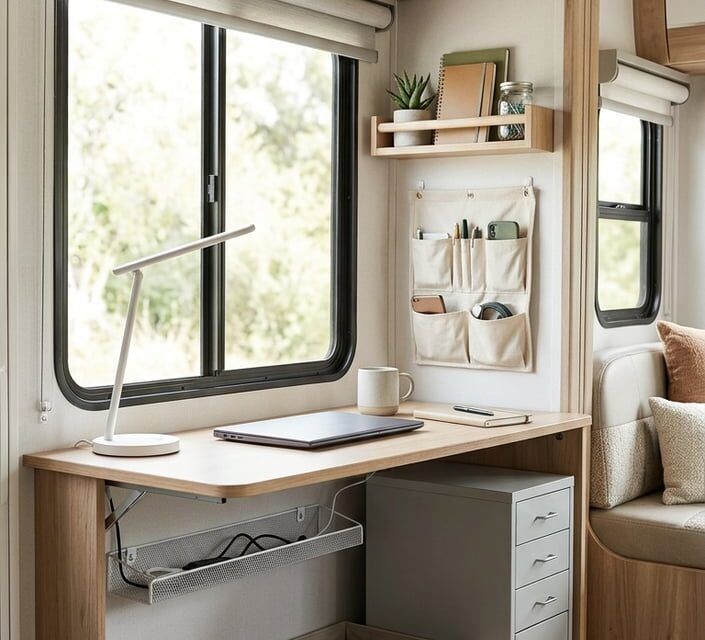
A cluttered desk can make your RV workspace feel cramped and slow down everyday tasks. You can keep your RV desk clear by moving supplies onto walls, securing loose gear, and giving drawers and bins defined jobs.
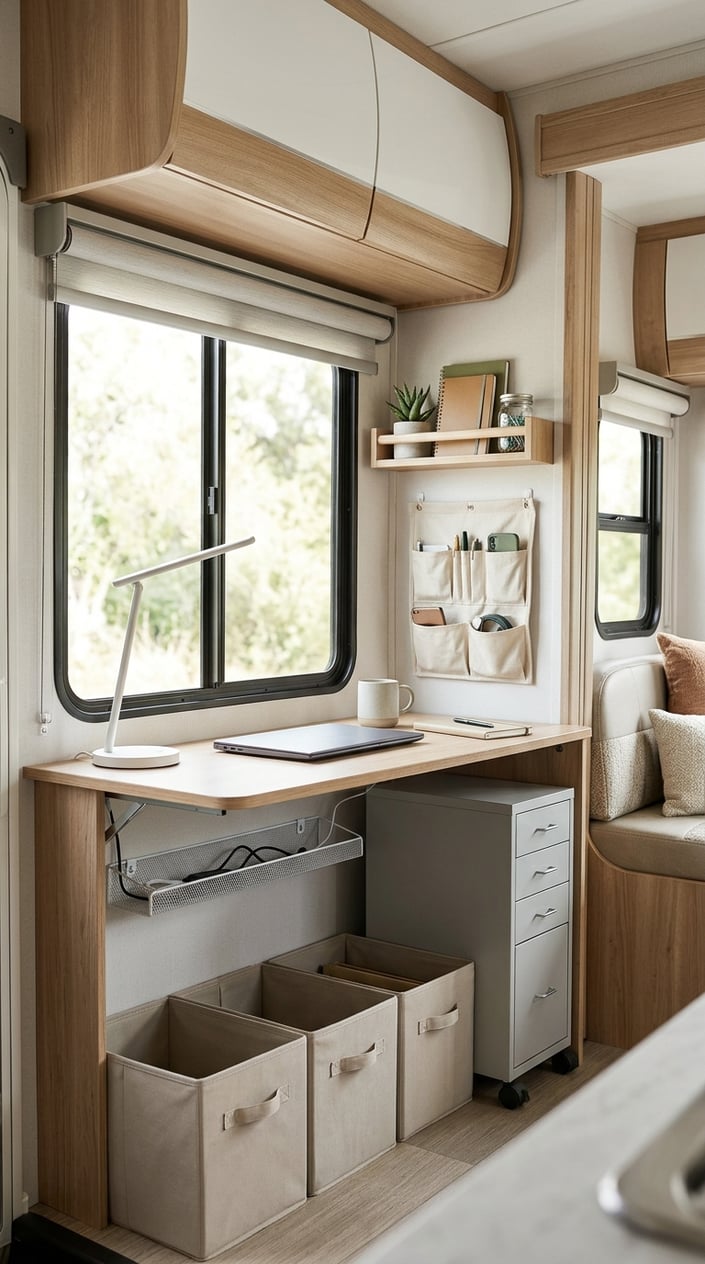
With a few space-saving changes, you can make room for a laptop, paperwork, or a quick meal without letting office supplies take over your limited counter space. Choose lightweight storage and secure each item before you travel.
1) Install a Wall-Mounted Fold-Down Desk
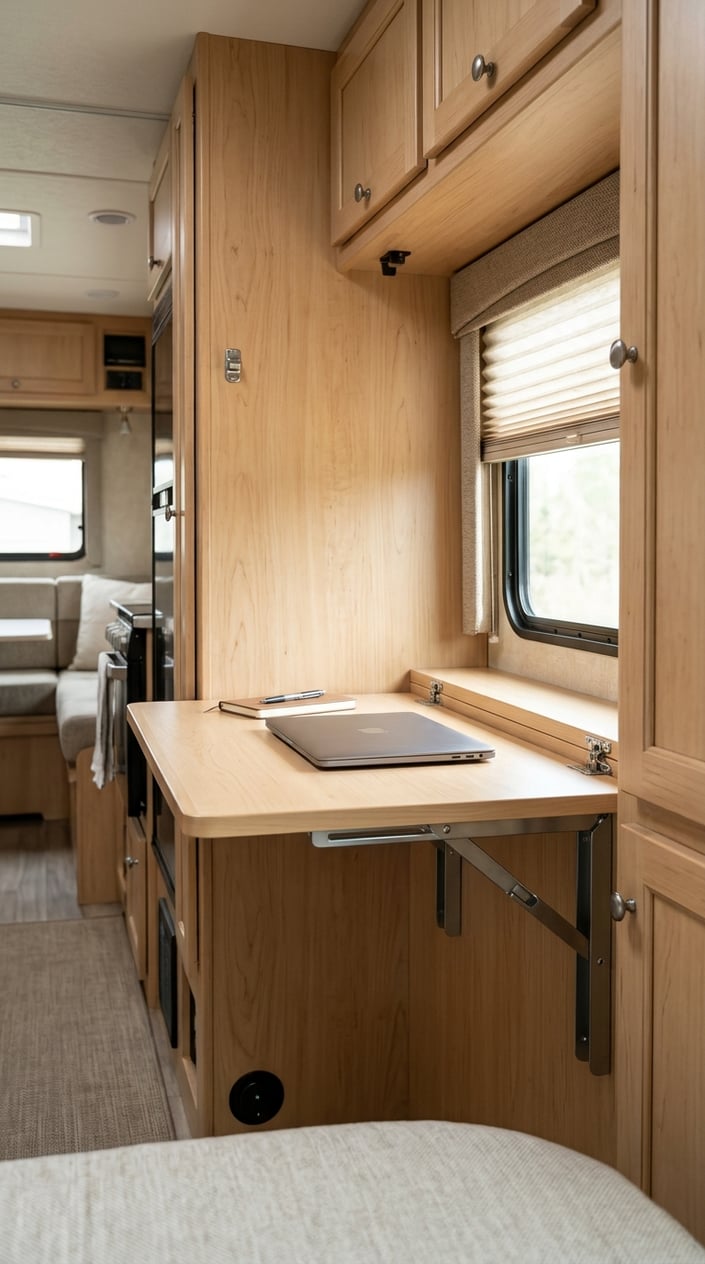
A wall-mounted fold-down desk gives you a work surface that tucks away when you need more room. Pick a size that fits your laptop and writing needs, then check that the folded desk leaves walkways and doors clear.
Before mounting, check your RV’s wall structure and look for wiring or plumbing behind the surface. Use hardware suited to the wall and desk weight, and follow the desk maker’s installation directions. When you drive, fold and latch the desk, then stow the items on top.
2) Add a Slim Floating Shelf for Everyday Supplies
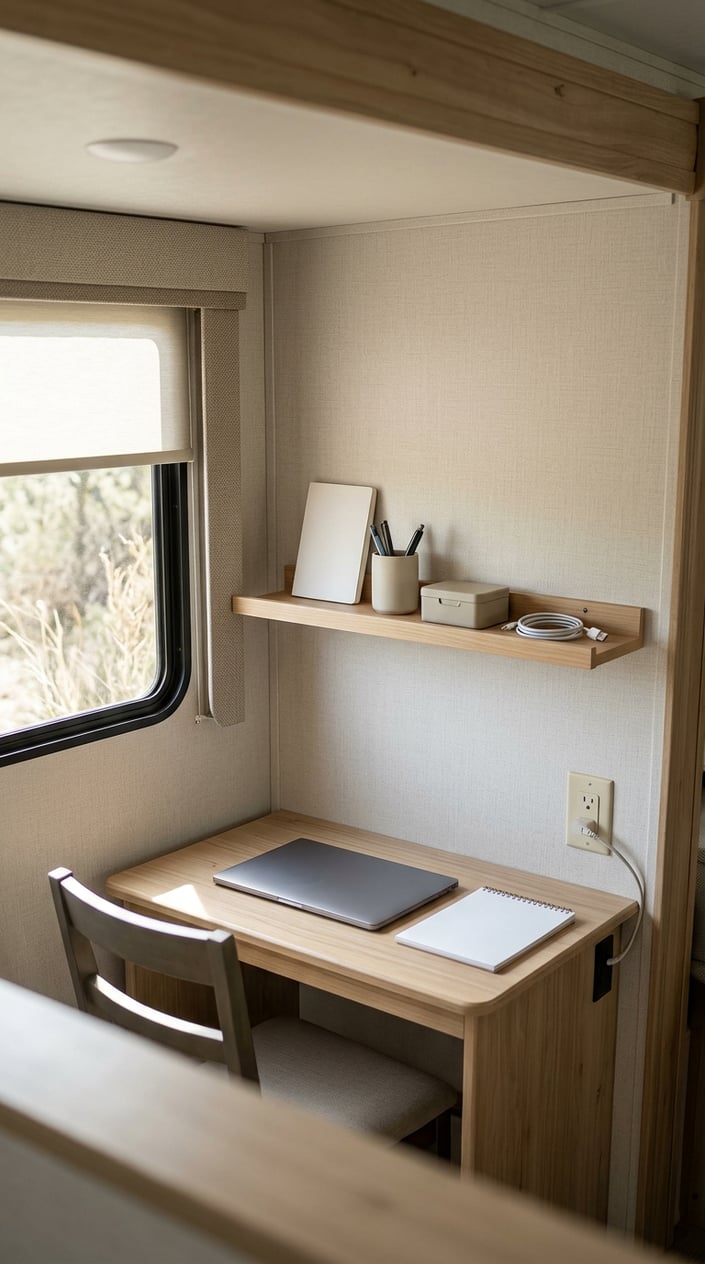
A slim floating shelf puts daily-use supplies within reach while keeping the desk surface open. Keep the shelf shallow, and reserve it for lightweight items such as a notebook, pens, or a small charging dock.
Measure the wall and the space above your desk before choosing a shelf. Mount it into suitable support with hardware rated for the load, and add a small lip or removable shelf liner to help keep supplies in place. Clear the shelf before travel if its contents are loose.
3) Hang an Adhesive Shoe Organizer for Small Gear
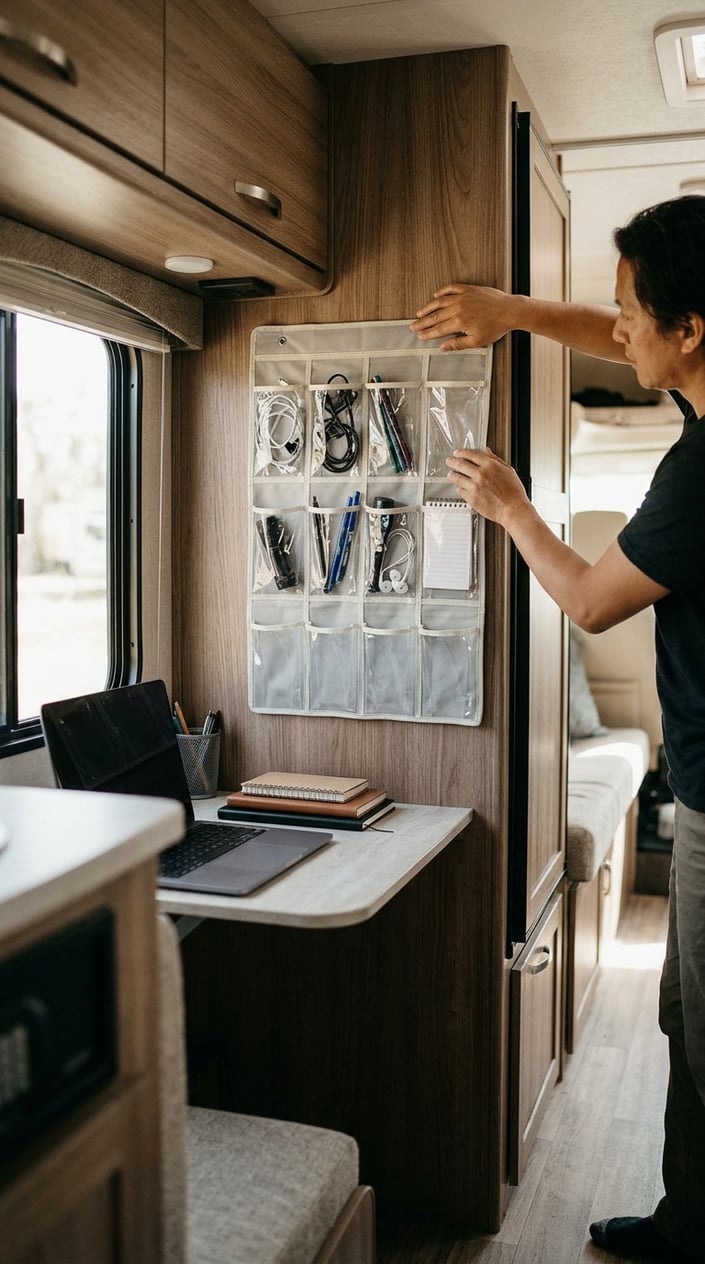
An adhesive shoe organizer turns unused wall space into pockets for small office gear. Use the pockets for items such as sticky notes, pens, charging bricks, or headphones, and label them if you share the workspace.
Choose an organizer with pockets sized for your supplies, then check the adhesive instructions for approved surfaces and weight limits. Clean and dry the wall as directed before attaching it, and allow the stated set time before loading it. Empty the pockets before driving if their contents might spill.
4) Mount a Magnetic Strip for Metal Office Tools

A magnetic strip keeps small metal tools visible and easy to grab while freeing drawer space. Use it for items such as scissors, clips, or a metal ruler, and place it where you can reach it without leaning across your desk.
Follow the mounting directions and check that the strip is secured to a suitable surface. Test each item’s hold before placing it there, since magnets do not grip every metal. Remove the tools before travel unless the strip and its mounting are designed to keep them safely in place.
5) Use Adhesive Hooks for Headphones and Bags
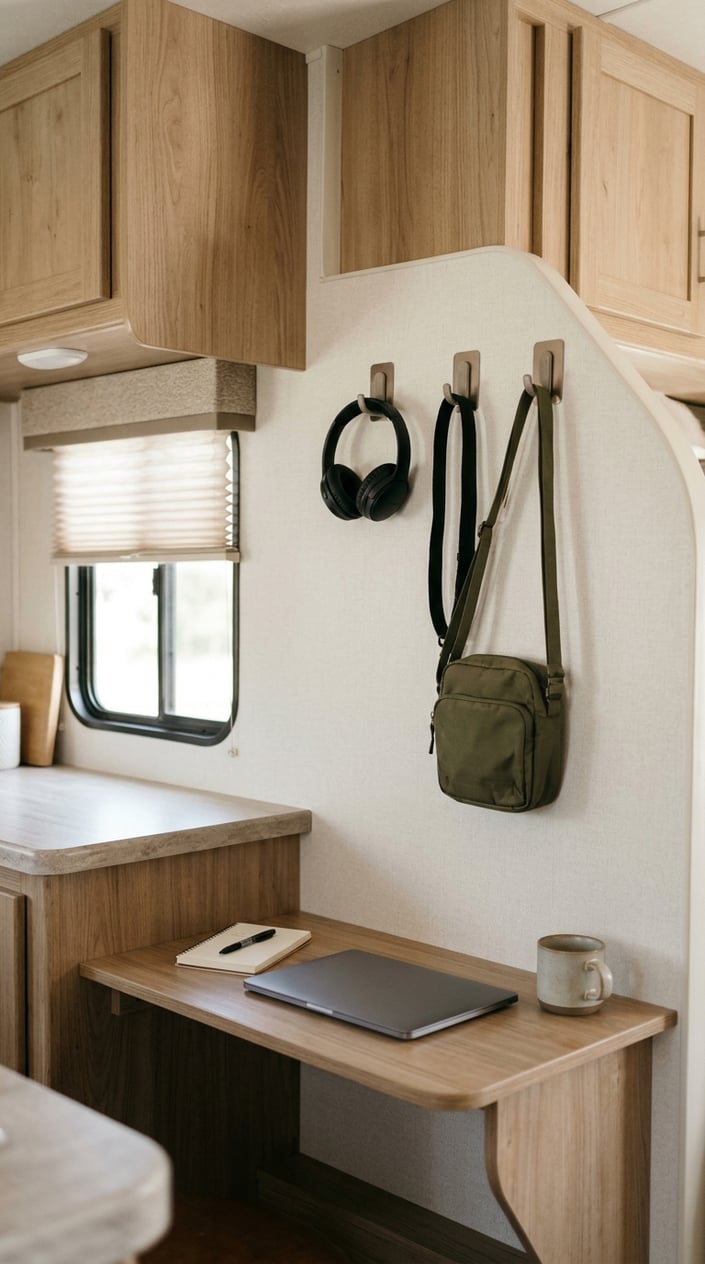
Adhesive hooks give headphones, a small bag, or a charging cable a regular place beside your desk. Choose hooks with a load rating that suits each item, and position them so hanging gear stays clear of the chair and walkway.
Clean the mounting spot and follow the product’s directions for surface type, weight, and curing time. A hook near the desk edge makes headphones easy to reach; a lower hook can hold a light bag. Take hanging items down before driving to prevent swinging or falling.
6) Tame Charging Cords With Cable Clips
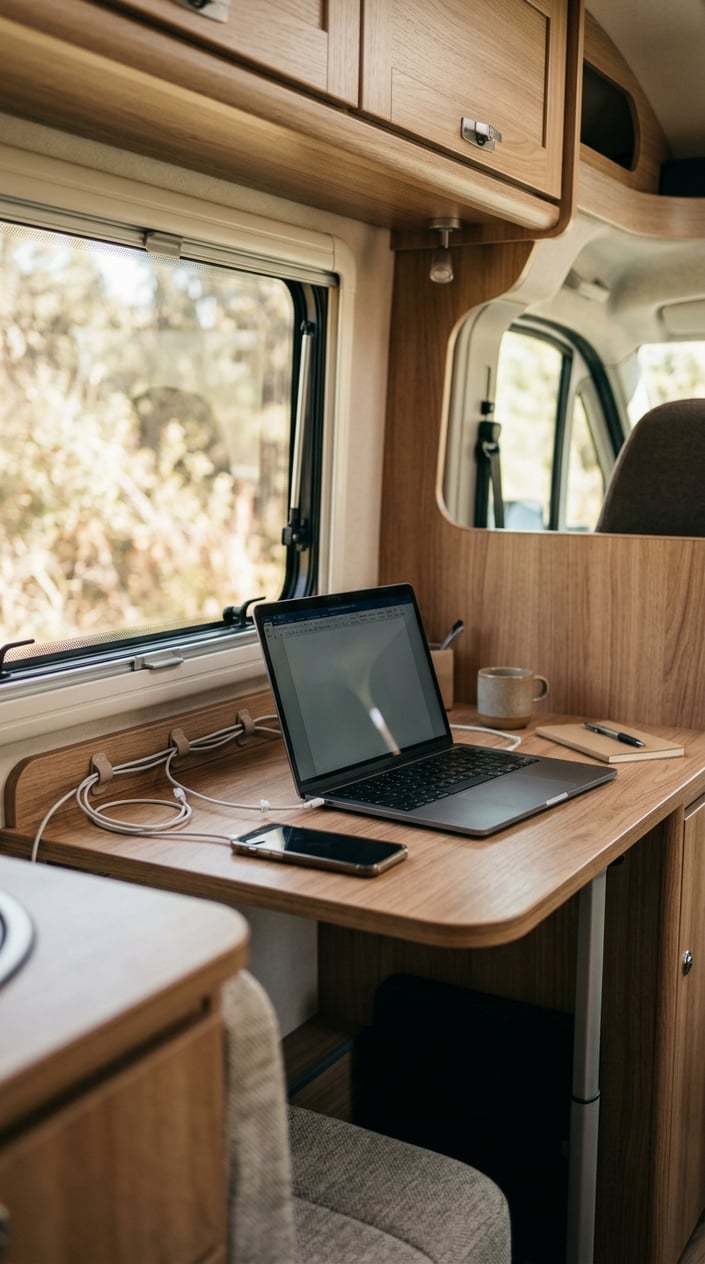
Cable clips keep charging cords routed along the desk edge, so they stay easy to find and out of your work area. Use one clip for each cable you reach for often, and leave enough slack to connect your phone or laptop without pulling on the plug.
Wipe the surface as directed before attaching the clips, then press each cord into its channel. Group extra cable length with a reusable tie and keep cords away from hinges or moving desk parts. Unplug and stow loose cables before travel.
7) Fit Non-Slip Dividers Into Desk Drawers

Non-slip drawer dividers keep pens, paper clips, and other small supplies from mixing together. Measure the drawer’s inside width and depth first, then choose adjustable dividers or trays that fit without blocking the drawer’s movement.
Line the drawer with a grippy liner if items slide when the RV moves. Give each compartment a purpose, such as writing tools or charging accessories, and leave room for the drawer to close fully. Before driving, check that the dividers fit snugly and the contents sit below the drawer edge.
8) Stow Supplies in Latching Stackable Bins
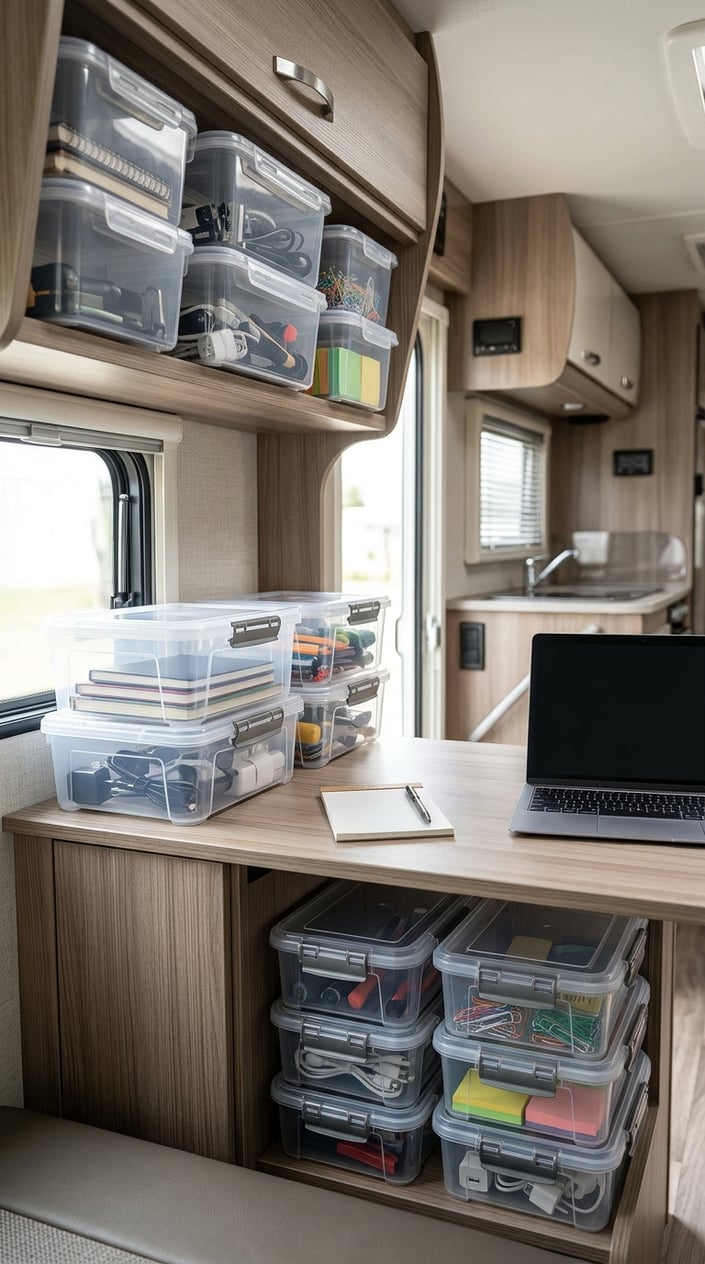
Latching stackable bins group extra supplies and keep them contained when you travel. Choose compact bins that fit a cabinet, closet, or space beside your desk, then sort items by use so you can find refills without unpacking everything.
Use clear bins or add labels for printer paper, craft supplies, or backup chargers. Check that each lid latches and that the stack fits securely in its storage spot. Keep heavier bins low, and leave room to lift them out without blocking your desk.
How to Choose RV Desk Storage
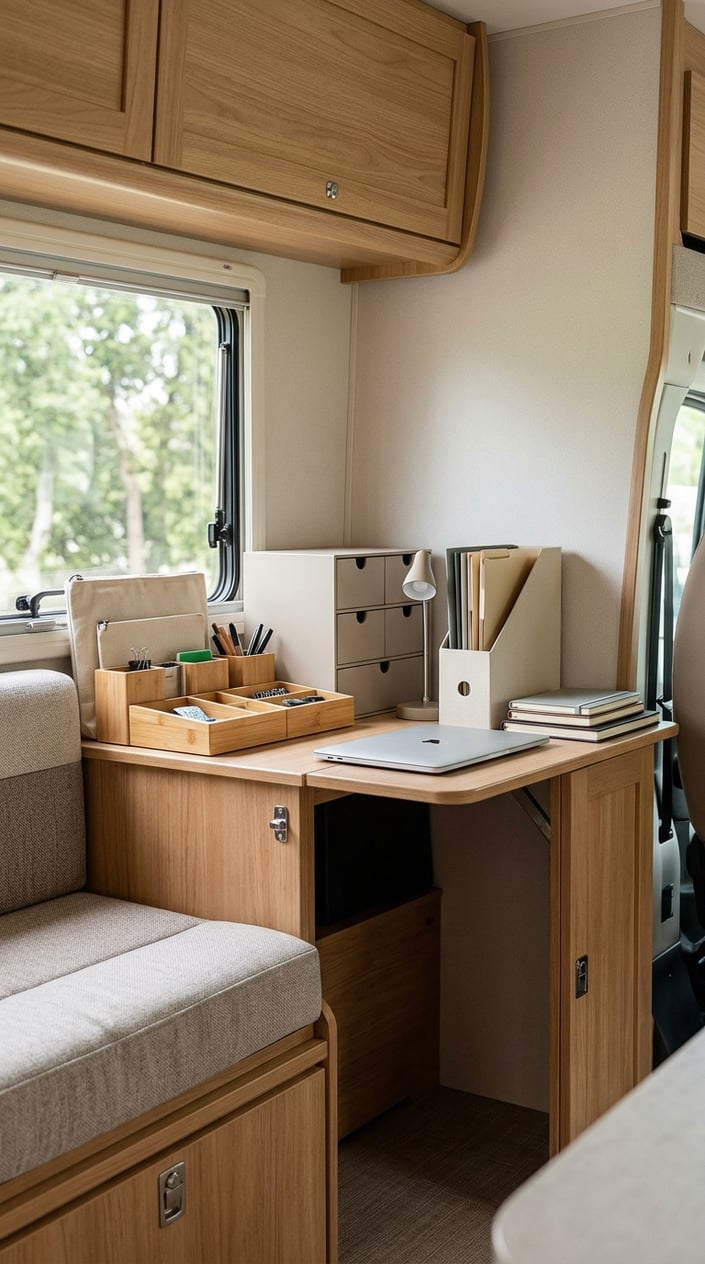
Choose RV desk storage by measuring your work area, checking how each item will stay put on the road, and confirming that its mounting method suits your RV.
How Much Workspace Do You Need to Keep Clear?
Start by listing the tasks you do at your desk, such as laptop work, writing, or sorting mail. Measure the surface you need for those tasks, then plan storage around it so frequently used supplies stay accessible without taking up your main work area.
A fold-down desk suits a spot that serves more than one purpose. A shelf or wall pockets work well when you want to keep a fixed desk open. Leave enough space for the chair and for opening nearby drawers or cabinets.
Will the Storage Stay Secure While the RV Is Moving?
Treat travel security as part of the setup. Use latching bins for loose supplies, close and latch a fold-down desk, and remove items from shelves or hooks if they can shift or fall.
After installing storage, give it a gentle check and confirm that drawers close fully. Before each drive, stow loose gear and make sure bins cannot slide out of cabinets. Keep heavier supplies low and secure them in a closed compartment.
Can You Mount It Without Damaging the RV?
Check the RV wall material and the storage maker’s mounting instructions before attaching anything. Adhesive products need a compatible, clean surface, while shelves and desks may need support suited to the wall and the load.
Measure the mounting area and check for wiring or plumbing before drilling. If you are unsure about the wall’s construction, ask your RV dealer or a qualified installer to help identify a safe mounting point.