
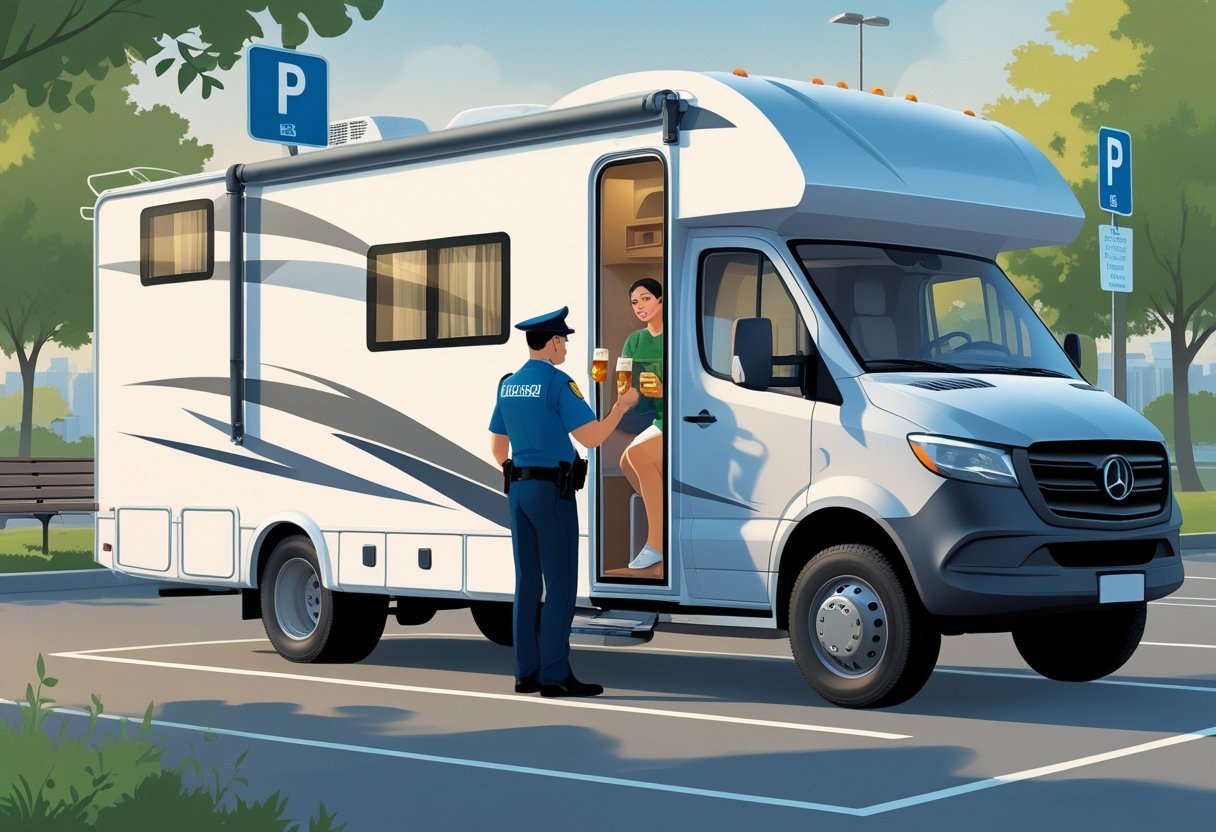
RV owners often wonder about the rules for enjoying a cold drink while their vehicle is stationary. When an RV is parked, drinking alcohol inside is generally legal, but the specific rules depend heavily on where the RV is located.
The key factor is not whether the RV is parked, but rather where it sits when parked.
The legal status of drinking in a parked RV shifts from vehicle open container laws to rules about public consumption and property regulations. In designated campgrounds, drinking is usually allowed inside the RV.
On public streets or rest stops, local laws may prohibit alcohol consumption even inside a parked vehicle. On private property with permission, RV owners typically face no restrictions.
State laws vary widely, and local ordinances add another layer of complexity. This guide breaks down the specific regulations that apply to different parking situations.
Key Takeaways
- Drinking in a parked RV is legal in most campgrounds but often prohibited on public streets and rest stops
- The location where the RV is parked determines which laws apply, not just whether the vehicle is stationary
- State and local regulations differ significantly, so checking specific rules for each destination prevents legal issues
Legal Definition of Drinking in a Parked RV
Would you like to save this article?
The legal definition of drinking in a parked RV depends on whether the vehicle is moving or stationary and where it sits. Laws treat parked RVs differently than moving ones, and location plays a major role in determining what’s legal.
Distinction Between Parked and Moving RVs
Open container laws apply differently when an RV stops moving. While the vehicle is in motion, most states enforce strict rules about where alcohol can be located inside the RV.
The driver cannot drink alcohol or have open containers within reach under any circumstances. Once parked, the legal framework shifts.
Many jurisdictions stop treating the RV as a motor vehicle and start viewing it more like a temporary home. This change in status affects how open container laws apply to the occupants inside.
The driver still faces restrictions even when parked. In states like California, drivers cannot consume alcohol while behind the wheel regardless of whether the RV is moving or stationary.
Passengers face fewer restrictions once the vehicle is fully parked and stationary.
Impact of Location: Private Land vs. Public Spaces
Location determines whether drinking in a parked RV is legal. Private property with the owner’s permission generally allows alcohol consumption inside an RV.
This includes driveways, private campsites, and businesses that permit overnight parking. Public property creates more legal complications.
Parking on public streets, rest stops, or public parking lots and drinking inside the RV often violates local ordinances. These laws prohibit public consumption of alcohol, and sitting inside an RV on public land doesn’t always provide legal protection.
Designated campgrounds fall into a middle category. Most private, state, and national park campgrounds allow alcohol consumption inside RVs, but individual facilities can set their own rules.
Some parks ban alcohol entirely or limit where people can drink it.
Legal Status of RV as a Residence While Parked
Laws in both the U.S. and Canada recognize a parked RV as a residence rather than a vehicle. This residential status matters because it removes the RV from standard vehicle regulations and applies property-based rules instead.
The residential classification isn’t automatic. Parking briefly on the roadside doesn’t convert an RV into a residence under the law.
State codes often specify that the RV must be properly parked and set up at an appropriate location. This residential status affects how RV open container laws work.
Once the RV qualifies as a residence, typical open container restrictions for vehicles no longer apply in the same way. The rules shift to local regulations about alcohol consumption in residences and public intoxication laws that apply regardless of location.
Open Container Laws and Parked RVs
Open container laws regulate where alcoholic beverages can be stored and consumed in vehicles, including RVs. When an RV is parked, these laws shift from traffic regulations to property-based restrictions that depend on location and local ordinances.
Overview of RV Open Container Laws
Open container laws make it illegal to have unsealed alcohol containers in the passenger area of a motor vehicle. Most states enforce these rules, though the specific details vary widely across the country.
RVs receive special treatment under many state laws because they have separate living quarters. This “living quarters exception” allows open containers in the back portion of an RV, away from the driver’s area.
The exception does not apply everywhere, and some states set specific requirements for it to work. For example, Florida and Louisiana require an RV to be over 21 feet long for the living quarters exception to apply.
When valid, the exception lets passengers keep open alcohol containers in the living area while keeping them out of the driver’s reach. Penalties for violations range from $100 fines in North Carolina to $250 or more in California for first offenses.
Applicability to Parked Versus Moving RVs
The rules change significantly when an RV stops moving. Open container laws focus mainly on vehicles in motion to prevent driver impairment and maintain road safety.
Once parked, an RV functions more like a temporary residence than a vehicle. The legal focus shifts from traffic laws to property regulations and public consumption rules.
This means the location where the RV is parked matters more than whether containers are open inside. Most campgrounds allow alcohol consumption inside parked RVs, though individual facilities may have their own restrictions.
Some parks prohibit alcohol completely or limit drinking to specific areas. Public property locations like rest stops and street parking usually maintain stricter rules against alcohol consumption, even inside a parked vehicle.
State Variations in Enforcement
No federal law standardizes alcohol rules for RVs across all states. Each state creates its own open container laws, and local jurisdictions add their own ordinances on top of state rules.
Some states enforce strict prohibitions on any open containers in vehicles, regardless of whether they are moving or parked on public property. Other states take a more lenient approach, especially when RVs are parked in designated camping areas or on private property with permission.
Travelers need to check regulations for each state on their route. State Department of Motor Vehicles (DMV) websites and Alcoholic Beverage Control (ABC) boards provide current information about local laws.
Campground websites often list their specific alcohol policies, and some parks require permits ranging from $35 to $250 or more depending on the state and facility type.
State-Specific Differences for Alcohol Consumption in Parked RVs
Laws about drinking alcohol in parked RVs change dramatically depending on the state and local jurisdiction. Some states permit it freely while others impose strict limits based on where the RV is parked and how it’s classified.
States Permitting Alcohol Consumption in Parked RVs
Most states allow alcohol consumption in parked RVs when they are located in designated areas like campgrounds or on private property. The RV becomes treated as a temporary residence rather than a vehicle once it’s parked and stationary.
Florida and Louisiana have specific requirements for their living quarters exceptions. Both states require RVs to be over 21 feet long for open container law exemptions to apply.
Private campgrounds typically permit alcohol consumption inside RVs. State and national park campgrounds also generally allow it, though individual parks may have their own rules.
Private property offers the most flexibility. RV owners can consume alcohol in their parked vehicles on private land with the owner’s permission, such as in a friend’s driveway or at businesses that allow overnight parking.
States With Strict Prohibitions
Open container laws in many states prohibit alcohol consumption in vehicles parked on public property. This includes public streets, rest stops, and publicly accessible parking lots.
Local ordinances frequently ban public alcohol consumption. Being inside an RV on public property doesn’t always provide an exemption from these rules.
The penalties for violating open container laws vary widely. North Carolina fines start around $100 for first offenses.
California charges $250 or more. Some states impose jail time for repeat violations.
Public intoxication laws remain in effect even inside a parked RV. Disruptive behavior can lead to charges regardless of location.
RV Size and Living Area Considerations
The physical characteristics of an RV affect which laws apply. Some states distinguish between different RV types and sizes when determining legal alcohol consumption.
The living quarters exception requires a clear separation between the driver’s compartment and living areas. This distinction matters even when parked in some jurisdictions.
Certain states mandate minimum RV lengths for open container exemptions. The 21-foot requirement in Florida and Louisiana represents one such specification that travelers must consider.
The designated living area must be structurally separate from the driver’s area. This separation determines whether the RV qualifies for exceptions to standard vehicle open container laws.
Practical Guidelines for Drinking in a Parked RV
Following basic safety and legal practices helps RV owners avoid problems when drinking alcohol in their parked vehicle. Where you park matters most, and understanding local laws prevents costly mistakes.
Parking Legally: Choosing the Right Location
Private campgrounds typically allow alcohol consumption inside parked RVs. State and national park campgrounds also permit drinking, but individual facilities may have specific restrictions or outright bans.
Some parks require permits for alcohol consumption. Maryland charges around $35 for these permits, while Tennessee fees can exceed $250.
Checking park rules before arrival saves time and money. Public streets and rest stops present more risk.
Most local ordinances treat drinking in an RV parked on public property the same as public alcohol consumption. The vehicle’s status as a temporary home doesn’t override these laws.
Private property offers the most freedom. RV owners can drink in their vehicles when parked in a friend’s driveway or on business property with permission.
The property owner’s consent removes most legal concerns about public consumption laws.
Handling Open Alcohol Containers Responsibly
RV open container laws shift focus from the driver’s compartment to the entire vehicle when parked. The distinction between living quarters and cab area becomes less important in a stationary RV.
Anyone planning to drive should avoid alcohol completely. DUI laws apply equally to RV operators as they do to regular vehicle drivers.
Penalties include fines, license suspension, and jail time. Public intoxication laws remain in effect even inside a parked RV.
Disruptive behavior that disturbs other campers or park visitors can lead to removal from the property or criminal charges. Keeping noise levels reasonable protects everyone’s right to enjoy their stay.
How to Store Alcohol Properly in Your RV
Sealed containers belong in dedicated storage areas away from the driver’s seat. Cabinets, refrigerators, and storage compartments in the living area work well for bottles and cans.
Open containers need secure locations that prevent spills during travel. The refrigerator provides the safest option for opened beverages.
Cup holders and counter spaces risk creating messes when the RV moves. Temperature control matters for beer and wine.
RV refrigerators maintain proper storage conditions, but cabinet temperatures can fluctuate significantly. Spirits handle temperature changes better than other alcoholic beverages.
Proper storage also means keeping alcohol out of reach when driving resumes. Moving all open containers to sealed storage or disposing of them before departure keeps the RV compliant with state traffic laws.
Potential Risks and Legal Consequences
Drinking in a parked RV carries serious legal risks that vary by location and circumstance. Violations can lead to criminal charges, fines, and long-term impacts on driving privileges and insurance rates.
DUIs and Alcohol-Related Charges in Parked RVs
Law enforcement can charge RV owners with DUI even when the vehicle is parked. If someone sits in the driver’s seat with access to the keys while intoxicated, officers may consider this intent to operate the vehicle.
This applies regardless of whether the engine is running. Some states define “operating” a vehicle broadly.
Being in physical control of an RV with the ability to move it can trigger DUI charges. The location matters significantly.
Parking on a roadside or highway increases the risk of charges compared to being in a designated campsite. Officers often interpret parked RVs on public roads differently than those settled in private areas.
Blood alcohol content above the legal limit combined with keys in the ignition creates strong grounds for arrest.
Consequences of Violating Open Container Laws
Open container violations in parked RVs typically result in fines starting at $100 for first offenses. Repeat violations can escalate fines to $500 or higher depending on state regulations.
Some jurisdictions require court appearances for these infractions.
Common penalties include:
- Monetary fines ranging from $100 to $500
- Mandatory court appearances
- Potential misdemeanor charges
- Points added to driving records
When combined with DUI charges, open container violations become more serious. These compound violations can lead to misdemeanor or even felony charges in certain states.
California enforces strict penalties, while Texas can impose up to 180 days in jail for first-time Class B misdemeanor violations.
Impacts on Future Travel and Insurance
Alcohol-related violations create lasting consequences beyond immediate penalties. Insurance companies often raise rates significantly after DUI or open container convictions.
Some providers may refuse coverage entirely. License suspensions prevent RV owners from legally operating their vehicles for months or years.
These suspensions affect travel plans and limit the ability to drive any vehicle. Criminal records from alcohol violations appear in background checks, potentially affecting employment and housing applications.
RV park policies become more restrictive for those with violations. Many campgrounds conduct background checks and deny entry to guests with recent alcohol-related offenses.
RV Park, Campsite, and Private Property Rules
Where an RV is parked determines whether drinking alcohol inside is legal. Most campgrounds allow alcohol consumption, but each location has its own rules that RV owners must follow.
Drinking Regulations at Campsites and RV Parks
Most private campgrounds, state parks, and national park campgrounds permit alcohol consumption inside RVs at designated campsites. The RV functions as a temporary residence once parked at a campsite, which means standard open container traffic laws no longer apply.
However, not all parks allow alcohol. Some campgrounds ban alcohol completely or restrict where people can drink it.
Many state and national parks require visitors to keep alcohol inside their RV or at their specific campsite only. Certain parks charge fees for alcohol permits.
Maryland charges around $35 for alcohol permits at some facilities. Tennessee can charge $250 or more at certain locations.
RV owners should check the campground’s website or call ahead to confirm alcohol policies before arrival. Public intoxication laws still apply at campgrounds.
Drinking is legal, but becoming disruptive or visibly intoxicated can result in penalties or removal from the property.
Private Property Exemptions and Policies
Drinking alcohol in a parked RV on private property is legal with the property owner’s permission. This includes driveways, business parking lots that allow overnight stays, and private land.
The RV is treated as a residence on private property. Public consumption laws do not apply in these settings because the vehicle sits on non-public land.
Property owners set their own rules about alcohol consumption. Businesses like Walmart or Cracker Barrel may allow overnight RV parking, but each location has different policies.
Some permit alcohol consumption while others prohibit it. RV owners should confirm the rules with property managers or store employees before drinking.
Dealing With Law Enforcement and Avoiding Issues
Law enforcement officers assess parked RVs based on location and context. An RV parked at a campsite receives different treatment than one stopped on a roadside or rest area.
Officers consider several factors when evaluating a situation. These include whether the RV sits on public or private property and if it’s at a designated campsite.
Parking at a proper campsite provides the strongest legal protection. RV owners should keep all alcohol-related receipts and campground registration paperwork accessible.
This documentation proves legal parking status if questions arise. Storing open containers in locked compartments while moving between locations prevents legal issues during transit.