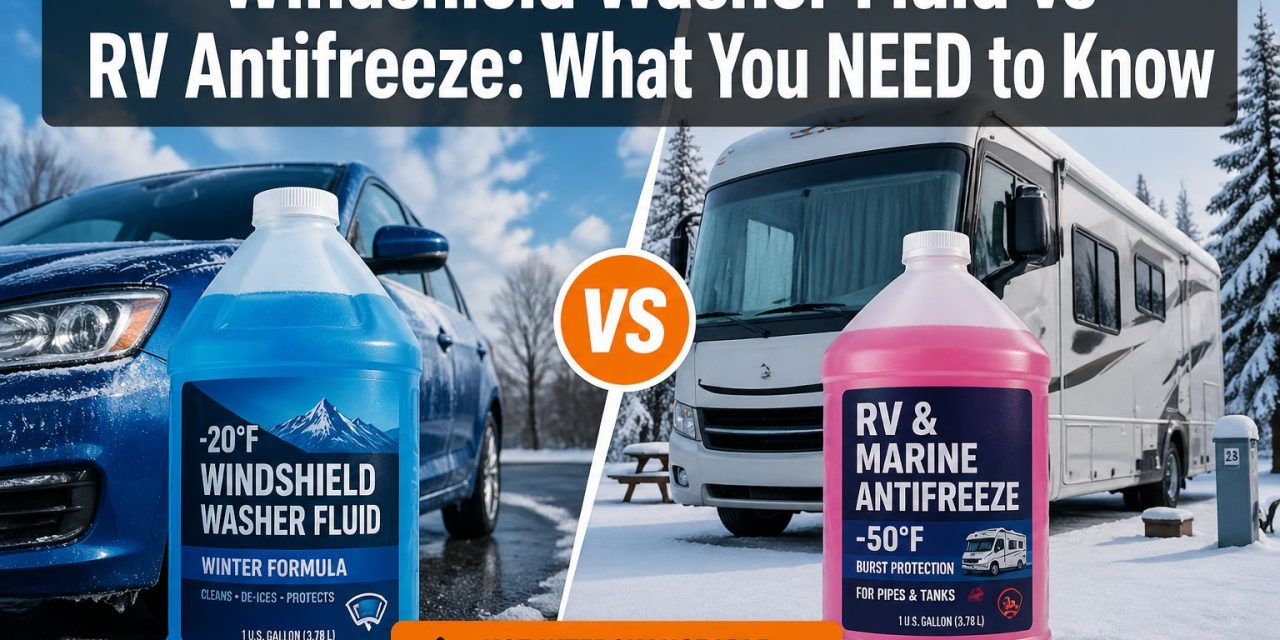
Every winter, thousands of RV owners face a tempting shortcut: grabbing a $1.25 jug of windshield washer fluid from the gas station instead of paying $6–7 per gallon for proper RV antifreeze [1]. The price difference is real — but so is the risk of making the wrong call.
So, can you use windshield washer fluid for RV antifreeze? The short answer is: it depends entirely on where you plan to use it. In some situations, it’s a reasonable swap. In others, it could be genuinely dangerous. This guide breaks it all down so you can make the smartest, safest choice for your rig. 🚐
Key Takeaways
- 🚫 Never use windshield washer fluid in RV freshwater or drinking water lines — it contains toxic ethylene alcohol.
- ✅ RV antifreeze uses propylene glycol, which is food-grade and safe for plumbing systems.
- 💧 Windshield washer fluid may work in drain traps (P-traps, toilet bowls) where it won’t contact drinking water.
- ❄️ Product quality varies — always test antifreeze before relying on it for winter protection.
- 🧪 A simple freezer test can tell you if your RV antifreeze is still effective.
Can You Use Windshield Washer Fluid for RV Antifreeze? Understanding What’s Actually Inside
Before swapping one product for another, it helps to know what you’re actually working with. These two fluids look similar and both prevent freezing — but their chemistry and intended uses are very different.
What’s in Windshield Washer Fluid?
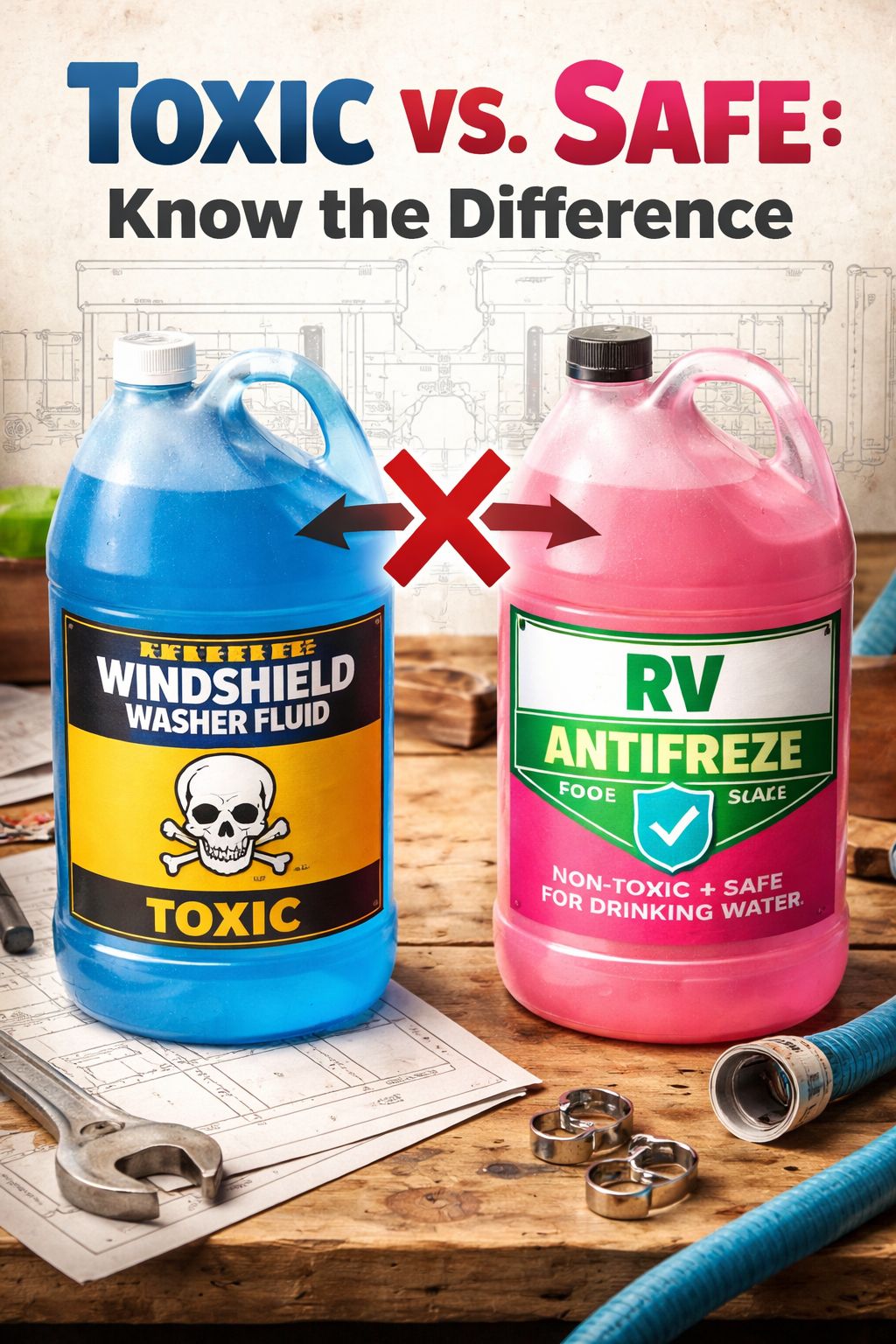
Windshield washer fluid is primarily made with methanol or ethanol (ethylene-based alcohols), water, and detergents. It’s engineered to clean glass and resist freezing in automotive reservoirs and spray nozzles. The key issue? It is toxic and poisonous to humans [1].
⚠️ Pull Quote: “Windshield washer fluid contains ethylene alcohol — a substance that is toxic to humans and has no place in your RV’s drinking water system.”
Even small amounts of methanol can cause serious harm if ingested. That’s why it carries poison warnings right on the label.
What’s in RV Antifreeze?
RV antifreeze is formulated with propylene glycol, which is a food-grade, non-toxic compound approved for use in plumbing systems that carry drinking water [1]. It’s the pink stuff you’ll find at any RV supply store, and it’s specifically designed to protect water lines, tanks, and fixtures during winterization.
Side-by-Side Comparison 📊
| Feature | Windshield Washer Fluid | RV Antifreeze |
|---|---|---|
| Main ingredient | Methanol / Ethanol | Propylene Glycol |
| Toxic to humans? | ✅ Yes | ❌ No (small amounts) |
| Safe for plumbing? | ❌ No | ✅ Yes |
| Average cost/gallon | ~$1.25 | ~$6–7 |
| Shelf life (opened) | Variable | 1–5 years [3] |
| Freeze protection | Good | Good to Excellent |
The Automotive Antifreeze Confusion
It’s also worth clearing up another common mix-up: RV antifreeze and automotive (engine) antifreeze are not interchangeable [3]. Automotive antifreeze (like the green or orange coolant in your car’s radiator) contains ethylene glycol, which is highly toxic. It belongs in engine cooling systems only — never in RV water lines or windshield reservoirs.
Where Can (and Can’t) You Use Windshield Washer Fluid in an RV?
Now that the chemistry is clear, here’s the practical breakdown every RV owner needs.
❌ Where You Should NEVER Use Windshield Washer Fluid
Freshwater lines and tanks — This is the big one. If windshield washer fluid enters your RV’s freshwater system, the toxic methanol or ethanol can contaminate water that you, your family, or your pets might drink or cook with [1]. No amount of flushing guarantees complete removal.
Water heater — The ethanol base in washer fluid can become acidic over time, potentially corroding metal components inside your water heater [2]. That’s an expensive repair you don’t want.
Anywhere near food prep or drinking sources — Sinks, showers, and kitchen lines all connect back to your freshwater supply. Keep toxic fluids far away.
✅ Where Windshield Washer Fluid Might Be Acceptable
P-traps and drain lines — Some RVers use washer fluid in sink and shower drain traps (the curved pipe section that holds water to block sewer gases). Since these are drain lines — not supply lines — the risk of contamination is lower. However, even here, proper RV antifreeze is the safer, recommended choice.
Toilet bowl — Similar logic applies. A small amount in the toilet bowl to prevent freezing in the trap is sometimes done, but again, RV antifreeze is the better option.
Windshield washer reservoir on the RV’s cab — This is the one place windshield washer fluid is 100% appropriate. It’s literally what it was made for. 😄
🧊 A Surprising Real-World Test
One forum discussion revealed something interesting: a user reported that windshield washer fluid actually outperformed a store-brand RV antifreeze in a freeze test, staying liquid at -10°F while the RV antifreeze froze solid [4]. This highlights that product quality varies widely — not all RV antifreeze is created equal. Always check the freeze-protection rating on the label before trusting any product with your pipes.
How to Test and Choose the Right RV Antifreeze
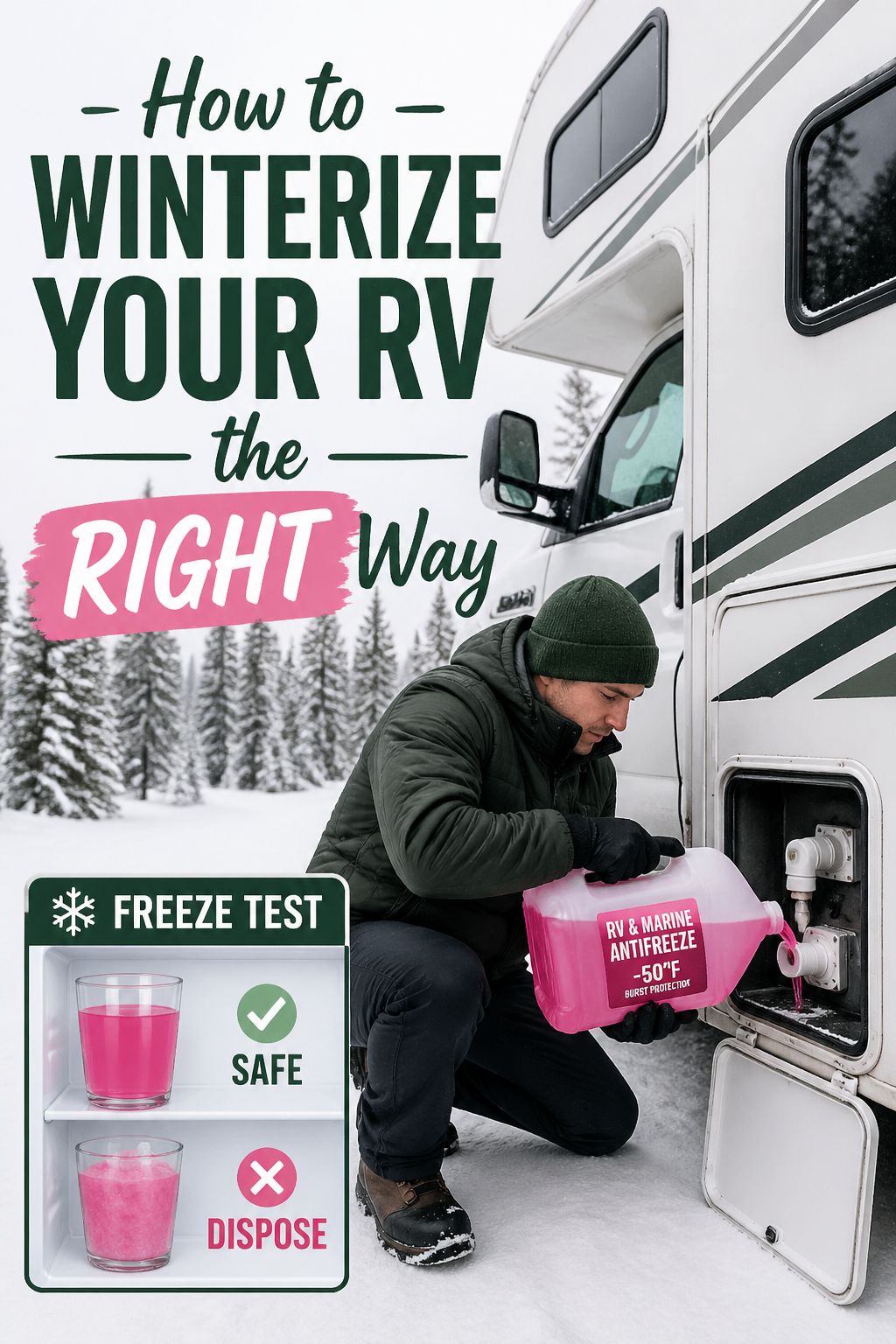
The Simple Freezer Test 🧊
Wondering if your RV antifreeze is still good? Here’s a quick method:
- Pour a small amount of antifreeze into a container.
- Place it in your freezer overnight.
- If it stays liquid → It’s still effective. ✅
- If it becomes slushy or icy → Dispose of it immediately and buy fresh product. ❌ [3]
This test is especially useful for antifreeze that’s been sitting in storage for a season or two.
Shelf Life: What You Need to Know
- Opened bottle: RV antifreeze lasts roughly 1–5 years depending on storage conditions [3].
- Unopened bottle: Stored properly in its original, sealed container, RV antifreeze can last indefinitely [3].
- Store it in a cool, dry place away from direct sunlight and extreme temperatures.
Tips for Smart RV Winterization 🛠️
- Buy name-brand RV antifreeze with a clearly stated freeze-protection temperature (look for -50°F protection for cold climates).
- Calculate how much you need before starting — most RVs require 2–3 gallons for a thorough winterization.
- Never mix RV antifreeze with other fluids in your system.
- Flush the system thoroughly in spring before using your water lines again.
- Note: RV antifreeze is non-toxic in small amounts, but it can harm plants and grass if poured in large quantities onto soil [3] — dispose of it responsibly.
Conclusion: Don’t Let a $5 Savings Cost You Much More
The question — can you use windshield washer fluid for RV antifreeze? — has a nuanced but clear answer: not in any part of your RV’s water system. The toxic ingredients in windshield washer fluid make it genuinely dangerous in freshwater lines, and the potential for corrosion makes it risky in heating components too [1][2].
Yes, windshield washer fluid is cheaper. But the cost of contaminated water lines, a corroded water heater, or a health scare far outweighs saving a few dollars per gallon.
Here’s your action plan:
- ✅ Stock up on proper RV antifreeze (propylene glycol-based) before each winter season.
- ✅ Run the freezer test on any antifreeze that’s been stored for more than a year.
- ✅ Check freeze ratings on the label — not all products protect equally.
- ✅ Use windshield washer fluid only where it belongs — in your cab’s washer reservoir.
- ✅ Flush your system completely each spring before hitting the road.
Your RV is a big investment. Protect it with the right products, and you’ll enjoy many more seasons of adventure ahead. 🏕️❄️
References
[1] Watch – https://www.youtube.com/watch?v=qEXTQxY87O4
[2] Faqs – https://www.splashwash.com/faqs
[3] In Winter Rv Antifreeze For Windshield Washer Fluid Go Bad 54185 – https://www.southavenrv.com/blog/in-winter-rv-antifreeze-for-windshield-washer-fluid-go-bad–54185
[4] Rv Antifreeze Vs Windshield Washer Fluid – https://mikeysboard.com/threads/rv-antifreeze-vs-windshield-washer-fluid.291566/
[5] Rv Anti Freeze As Windshield Washer Fluid – https://www.orangetractortalks.com/forums/threads/rv-anti-freeze-as-windshield-washer-fluid.66406/