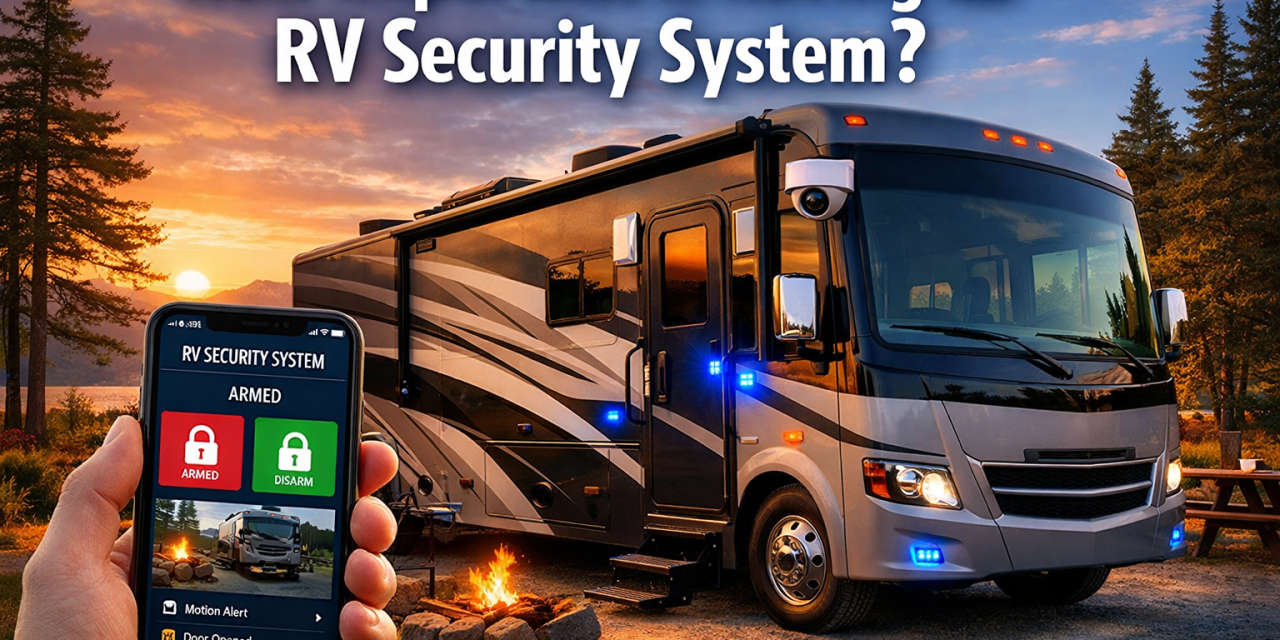
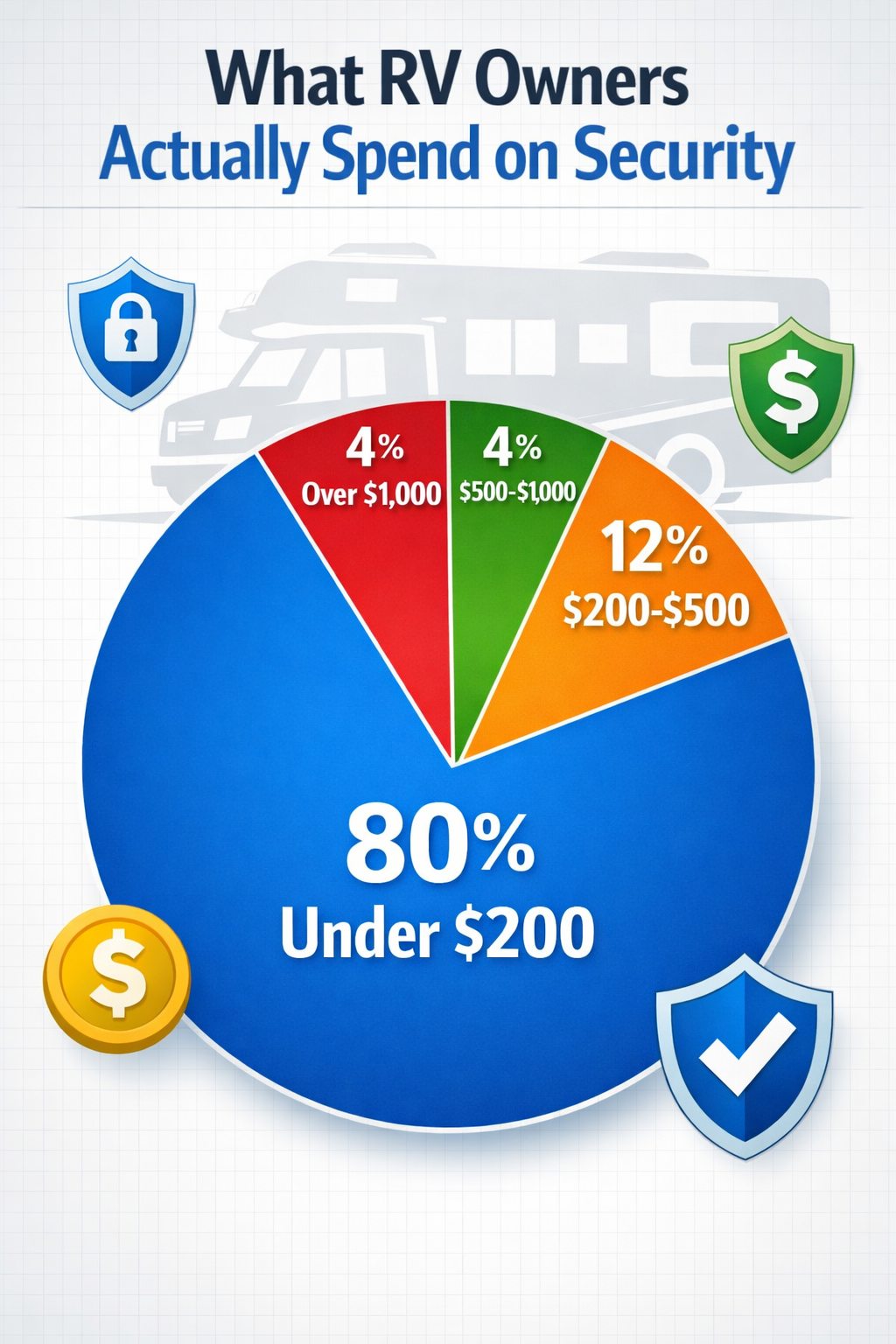
You’re enjoying a beautiful sunset at a remote campground, completely relaxed… until you wonder if your RV is truly safe while you’re away exploring. That nagging worry is something most RV owners know all too well. But here’s the surprising truth revealed in our latest survey: 80% of RV owners invest less than $200 in security systems, even though protecting their home-on-wheels should be a top priority.
So how important is having an RV security system? (Survey reveals) some eye-opening insights that every RV enthusiast needs to know in 2026.
Key Takeaways
- 80% of RV owners spend under $200 on security, showing budget-friendly options dominate the market
- New 2026 electrical safety regulations require Grounding Monitor Interrupters (GMIs) on all RVs, adding another layer of protection[3]
- Security threats are evolving beyond physical break-ins to include cybersecurity risks, especially as RVs become more connected[1]
- AI-powered security solutions are becoming more accessible and effective, with 61% of security leaders seeing their value[2]
- Economic uncertainty is driving smarter security investments, with RV owners seeking cost-effective protection strategies
What the Survey Reveals About RV Security Investments
Would you like to save this article?
The numbers tell a fascinating story about how RV owners approach security in 2026. Let’s break down what RV enthusiasts are actually spending:
The Budget Breakdown
| Investment Range | Percentage of RV Owners |
|---|---|
| Under $200 | 80% 🏆 |
| $200-$500 | 12% |
| $500-$1,000 | 4% |
| Over $1,000 | 4% |
This data reveals something important: most RV owners are finding security solutions that don’t break the bank. The overwhelming majority stick with affordable options, which makes sense when you consider that many RVers are budget-conscious travelers.
But here’s the question: Does spending less mean getting less protection? Not necessarily! The security landscape has changed dramatically, with affordable cameras, sensors, and smart devices offering features that once cost thousands of dollars.
Why RV Security Matters More Than Ever in 2026
The world of RV ownership is changing fast. Gone are the days when a simple padlock was enough to feel secure. Today’s RVs face multiple types of threats that require modern solutions.
Physical Security Threats
Theft and break-ins remain the most obvious concern. RVs are particularly vulnerable because:
- They’re often parked in remote or unfamiliar locations
- Expensive equipment (bikes, generators, solar panels) sits outside
- RVs contain valuable electronics, appliances, and personal belongings
- They’re left unattended for extended periods during day trips
According to recent security research, 52% of organizations predict physical security incidents will increase in 2026[2]. While this statistic covers broader security concerns, the trend applies to RV owners facing economic pressures and increased crime concerns in certain areas[5].
The New Electrical Safety Requirements
Here’s something every RV owner needs to know: Starting September 2026, the RV Industry Association will enforce new electrical safety requirements[3]. The 2026 National Electric Code (NEC) now mandates Grounding Monitor Interrupters (GMIs) on all RVs with 30A or 50A electrical service[3].
Why does this matter? GMIs protect against “hot skin” conditions—a dangerous electrical hazard where your RV’s metal exterior becomes electrified[3]. This isn’t just about security; it’s about life-threatening safety.
“RV parks will need to test their electrical systems, and manufacturers must produce portable testing devices to comply with these new standards.”[3]
Cybersecurity: The Hidden Threat
Modern RVs are becoming rolling smart homes, packed with connected devices. This convenience comes with new risks. 27% of RV dealers report feeling “very prepared” against cybersecurity risks in 2026—a 10% increase from 2025—though 53% still feel only “somewhat prepared”[1].
What cybersecurity threats face RV owners?
- 📱 Smart RV systems that can be hacked remotely
- 🌐 Public Wi-Fi vulnerabilities at campgrounds
- 💳 Payment information theft through compromised booking systems
- 🔓 Smart lock exploits on keyless entry systems
How Important Is Having an RV Security System? The Real-World Impact
Let’s get practical. What actually happens when you invest in RV security versus when you don’t?
Benefits of Having a Security System
Peace of mind tops the list. Knowing your RV is protected lets you actually enjoy your adventures instead of constantly worrying. But the benefits go much deeper:
✅ Lower insurance premiums – Many insurance companies offer discounts for RVs with security systems
✅ Faster recovery – GPS tracking helps law enforcement locate stolen RVs quickly
✅ Evidence collection – Cameras provide crucial footage for insurance claims and police reports
✅ Deterrent effect – Visible security measures make thieves move on to easier targets
✅ Remote monitoring – Check on your RV from anywhere using smartphone apps
✅ Emergency alerts – Get instant notifications about break-ins, fires, or carbon monoxide
The Cost of Going Without Security
On the flip side, skipping security can lead to:
- 💰 Total loss of your RV (average value: $35,000-$100,000+)
- 😰 Stolen personal belongings with sentimental value
- 📄 Insurance complications and potential coverage denials
- ⏰ Vacation disruptions and ruined travel plans
- 🔧 Damage from break-in attempts even if nothing is stolen
Budget-Friendly Security Solutions That Actually Work
Since 80% of RV owners spend under $200, let’s explore what that budget can buy in 2026.
Under $200: Maximum Protection on a Minimum Budget
Smart doorbell cameras ($50-$150) have revolutionized affordable RV security. Brands like Ring and Blink offer:
- Motion-activated recording
- Two-way audio communication
- Night vision capabilities
- Cloud storage for footage
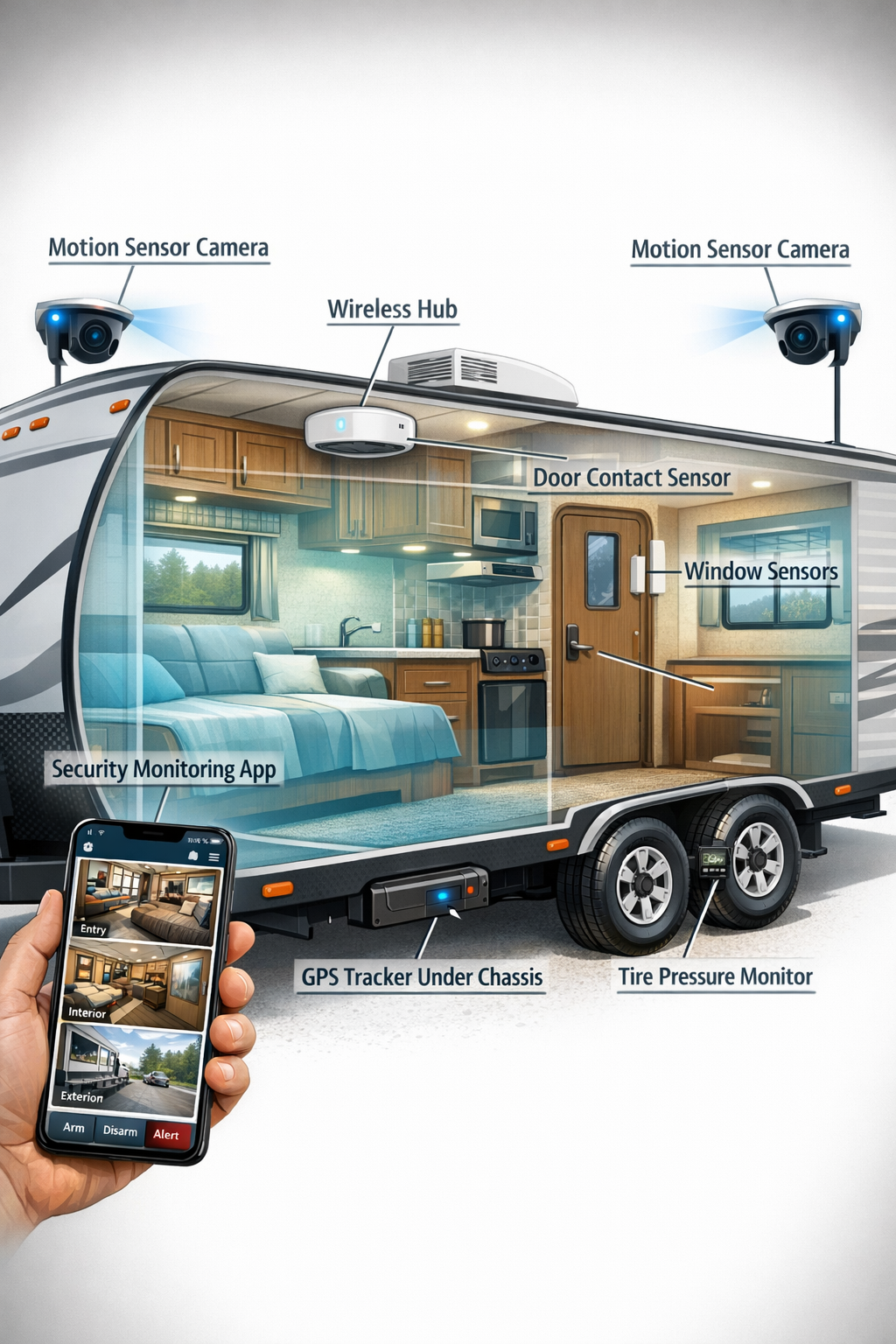
Window and door sensors ($20-$60 per set) alert you immediately when someone opens an entry point. These simple devices pack a powerful punch.
Portable motion-sensor alarms ($15-$40 each) create a loud deterrent without complex installation.
Wheel locks and hitch locks ($30-$80) provide physical barriers that stop thieves cold.
Fake security cameras ($10-$25) might sound silly, but they work! Most criminals won’t risk finding out if they’re real.
$200-$500: Stepping Up Your Game
This range opens up complete wireless security systems with multiple cameras, professional monitoring options, and integrated smartphone apps.
Solar-powered cameras eliminate battery changes and work perfectly for boondocking.
Smart locks let you grant temporary access to friends or service technicians without sharing keys.
$500-$1,000: Premium Protection
Professional-grade camera systems with 4K resolution and advanced AI features enter this range.
Integrated alarm systems that connect smoke detectors, carbon monoxide sensors, and security cameras into one platform.
Over $1,000: Ultimate Security
Custom security installations with hidden cameras, hardwired systems, and professional monitoring services.
Advanced GPS tracking with real-time updates and geofencing capabilities.
The Role of AI in Modern RV Security Systems
Artificial intelligence is revolutionizing security, and RV owners are benefiting. 61% of business leaders now believe AI is useful in stopping physical security incidents—up 25 points from just 36% the previous year[2].
How does AI help RV security?
🤖 Smart detection – AI cameras distinguish between people, animals, and vehicles, reducing false alarms
🤖 Facial recognition – Some systems can identify familiar faces versus strangers
🤖 Predictive alerts – AI learns your patterns and flags unusual activity
🤖 Automated responses – Systems can trigger lights, alarms, or notifications based on specific threats
AI is also reshaping how RV buyers research purchases[1], making it easier to find the right security solutions through personalized recommendations and smart comparison tools.
Essential Security Features Every RV Should Have
Regardless of your budget, certain security features are non-negotiable:
Must-Have Physical Security
- Quality door locks – Upgrade from factory locks to deadbolts
- Window security – Locks or bars on accessible windows
- Hitch lock – Prevents someone from towing your RV away
- Wheel locks – Additional theft deterrent
- Safe or lockbox – Secure valuables and important documents
Must-Have Electronic Security
- At least one camera – Even a basic model is better than nothing
- Motion-activated lighting – Illuminates suspicious activity
- Door/window sensors – Alerts you to unauthorized entry
- Smartphone monitoring – Remote access to your security system
- Backup power – Battery backup keeps systems running during outages
Must-Have Safety Equipment (Not Just Security)
Don’t forget these life-saving devices:
- ⚡ Grounding Monitor Interrupter (GMI) – Required by 2026 code[3]
- 🔥 Smoke detectors – Test regularly and replace batteries
- ☠️ Carbon monoxide detector – Absolutely essential
- 🧯 Fire extinguisher – Easily accessible and properly rated
- 🚨 Propane leak detector – Early warning saves lives
How to Choose the Right Security System for Your RV
With so many options available, how do you decide? Follow this simple framework:
Step 1: Assess Your Risk Level
High-risk scenarios:
- Frequent urban camping or parking
- Extended periods away from RV
- High-value RV or contents
- Areas with known crime issues
Lower-risk scenarios:
- Mostly private campgrounds with security
- Someone always present at RV
- Older, less valuable RV
- Remote locations with low crime
Step 2: Determine Your Budget
Be honest about what you can spend. Remember: something is always better than nothing. Start small and expand over time if needed.
Step 3: Consider Your Technical Comfort
Some systems require:
- Drilling and permanent installation
- Network configuration
- Regular maintenance
- Technical troubleshooting
Others offer:
- Peel-and-stick installation
- Plug-and-play setup
- Minimal maintenance
- User-friendly apps
Choose systems that match your skill level.
Step 4: Think About Power Sources
Battery-powered systems work anywhere but require regular battery changes.
Solar-powered options are perfect for boondocking but may struggle in shaded areas.
Hardwired systems offer reliability but need professional installation.
Step 5: Check Compatibility
Ensure your security system works with:
- Your smartphone (iOS or Android)
- Your RV’s electrical system
- Your internet connectivity options (Wi-Fi, cellular)
- Other smart devices you already own
Common RV Security Mistakes to Avoid
Even with the best equipment, these mistakes can leave you vulnerable:
❌ Advertising your absence – Social media posts showing you’re away from your RV
❌ Leaving valuables visible – Bikes, grills, and equipment outside invite theft
❌ Neglecting maintenance – Dead batteries and malfunctioning sensors provide no protection
❌ Using obvious hiding spots – Thieves know to check under mats and fake rocks
❌ Forgetting about windows – Many break-ins happen through windows, not doors
❌ Relying solely on technology – Physical locks and common sense matter too
❌ Ignoring campground security – Choose well-lit spots near other campers and office areas
The Future of RV Security: What’s Coming Next
The security landscape continues evolving rapidly. Here’s what to watch for:
Emerging Technologies
Biometric locks using fingerprints or facial recognition will become more affordable and reliable.
Drone surveillance might sound futuristic, but some high-end RV parks are already testing automated drone patrols.
Blockchain-based identity verification could revolutionize RV park check-ins and access control.
5G connectivity will enable faster, more reliable remote monitoring with less lag time.
Industry Trends
Economic uncertainty is making RV buyers more cautious about purchases[1], which means they’re also thinking carefully about security investments. This drives demand for budget-friendly solutions that deliver real value.
Standardization efforts like the new GMI requirements[3] show the industry taking safety seriously, with more regulations likely coming.
Integration platforms that combine security, entertainment, climate control, and vehicle diagnostics into single apps will become standard.
Making Your Security Investment Count
Here’s how to maximize the value of whatever you spend on RV security:
Smart Shopping Strategies
🛒 Buy during sales – Black Friday, Cyber Monday, and end-of-season sales offer deep discounts
🛒 Bundle systems – Buying cameras, sensors, and alarms together often costs less than individual purchases
🛒 Consider refurbished – Certified refurbished security equipment works great at fraction of new prices
🛒 Read reviews carefully – Focus on long-term reliability, not just initial impressions
🛒 Check return policies – Make sure you can return equipment that doesn’t work for your situation
Installation Tips
🔧 Start with easy wins – Install simple solutions first to build confidence
🔧 Test before committing – Try temporary installations before drilling permanent holes
🔧 Document everything – Take photos of installations for insurance purposes
🔧 Label all components – Future you will appreciate knowing which sensor is which
🔧 Create a maintenance schedule – Regular testing keeps systems functioning
Maintenance Best Practices
Regular maintenance ensures your security investment continues protecting you:
- Monthly: Test all alarms and sensors
- Quarterly: Check battery levels and replace as needed
- Annually: Review camera footage quality and adjust positioning
- Before each trip: Verify all systems are functioning properly
- After incidents: Review what worked and what needs improvement
Real-World Security Success Stories
Understanding how security systems help real RV owners makes the investment more tangible:
The prevented theft: One couple’s motion-activated cameras caught someone attempting to break in at 2 AM. The loud alarm scared them off, and police used the footage to identify repeat offenders in the area.
The quick recovery: A GPS tracker helped law enforcement locate a stolen Class A motorhome within 6 hours. The owners recovered their RV with minimal damage.
The insurance win: When a storm damaged an RV, security camera footage proved the damage occurred at a specific time, expediting the insurance claim that might have otherwise been disputed.
The peace of mind: A retired couple traveling full-time reports that their simple $150 camera system lets them explore confidently, knowing they’ll receive alerts if anything happens at their RV.
Conclusion: Your RV Security Action Plan
So, how important is having an RV security system? (Survey reveals) that while 80% of RV owners keep investments under $200, the real question isn’t about how much you spend—it’s about making smart choices that protect your investment and peace of mind.
The data shows that affordable security solutions are accessible to everyone, and with new safety requirements coming in September 2026[3], there’s never been a better time to evaluate your RV’s protection.
Your Next Steps
Today:
- Assess your current security situation honestly
- Identify your biggest vulnerabilities
- Set a realistic budget
This Week:
- Research specific products that fit your needs
- Read reviews from other RV owners
- Make your first purchase (even if it’s just a $30 door sensor)
This Month:
- Install your new security measures
- Test everything thoroughly
- Create a maintenance schedule
- Review your insurance policy for potential discounts
Ongoing:
- Stay informed about new technologies
- Upgrade gradually as budget allows
- Share your experiences with fellow RV enthusiasts
- Enjoy your adventures with greater confidence
Remember, the best security system is the one you’ll actually use consistently. Whether you invest $50 or $5,000, taking action to protect your RV is always worth it. Your home-on-wheels deserves protection, and you deserve the peace of mind that comes with knowing it’s secure.
The open road is calling—answer it confidently, knowing your RV is protected! 🚐🔒✨
References
[1] publications.ids-astra – https://publications.ids-astra.com/view/569147507
[2] State Of Security 2026 – https://pro-vigil.com/blog/state-of-security-2026/
[3] Grounding Monitor Interrupters Rvs And Its Impact Rv Campgrounds – https://www.rvia.org/news-insights/grounding-monitor-interrupters-rvs-and-its-impact-rv-campgrounds
[5] 105003 Pro Vigil Survey Nearly Half Of Businesses Fear Economic Uncertainty Will Impact Physical Security In 2026 – https://www.sdmmag.com/articles/105003-pro-vigil-survey-nearly-half-of-businesses-fear-economic-uncertainty-will-impact-physical-security-in-2026