Most RV tire blowouts have nothing to do with bad luck. They start weeks earlier, a slow leak nobody checked, a sidewall older than the tow vehicle, or a rig loaded heavier than its tires were ever built to carry. That’s the uncomfortable truth about towing into the backcountry: the tires holding thousands of pounds off the pavement are often the most neglected part of the whole setup.
RV Tire Maintenance and Upgrades: How to Use Tire Rack Tires for Safer Off-Road Adventures starts with a simple mindset shift. Tires aren’t a “replace when they look bad” item. They’re a safety system with age limits, pressure requirements, and load math, and choosing the right upgrade from a retailer like Tire Rack can make the difference between a smooth trip to a remote campsite and a roadside emergency.
This guide breaks down how to inspect, maintain, and upgrade RV tires so towing feels less like a gamble and more like a plan.
Key Takeaways
- 🕐 Age matters more than tread. Most manufacturers and NHTSA guidance recommend replacing RV tires between 6-10 years old, even if tread looks fine.[10]
- 🪙 Use the quarter test. If Washington’s head is visible above the tread in several spots, you’re below the 4/32-inch safety threshold and it’s time to shop.[10]
- 📊 Check pressure monthly, not just when the TPMS alerts you. A digital gauge on cold tires is still the gold standard.[10]
- ⚖️ Build in a load margin. Trailer tires should carry at least 10% more capacity than your GVWR to cover cargo, water, and gear.[10]
- 🛞 Match your tire choice to your terrain, trailer tires for towing stability, all-terrain for mixed gravel and dirt, mud-terrain for serious trails.[1][8][4]
The Real Risks Behind RV Tire Failures on Rough Roads
Highway tire failures are dangerous enough. Off-road and backcountry driving raises the stakes even further because trailer tires face more sidewall flex, more heat, and more sudden impact from rocks, ruts, and washboard roads. A tire that’s marginal on pavement can fail outright on a rough forest service road.
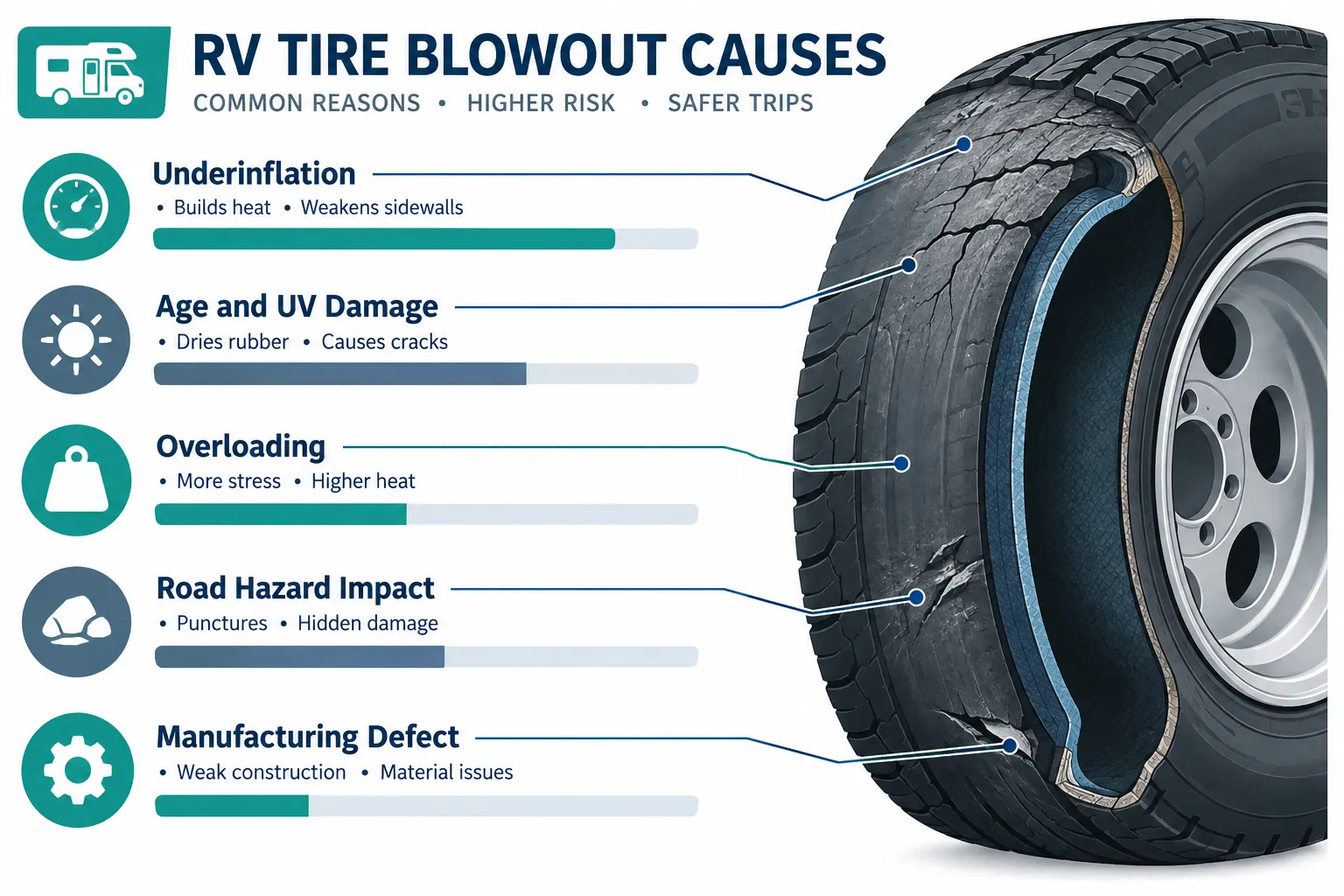
Industry safety data consistently points to the same culprits, and none of them are exotic. Underinflation is the single biggest factor behind RV blowouts, followed by age and UV degradation, overloading, road hazard damage, and, least common of all, manufacturing defects. In other words, most tire failures are preventable with basic upkeep, not luck of the draw on which brand you bought.
Heat is the hidden accelerant here. Rubber compounds break down faster under UV exposure and high ambient temperatures, which is exactly the environment many RVs sit in between trips, parked in the sun, tires slightly underinflated, sidewalls quietly drying out. By the time an owner notices cracking, the tire may already be past its safe service life.
This is why performing your own RV maintenance, even just a five-minute walk-around before every trip, matters so much more for tires than almost any other system on the rig. A cracked sidewall or a soft tire is easy to catch early and expensive to ignore.
“If a full set replacement isn’t possible right now, at minimum replace tires in pairs on the same axle, and make sure everything matches in size and construction type.”, TJ Campbell, Discount Tire/Tire Rack
RV Tire Maintenance and Upgrades: Choosing the Right Tire Rack Tires for Off-Road Adventures
Not every RV tire is built for the same job. A tire designed for smooth interstate towing behaves very differently on a gravel forest road, and knowing which category fits your travel style is the core of smart RV tire maintenance and upgrades.
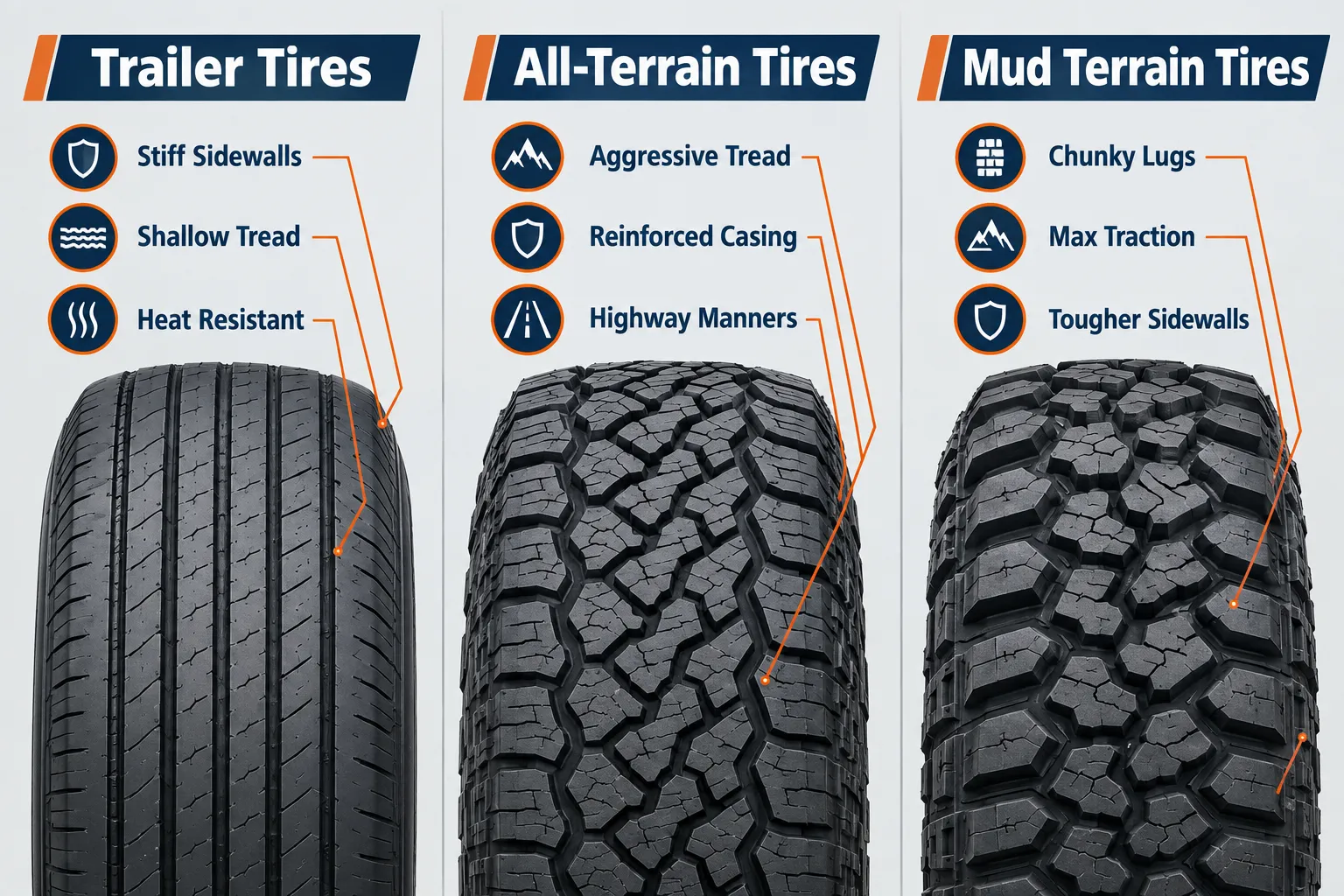
Here’s how the major categories break down for RV owners:
| Tire Category | Best For | Key Features |
|---|---|---|
| Trailer Tires | Travel trailers, fifth wheels, toy haulers | Stiffer sidewalls, shallower tread for stability, reduced heat build-up[1][5] |
| All-Terrain / Off-Road All-Terrain | Tow vehicles and adventure rigs on dirt, gravel, sand | Aggressive tread, reinforced construction, year-round traction[8][11] |
| Mud Terrain (Max Traction) | Overlanding, truck campers, technical trails | Chunky tread patterns, stronger sidewalls, maximum grip[4] |
Trailer-specific tires like the Goodyear Endurance and Hankook Vantra Trailer are engineered specifically for towing loads rather than steering and acceleration, which is why they hold up better on long highway hauls and washboard roads than passenger-car tires pressed into trailer duty.[2][6] Many are also available as pre-mounted, precision-balanced tire-and-wheel packages, which helps RV owners avoid the installation mistakes that can lead to vibration or uneven wear before a rig ever leaves pavement.[5][6]
For the tow vehicle itself, Tire Rack’s Off-Road All-Terrain lineup is built for drivers who split time between highway miles and unpaved back-country routes. These tires keep reasonable on-road manners while adding the tread depth and reinforced sidewalls needed for dirt, gravel, sand, and moderate off-road terrain.[8][11] Tire Rack’s “Best All-Terrain Tires” rankings combine lab testing with thousands of owner reviews, and models like the BFGoodrich All-Terrain T/A KO3 consistently score near the top for off-road performance, useful data for anyone trying to choose without guessing.[9][15]
If the adventure gets more serious, think overlanding with a truck camper, rocky trail access, or deep mud, the Mud Terrain (Off-Road Max Traction) category trades some highway smoothness and tread life for maximum grip and durability.[4] Tire Rack’s own off-road comparison testing shows real differences between On-Road, Off-Road, Rugged All-Terrain, and Max-Traction tires once you’re actually off pavement, which is worth reviewing before committing to a more aggressive tread.[4][13]
Before buying anything, it’s worth talking to a tire specialist who can match tread type to your specific trailer weight, tow vehicle, and travel plans, most major retailers offer this free, and many tires also come with two years of road-hazard protection, which matters a lot when a puncture happens far from the nearest shop.[3] This kind of support pairs well with other easy RV upgrades that make a huge difference for owners looking to get more capability out of their rig without a full overhaul.
RV Tire Maintenance and Upgrades: A Step-by-Step Checklist for Safer Off-Road Adventures
Buying the right tire is only half the job. The other half, the part most owners skip, is the ongoing maintenance that keeps those tires performing safely trip after trip.
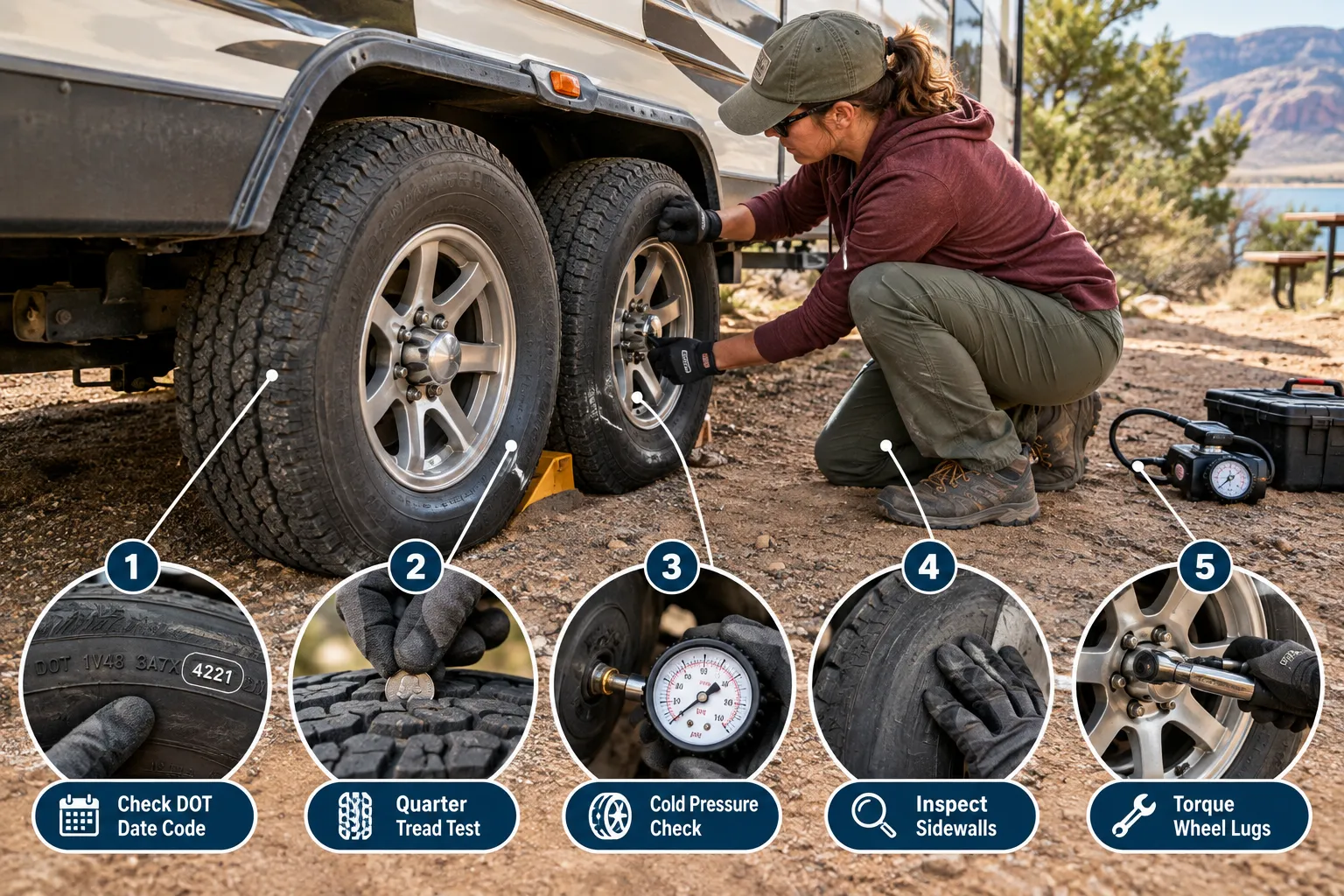
Follow this routine before every off-road or long-distance trip:
- Read the DOT Tire Identification Number. The last four digits on the sidewall show the week and year of manufacture. Use this to confirm your tires aren’t sun-baked old stock before a long off-grid drive.[10]
- Run the quarter test. Place a quarter upside down in the tread grooves. If the top of Washington’s head shows in multiple spots, tread depth is below the 4/32-inch minimum and replacement is overdue.[10]
- Check cold pressure monthly with a digital gauge. A TPMS is a great early-warning tool, but it is not a substitute for a manual check, inflate trailer tires to the maximum cold pressure listed on the sidewall.[10]
- Confirm load capacity with a margin. Trailer tires should carry at least 10% more than your trailer’s gross vehicle weight rating (GVWR) to account for water, cargo, and gear.[10]
- Re-torque new wheels after 50-100 miles. Initial seating can loosen lug nuts, and this step matters even more once you leave pavement for washboard roads or rocky access trails.
- Replace tires in matched pairs on the same axle if a full set swap isn’t in the budget right now, and make sure size and construction type (radial vs. bias-ply) match across the axle.[10]
Owners planning routes with tollways or mixed highway-to-backroad driving should also review what to keep in mind when navigating toll roads with an RV, since longer highway stretches before hitting dirt roads add extra heat cycling that tires need to be prepared for.
Load Ratings and Upgrade Timing Most RVers Overlook
Adding off-road gear, auxiliary fuel tanks, recovery equipment, bigger batteries, larger water tanks, quietly adds weight. That extra weight can push tires past their rated limits even if the trailer “feels the same” to tow. This is exactly why the 10% load margin matters: it’s a buffer for the upgrades RVers tend to make over time, not just the trailer’s stock weight.
If you’re the type who regularly adds gear or renovates your setup, it’s worth reviewing how often to upgrade or renovate an RV alongside your tire plan, tires and payload upgrades should be reviewed together, not separately.
Frequently Asked Questions
How often should RV tires be replaced, even if the tread looks fine? Most manufacturers and safety guidance recommend replacement between 6 and 10 years regardless of tread wear, since heat and UV exposure degrade rubber compounds over time.[10]
Are Tire Rack tires a good fit for towing off-road? Yes, Tire Rack’s trailer-specific and all-terrain categories are designed with towing stability, load capacity, and rougher terrain in mind, and their comparison data and owner reviews make it easier to match a tire to a specific trailer and travel style.[1][8][9]
What’s the difference between all-terrain and mud-terrain tires for RV use? All-terrain tires balance dirt and gravel performance with comfortable highway driving, making them the better everyday choice for most RVers. Mud-terrain tires trade some ride comfort and tread life for maximum grip on technical trails, rocks, and deep mud.[8][4]
Do I really need to check tire pressure if I have a TPMS? Yes. A TPMS is a helpful alert system, but it doesn’t replace a monthly manual check with a quality digital gauge on cold tires.[10]
What tread depth means it’s time to replace RV tires? Once tread depth drops below 4/32 inch, confirmed with the quarter test, replacement is recommended, especially for off-road travel where traction demands are higher.[10]
Conclusion
RV tire maintenance and upgrades don’t need to be complicated, but they do need to be consistent. The pattern behind most tire failures, underinflation, age, overload, is almost always something an owner could have caught earlier with a five-minute check. Building simple habits, like the monthly pressure check, the quarter test, and reading the DOT date code, turns tire care from a mystery into a routine.
When it’s time to upgrade, matching the tire category to the actual terrain, trailer tires for towing stability, all-terrain for mixed dirt and gravel, mud-terrain for serious trails, makes a bigger safety difference than chasing the cheapest price. A well-chosen, well-maintained set of tires is one of the simplest ways to protect the whole trip, and it’s part of what makes road trips genuinely good for both stress levels and peace of mind rather than a source of worry every time the rig heads off pavement.
Next step: grab a tread depth gauge, a quarter, and a digital pressure gauge, and give every tire on the rig a five-minute check before the next trip. It’s the cheapest insurance policy in the entire RV.
References
[1] Trailer – https://www.tirerack.com/tires/trailer [2] Goodyear Endurance – https://www.tirerack.com/tires/goodyear-endurance [3] tirerack – https://www.tirerack.com/ [4] Mud Terrain – https://www.tirerack.com/tires/mud-terrain [5] Utility – https://www.tirerack.com/tires/trailer/utility [6] Hankook Vantra Trailer – https://www.tirerack.com/tires/hankook-vantra-trailer [7] Surveydisplay – https://www.tirerack.com/tires/surveyresults/surveydisplay.jsp?type=OFAT [8] Off Road – https://www.tirerack.com/tires/all-terrain/off-road [9] Best All Terrain Tires Of 2026 – https://www.tirerack.com/upgrade-garage/best-all-terrain-tires-of-2026 [10] Tread Smarts 101 – https://magazine.frva.com/2026/09/01/tread-smarts-101/