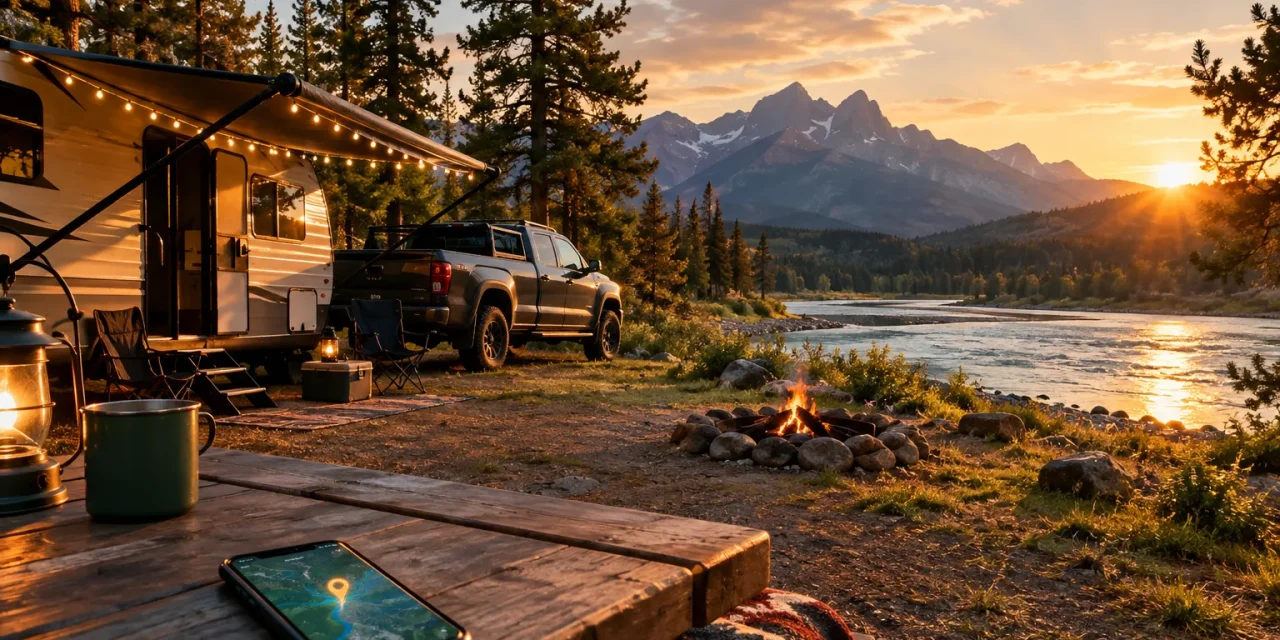
Nine out of ten RV trips today start with a search bar, not a paper atlas. Most RV owners now type some version of “RV camping close to me” before they ever pack a single bag, and that single search has quietly changed how campgrounds market themselves, how apps are built, and how quickly good sites get booked. With more than 20,000 public and private campgrounds spread across the U.S., the challenge isn’t a lack of options, it’s knowing which ones actually deliver a good night’s sleep, working hookups, and a spot that fits your rig.
This guide breaks down exactly how to turn that “close to me” search into a real reservation, using the same tools, checklists, and public land strategies experienced RVers rely on all year long.
Key Takeaways
- AI-powered trip planners and campground apps are now the fastest way to find quality RV camping close to me, especially for last-minute weekend trips.
- Not all “close to me” results are equal, always cross-check hookup type, rig length limits, and recent reviews before booking.
- Year-round camping requires a seasonal strategy, since elevation, storm systems, and public land access change what’s actually available each month.
- Public land tools and directories open up free or low-cost boondocking options that campground apps often miss.
- A simple safety and hookup checklist prevents the most common local camping disappointments, from surprise gravel lots to weak Wi-Fi and unsafe road access.
Why “RV Camping Close to Me” Searches Are Changing How RVers Plan Trips
The classic road trip playbook, plan for months, book six weeks out, is fading fast. Lifestyle data shows RVs are increasingly used for frequent weekend getaways and short mini-vacations rather than one big annual trip. That shift is exactly why “RV camping close to me” has become one of the most common searches in the RV world.
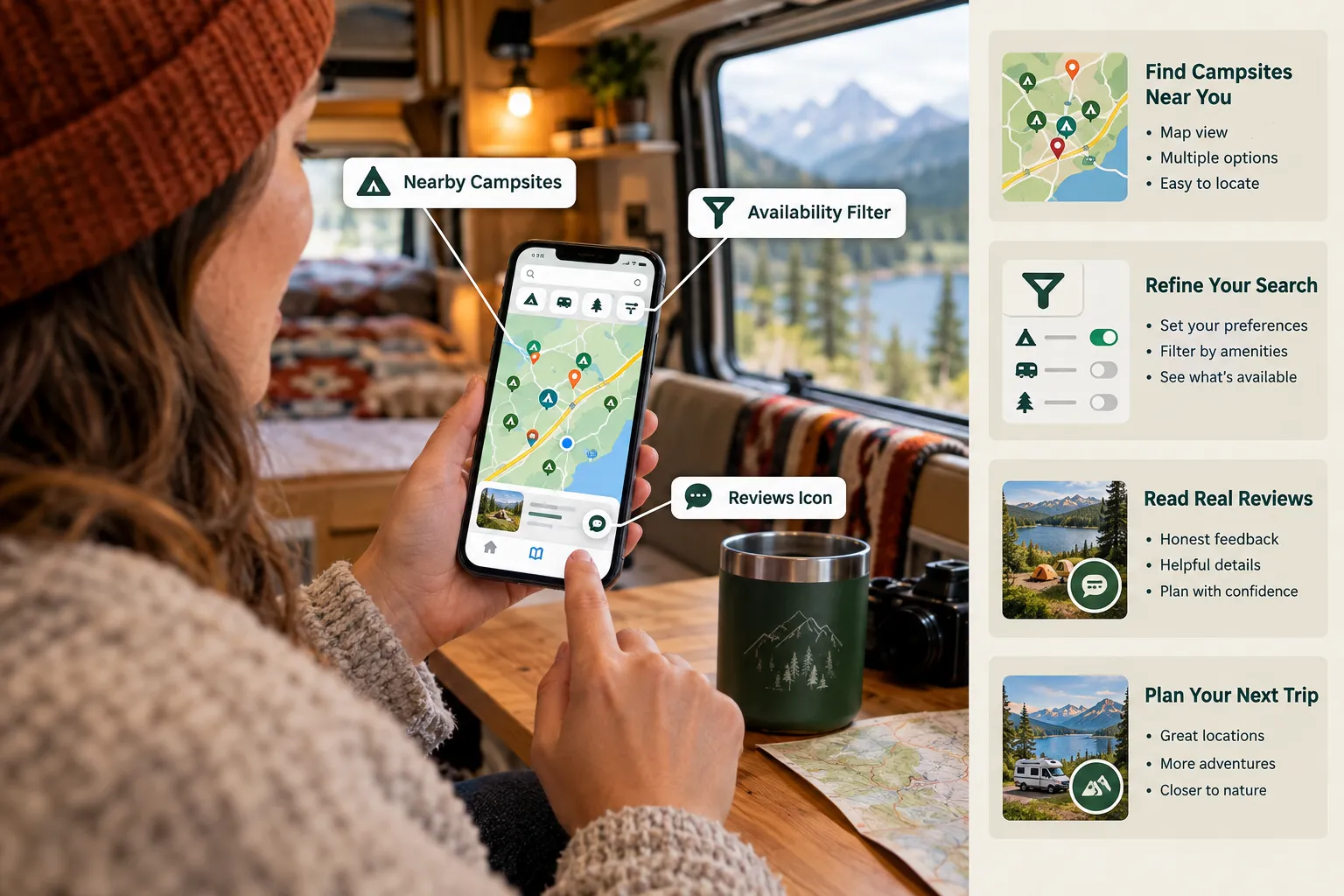
There’s a practical reason behind it, too. Fuel costs, tighter schedules, and a growing appetite for spontaneous travel mean RVers want a great site an hour or two away, not a week’s drive. Younger travelers and budget-conscious families are especially driving this trend, and it’s reshaping how campgrounds promote themselves, particularly during fall and shoulder-season months when occupancy naturally dips[3].
Campground owners and booking platforms have taken notice. Instead of only advertising to out-of-state visitors, many now target local RVers scrolling for a same-week escape. That means better real-time availability data, more accurate photos, and, increasingly, AI-assisted trip planning tools that instantly surface nearby options based on your rig size and travel dates[1][5].
The Best Tools for Finding RV Camping Close to Me: Apps, Maps, and Directories
Finding solid RV camping close to me isn’t about one magic app. It’s about layering a few reliable tools so you’re not relying on a single source that might be outdated or incomplete.
1. Reservation and Review Apps
These platforms show real-time availability, site photos, and recent camper reviews. They’re the fastest way to filter by hookup type, rig length, and pet policy. Look for apps that let you sort by distance and refresh availability daily, some listings lag by weeks, which matters a lot for last-minute local trips.
2. Public Land Maps
Government and nonprofit mapping tools show boundaries for national forests, BLM land, and state wildlife areas. These are essential for anyone chasing free or low-cost dispersed camping instead of a paid campground.
3. Campground Directories
Directories aggregate listings across private RV parks, KOA-style franchises, and mom-and-pop campgrounds. They’re especially useful for comparing amenities side by side, pool, laundry, pet areas, and Wi-Fi strength, before you ever call ahead.
4. Manufacturer and Dealer Tools
Newer pricing transparency tools from RV manufacturers are starting to pair with reservation platforms, helping shoppers and owners match their specific rig’s dimensions and power needs to nearby sites that can actually accommodate them[1][6]. This matters more than most first-time RVers expect, a “close to me” result is useless if the site can’t fit a 38-foot fifth wheel.
| Tool Type | Best For | Watch Out For |
|---|---|---|
| Reservation apps | Real-time availability, reviews | Outdated photos, seasonal price swings |
| Public land maps | Free/cheap dispersed camping | No hookups, road access varies |
| Campground directories | Comparing amenities fast | Listings not always verified |
| Dealer/manufacturer tools | Matching rig size to sites | Newer feature, limited coverage |
Pro tip: Cross-reference at least two sources before booking. An app might show a site as “available,” but a quick directory search or a phone call can confirm whether that spot is actually open for your rig length.
How to Vet a Local RV Campsite: Hookups and Safety Checklist
A campground that looks perfect in photos can turn into a frustrating night if the basics aren’t covered. Before booking anything labeled “RV camping close to me,” run through this checklist.
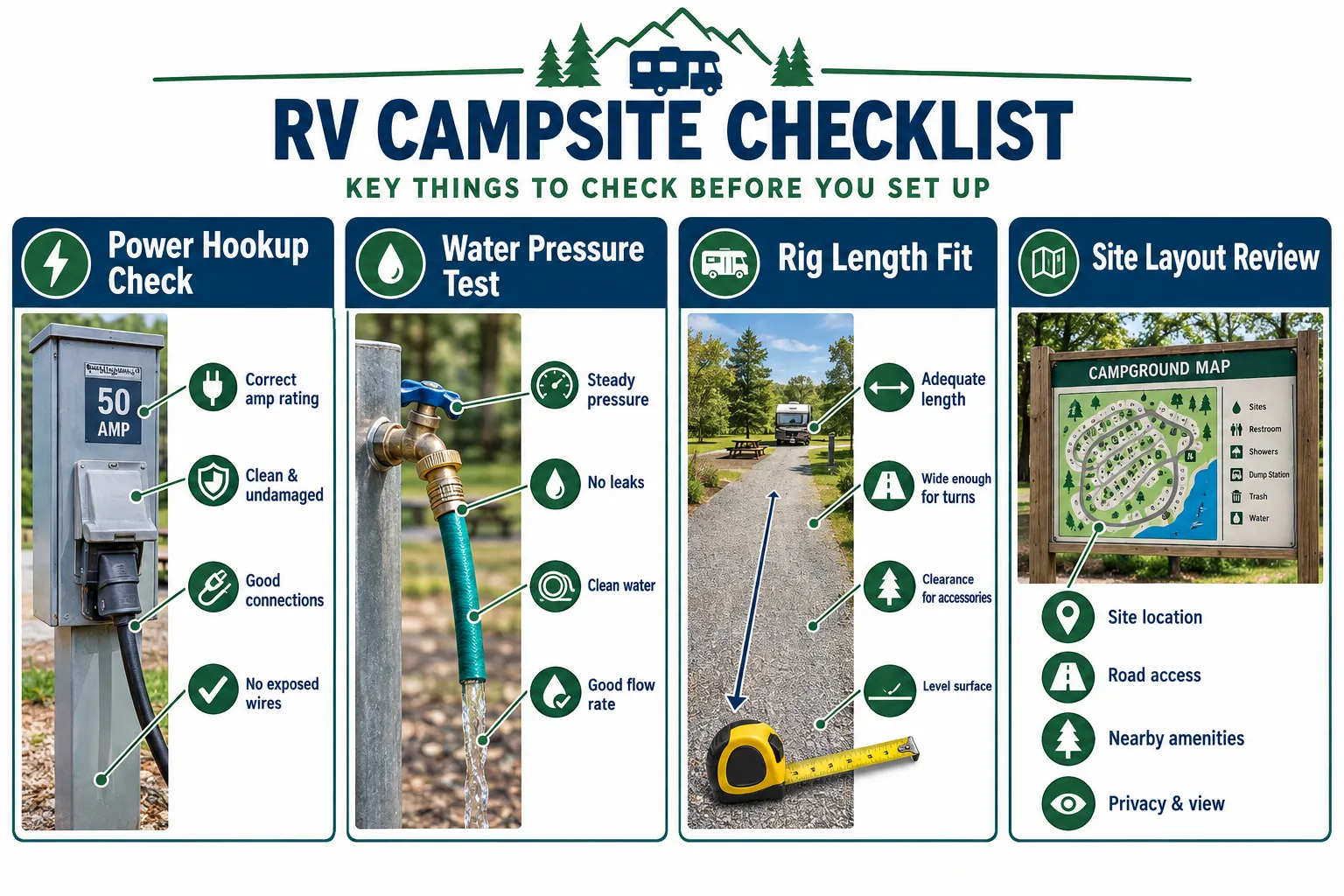
Hookup Checklist:
- ✅ Confirm amp service (30 or 50 amp) matches your RV’s system
- ✅ Ask about water pressure, some rural sites run low pressure that affects showers
- ✅ Check sewer hookup type (full hookup vs. dump station only)
- ✅ Verify Wi-Fi and cell signal if remote work is part of the trip
- ✅ Ask about pull-through vs. back-in sites for your rig length
Safety Checklist:
- 🔒 Look up recent reviews mentioning lighting, road conditions, and site drainage
- 🔒 Confirm road access width and clearance for larger rigs
- 🔒 Check for nearby flood zones or low-lying areas before storm season
- 🔒 Ask about on-site staff or emergency contact availability
- 🔒 Review cancellation policy in case weather changes plans
If a listing seems too vague on these details, that’s often a red flag. For a deeper look at warning signs, RV Showoff’s breakdown of 9 signs that tell you a campground is bad covers the exact red flags to watch for before you commit.
“A good site isn’t just close, it’s compatible with your rig, your schedule, and your comfort level.”
Once hookups are confirmed, it’s worth thinking about small upgrades that make any site feel more livable. Owners who camp locally on a regular basis often find that investing in something like the best RV bathroom upgrade you’ll ever make pays off more on frequent short trips than on rare long ones, simply because it gets used so often.
Finding RV Camping Close to Me Year-Round: Seasonal Strategies for Every Month
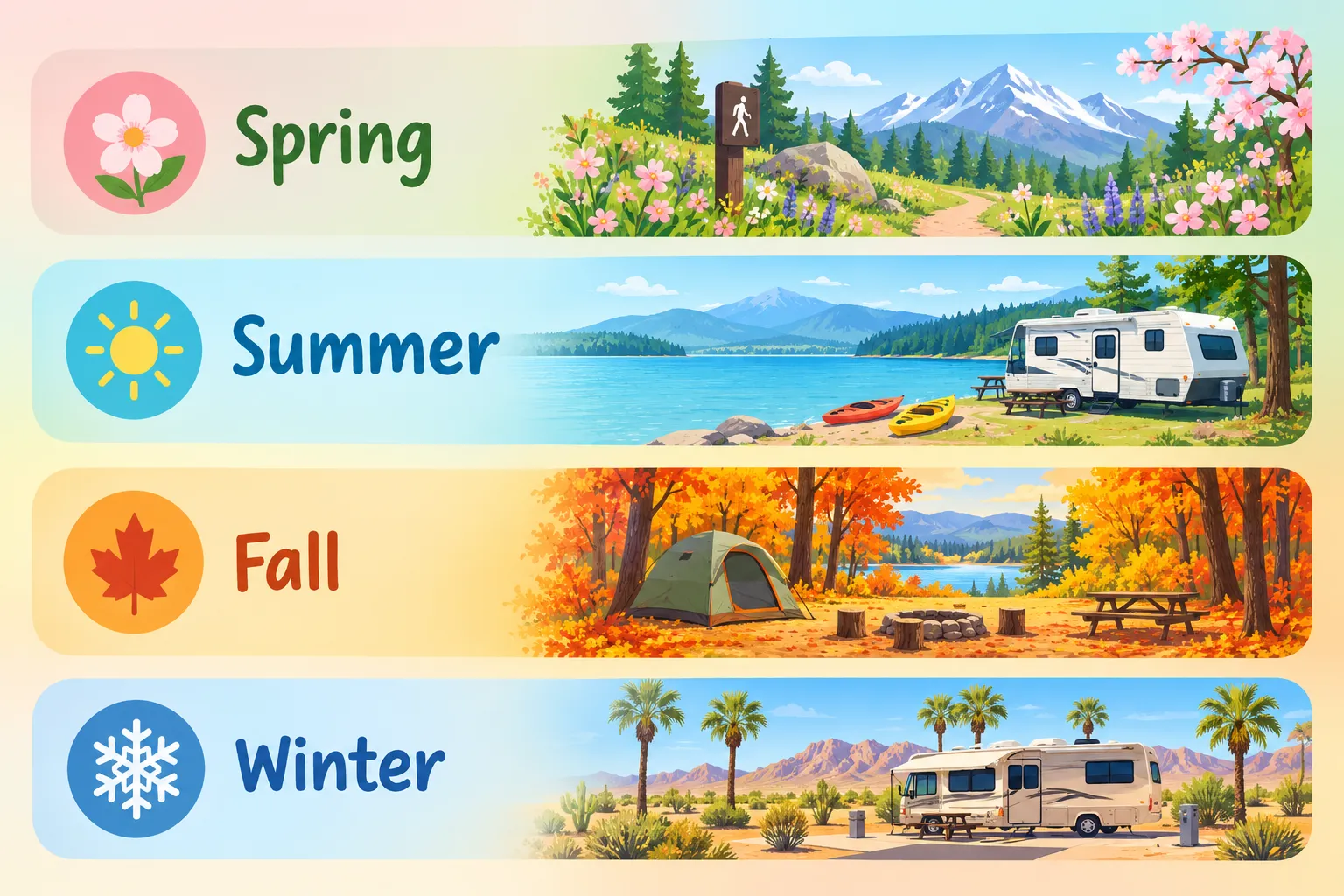
“Close to me” doesn’t mean the same thing in January as it does in July. Elevation, storm patterns, and public land access all shift what’s realistically available near home throughout the year.
Spring
Snowmelt can close forest roads and some dispersed sites well into April or May at higher elevations. Lower-elevation state parks and private RV parks tend to open first and are usually the safest local bet.
Summer
Demand peaks, especially on weekends. This is when apps and directories earn their keep, booking two to three weeks ahead for popular local sites avoids the scramble. Lakeside and mountain sites near metro areas fill fastest.
Fall
Shoulder season is quietly becoming one of the best times to camp close to home. Fewer crowds, lower rates, and cooler weather make it a favorite among budget-minded and younger RVers, and campgrounds are increasingly marketing directly to that audience during this stretch[3].
Winter
This is where regional research really matters. Warm-weather destinations like Florida see steady winter RV traffic, and areas such as Seffner, Florida camping illustrate how southern regions stay busy with local and snowbird RVers even in the coldest months up north. In colder climates, look for campgrounds offering heated bathhouses and winterized hookups, or shift toward public land at lower elevations where roads stay clear.
Policy changes affecting public land access can also shift what’s open near you from one year to the next, so it’s worth double-checking current land management notices before planning a winter boondocking trip[1][3].
Public Land, Boondocking, and Off-Grid Options Near You
Not every great local campsite comes with a fee or a reservation. National forests, BLM land, and many state wildlife areas allow dispersed camping, often for free or a small fee, and these spots are frequently overlooked in a basic “close to me” search because they don’t show up the same way paid campgrounds do.
To find them:
- Search public land maps specifically, not just general map apps
- Check length-of-stay limits, which are often 14 days per site
- Confirm road conditions, many dispersed sites require higher clearance vehicles
- Pack out everything, including gray water, since most sites have zero services
Boondocking has become more realistic for everyday RVers thanks to newer power technology. Advanced solar and battery systems are increasingly built to support off-grid stays and shoulder-season temperature swings, which means more RVers can comfortably camp off-grid closer to home instead of defaulting to a paid hookup site every time[1][9]. As RV build quality and component supply continue to improve industry-wide, these off-grid-friendly features are trickling down into more mid-range rigs, not just high-end models[2][9].
Making the Most of Local RV Camping: Outdoor Fun Checklist
Finding the site is only half the equation. A short local trip should still feel like a getaway, not just a change of scenery.
Quick-trip fun checklist:
- 🔥 Plan one no-fuss meal night, 7 easy camping meals you can make in one pot work great for a two-night local trip
- ☕ Pack a solid morning routine, since good coffee makes any campsite feel more like home, see the best coffee makers for camping for options that fit small RV kitchens
- 🧊 Skip the cooler hassle on short trips by leaning into no cooler camping strategies and shelf-stable meals
- 🍳 Try a few camping dinner ideas that don’t require a fridge to simplify packing for weekend trips
- 🌲 Ask campground staff about lesser-known scenic campground loops nearby, these hidden trails often beat the main attraction
Local trips are also a great time to test new gear or routines without much risk. If something doesn’t work, a new meal kit, a different site type, a piece of equipment, it’s a short drive home, not a wasted vacation.
Industry attendance at RV shows and events continues to show strong consumer interest in camping and travel, and many of these events now double as experiential marketing pushes that funnel RVers toward specific nearby destinations and campground partners[4][6][7][8]. Keeping an eye on local RV show schedules can actually be a decent way to discover new nearby campgrounds before they show up in general search results.
Conclusion
“RV camping close to me” isn’t just a search phrase, it’s become the actual planning method for a huge share of today’s RV owners. The good news is that finding a quality local site is easier than ever, as long as it’s approached with the right mix of tools: reservation apps for real-time availability, public land maps for off-grid options, and a simple hookup-and-safety checklist to avoid surprises.
The RV market overall is settling into a steadier, more moderate pace, but that stability is actually good news for campers, it means continued investment in booking tools, campground upgrades, and rig technology built for shorter, closer-to-home trips[1][2][3]. The best next step is simple: pick one tool from this guide, run a real search for camping near home this weekend, and put the hookup checklist to work before hitting “book.”
References
[1] Todays Industry News – https://rvbusiness.com/category/todays-industry-news/ [2] Supplyside – https://rvbusiness.com/category/supplyside/ [3] Industry Trends – https://www.rvnews.com/category/news/industry-trends/ [4] Video – https://rvbusiness.com/category/video/ [5] Big Stories – https://www.rvnews.com/category/big-stories/ [6] Top Story – https://rvbusiness.com/tag/top-story/ [7] See What S Next In Rv Travel As Winnebago Industries Showcases Three Premium Brands At America S Largest Rv Show – https://www.globenewswire.com/news-release/2026/09/15/3361995/0/en/see-what-s-next-in-rv-travel-as-winnebago-industries-showcases-three-premium-brands-at-america-s-largest-rv-show.html [8] See What S Next In Rv Travel As Winnebago Industries Showcases Three Vjahwkon5vyl – https://www.stocktitan.net/news/WGO/see-what-s-next-in-rv-travel-as-winnebago-industries-showcases-three-vjahwkon5vyl.html [9] manufacturingdive – https://www.manufacturingdive.com/news/supersede-elkhart-county-indiana-facility-building-material-rv/830380/ [10] rvbusiness – https://rvbusiness.com/