A campground host in Illinois once wrote in a state park training manual that hosts are not allowed to make up their own rules, not even to be nice.[1] That single sentence explains almost every conflict that happens at campground check-in booths across the country. Most campers do not mean to be rude. But the 2 things you should never say to a campground host slip out anyway, usually right after a long drive, a bad parking job, or a kid who really, really has to use the bathroom.
This guide breaks down exactly what those two phrases are, why they cause so much trouble, and what to say instead. It is written for every type of camper, from full-timers to weekend warriors, who wants smoother check-ins and a friendlier campground stay.
Key Takeaways
- The 2 things you should never say to a campground host are asking them to bend the rules for you, and treating them like personal staff who owe you a service.
- Campground hosts are usually volunteers or low-paid staff who follow strict rules set by park management, not their own preferences.[3][10]
- Hosts cannot legally or officially make exceptions for pets, extra vehicles, late checkouts, or site swaps.[1][3]
- Cleaning up trash and pet waste is always the camper’s job, never the host’s.[2][6]
- Being kind, patient, and prepared during check-in leads to a much better campground experience for everyone.
Why Campground Hosts Deserve More Respect Than They Get
Campground hosts have one of the toughest jobs in the outdoor world. Many of them are retirees who volunteer in exchange for a free campsite and hookups, not a paycheck.[10] Others are seasonal staff earning modest wages while working long hours in all kinds of weather.
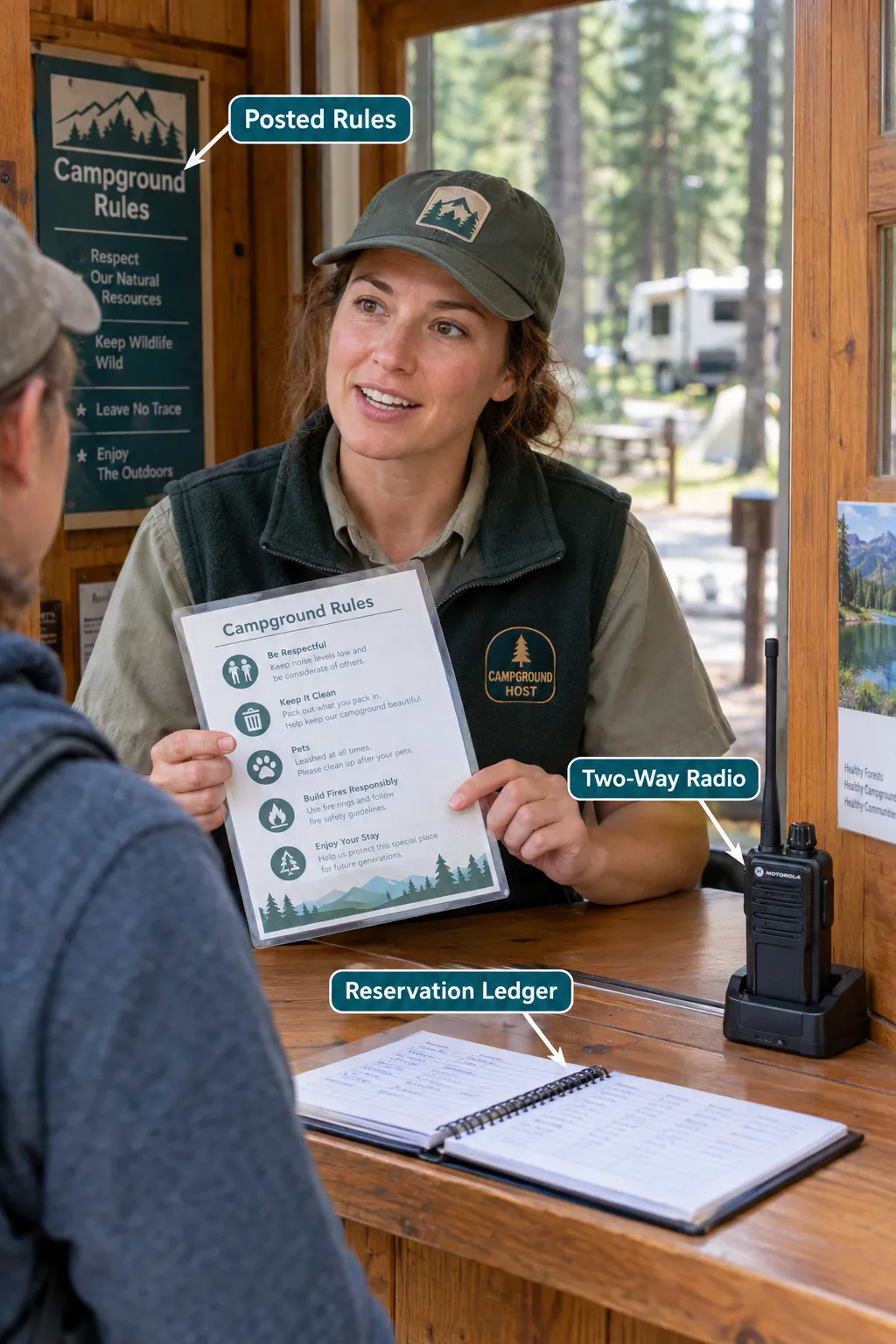
Their job is simple on paper: greet campers, answer questions, check people in, and keep the campground running smoothly. In real life, that job includes walking the grounds after dark, mediating noise complaints, cleaning bathrooms, and sometimes dealing with campers who are having the worst day of their trip.[9]
Host manuals used by state parks and the U.S. Forest Service are very clear about what hosts can and cannot do. Hosts are told to know the rules, follow the rules, and enforce the rules, every single time, for every single camper.[1][3] That means a host saying “no” to your request is not personal. It is the job.
Understanding this changes how most people talk to hosts. If a campground already feels off before you even say a word, it might be worth reading 9 signs that tell you a campground is bad before booking your next stay.
The 2 Things You Should Never Say to a Campground Host
Here they are, in plain language. These are the 2 things you should never say to a campground host, no matter how tired, frustrated, or rushed the arrival feels.
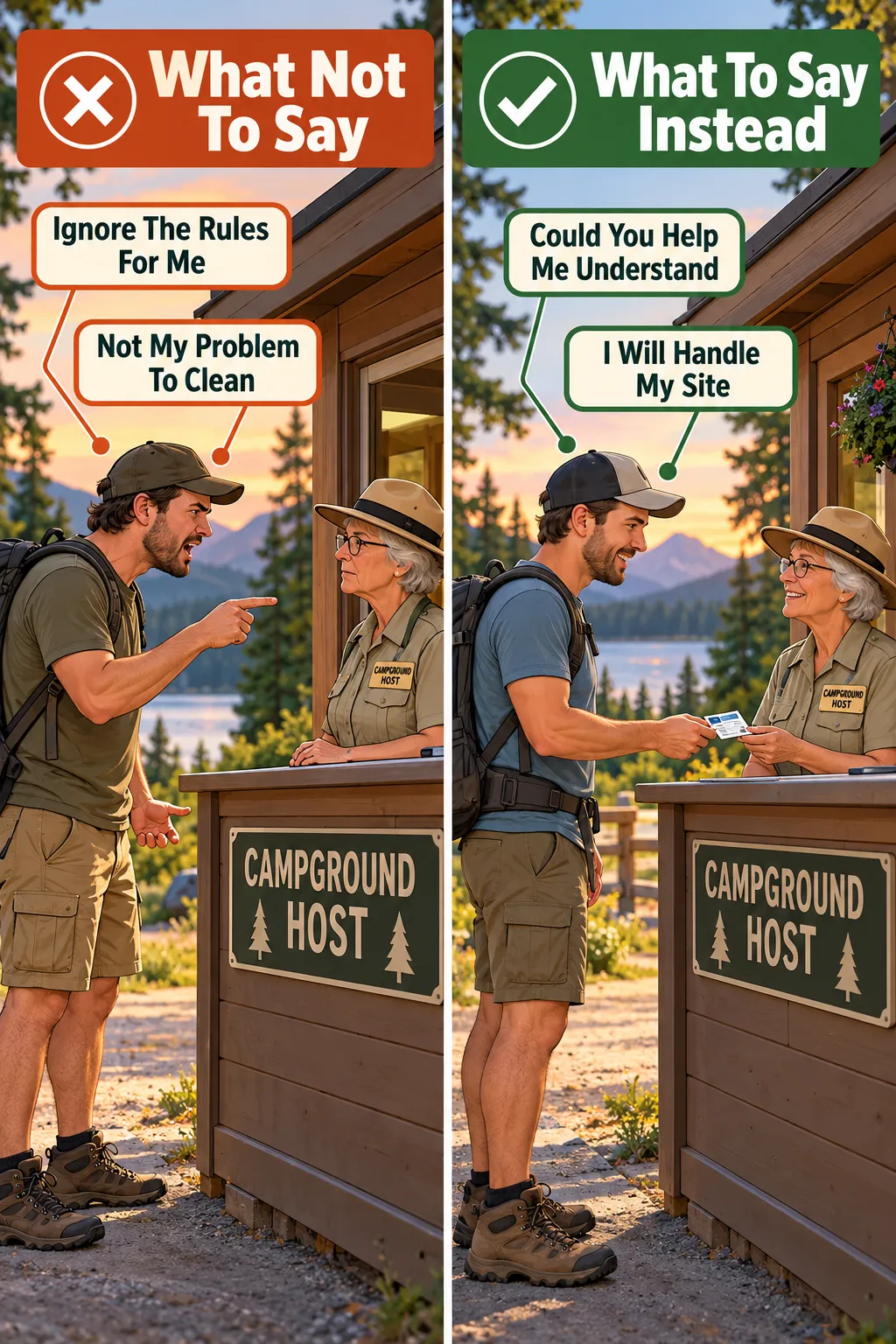
1. “Can’t You Just Ignore the Rules for Me?”
This is the number one phrase that puts a host in an impossible spot. It shows up in a lot of different outfits:
- “Can my dog off leash just this once?”
- “Can we squeeze in a third car?”
- “Can we stay past checkout? We’ll be quick.”
- “Nobody will notice if we just borrow that site for tonight.”
Host training manuals used across state and federal parks specifically forbid hosts from creating “additional rules” or unauthorized exceptions.[1][3] Hosts are required to enforce the same rules for every guest, every time. If they bend a rule for one camper, they open the door to being blamed, written up, or even losing their volunteer position.
“Hosts don’t get to pick and choose which rules matter. That’s not their call, and asking them to break the rules just puts them in a bad spot.”
Asking a host to look the other way is not a small favor. It is asking them to risk their position for a stranger’s convenience.
2. “You’re Basically My Concierge, Can You Handle This?”
The second phrase covers a whole category of entitled requests that treat a host like hotel staff instead of a park caretaker. Some real-world examples include:
- “Can you watch my kids while we go into town?”
- “Can you set up my awning? I’m exhausted.”
- “You’ll clean that up, right?” (about trash or pet waste)
- “Can you plan our whole weekend itinerary?”
Camp hosts are not bellhops, babysitters, or trip planners.[2][8] Their official duties usually include check-in, answering basic questions, and reporting site issues, not personal errands.[2] And when it comes to trash or pet waste specifically, cleaning up after your own site and your own pet is always the camper’s responsibility, never the host’s.[2][6]
If either of these phrases sounds familiar, it might be time for a quick refresh on campground etiquette tips every RVer should know before the next trip.
Why These Two Phrases Cause So Much Damage
It helps to understand what is actually happening behind the scenes when one of these phrases gets said out loud.
Hosts represent the park, not themselves. Whether it is a state park, a national forest, or a private RV resort, hosts are acting on behalf of the land manager or company that runs the property.[3][4] When a camper says “just make an exception,” the host has to say no on behalf of an entire organization, not because they personally want to be difficult.
Rule-breaking creates unfair treatment. If a host lets one RV park an extra car for free, the next twenty campers will expect the same. Consistency is the whole point of having a host in the first place.
Personal-service requests cross a line. Hosts are trained to focus on safety, rule enforcement, and basic guest questions, not personal tasks.[2][8] Asking them to babysit, hook up utilities, or clean a mess turns a working professional into unpaid labor.
Aggressive language makes things worse. Host manuals list intimidation, derogatory language, and fighting as serious violations that hosts are trained to disengage from immediately.[3] Raising your voice or using insults over either of these two phrases almost always escalates the situation instead of solving it.
Other Things You Should Avoid Saying to a Campground Host
While the two phrases above are the biggest offenders, a handful of close cousins also cause tension at the check-in window.
| Phrase | Why It Backfires |
|---|---|
| “That’s my site now” | Site assignments and reservations are protected; hosts must enforce them.[4] |
| “This is your fault” | Hosts implement policies set by park management or corporate ownership, not their own decisions.[3][9] |
| “You’re here to serve me” | Many hosts are volunteers trading work hours for a free site, not paid staff on call.[1][10] |
| “You won’t mind if we stay extra nights, right?” | Stay limits and checkout times exist for safety and scheduling reasons.[5] |
| “Deal with my neighbor right now” | Hosts are trained to step in for real rule violations, not every small annoyance.[4] |
Some of the most frustrating campground moments come from a mix of these phrases stacked together. For a lighter look at the personalities behind these run-ins, check out hilarious campground personalities, chances are, everyone will recognize someone.
What To Say Instead of The 2 Things You Should Never Say to a Campground Host
Good news: swapping out these phrases is easy once it becomes a habit. Here is a simple side-by-side guide.
Instead of asking for a rule exception, try:
- “Is there any flexibility on this, or is it firm?”
- “I didn’t realize that was the rule, can you help me understand it?”
- “Is there someone I should talk to about a special situation?”
Instead of treating the host like personal staff, try:
- “Could you point me toward the dump station?”
- “Is there a spot nearby where my kids can play safely?”
- “I’ll take care of cleanup, just wanted to let you know about the mess.”
A short, polite tone almost always gets a better result than a demand. Hosts remember kindness, and kindness often earns small favors that rule-breaking demands never will.
How to Build a Better Relationship With a Campground Host
Avoiding the 2 things you should never say to a campground host is just the starting point. A few extra habits make every stay smoother:
- Arrive with your reservation info ready. This speeds up check-in and reduces confusion.
- Ask questions early. Confirm quiet hours, pet rules, and checkout times the moment you arrive.
- Report problems, don’t demand solutions. Let hosts know about a noisy neighbor or broken hookup, then let them handle it their way.
- Say thank you. A simple thank-you goes further than most campers realize, especially with volunteer hosts.
- Leave the site better than you found it. Pack out trash, clean up pet waste, and reset fire rings.
Campgrounds run by families or long-term owner-operators often have a different feel than big corporate resorts, largely because of this kind of mutual respect. It is one reason so many RVers say mom-and-pop campgrounds beat corporate RV parks when it comes to overall experience.
Real Consequences of Getting It Wrong
Rule-breaking requests and entitled attitudes are not just awkward, they have real consequences.
- Volunteer burnout: Programs that rely on unpaid hosts already struggle with turnover, and entitled behavior from campers is a major contributor to hosts quitting mid-season.[1][3]
- Stricter rules for everyone: When a host gets burned by one exception, campgrounds often respond with tighter, less flexible policies for future guests.
- Bad reviews and reputations: Campgrounds with reputations for hostile guests or overwhelmed hosts often show up on lists of weird things going on at RV parks, which scares away future bookings.
- Safety issues: Ignoring posted rules, like leash laws or vehicle limits, is often tied to bigger safety problems. Some of the most dangerous RV campgrounds got that reputation partly because rules were ignored or unevenly enforced.
Frequently Asked Questions
Are campground hosts paid employees?
Sometimes, but not always. Many hosts at state parks, national forests, and other public lands are volunteers who trade their time for a free campsite and utility hookups rather than a paycheck.[1][10]
Can a campground host really refuse to bend the rules?
Yes. Host manuals require consistent rule enforcement and specifically prohibit hosts from making unauthorized exceptions, even for campers with sympathetic stories.[1][3]
What should campers do if a rule seems unfair?
Ask calmly whether there is flexibility, and if not, request contact information for park management. Hosts are rarely the ones who write the rules, they just enforce them.[3][4]
Do hosts clean up after pets or trash left at a site?
No. Cleaning up trash and pet waste is the camper’s job, both as basic etiquette and often as a written park rule.[2][6]
What is the single biggest thing to avoid at check-in?
Avoid demanding exceptions and avoid treating the host like personal staff, these are, by a wide margin, the 2 things you should never say to a campground host if a smooth stay is the goal.
Conclusion
Campground hosts keep the entire camping system running, cleaning bathrooms, checking IDs, enforcing rules, and handling problems most campers never even see. Remembering the 2 things you should never say to a campground host, asking them to bend the rules and treating them like personal staff, is one of the easiest ways to have a smoother, friendlier trip.
A little patience at the check-in window pays off fast. Hosts remember polite campers, and polite campers tend to get better information, better tips, and sometimes even a little extra grace when something unexpected comes up. Next time check-in feels stressful, take a breath, skip these two phrases, and lead with a simple “thank you” instead. It makes a bigger difference than most campers expect.
References
[1] Campgroundhostmanual – https://dnr.illinois.gov/content/dam/soi/en/web/dnr/outreach/documents/campgroundhostmanual.pdf
[2] What Do Camp Hosts Do – https://rvlifestyle.com/what-do-camp-hosts-do/
[3] Usfs Campground Host Manual Print – https://forestservicestewardship.org/pdf/USFS_Campground_Host_Manual_print.pdf
[4] Camp Etiquette – https://www.nps.gov/subjects/camping/camp-etiquette.htm
[5] Hoststandards – https://www.hipcamp.com/en-US/hoststandards
[6] Camping Tips From Campground Hosts – https://thedyrt.com/magazine/lifestyle/camping-tips-from-campground-hosts/
[8] 35 Campground Etiquette – https://crappyrv.com/blog/35-campground-etiquette.html
[9] How To Manage And Run A Campground Or Rv Park – https://software.camplife.com/blog/how-to-manage-and-run-a-campground-or-rv-park
[10] Camp Host – https://www.dcr.virginia.gov/state-parks/camp-host