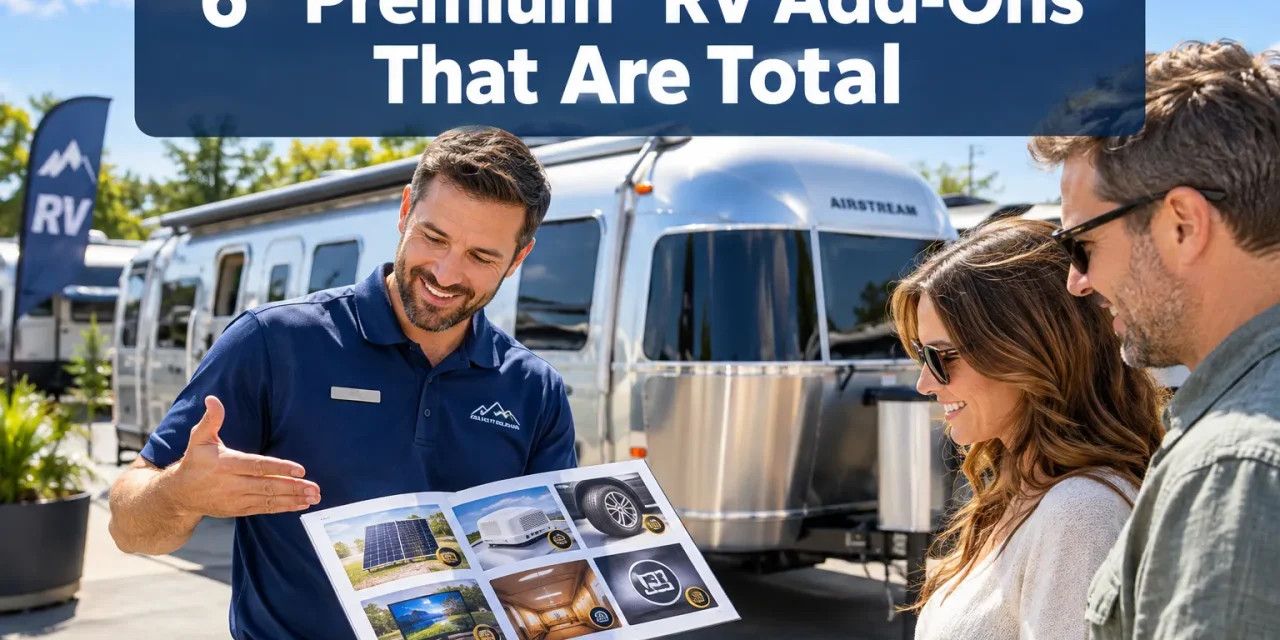
RV dealers made an average of thousands of dollars per sale in 2025 just from “extra” packages tacked onto the final bill.[10] Many of those extras never get used. Some even get removed within the first year of ownership. That is the hidden cost behind shiny showroom words like “premium,” “exclusive,” and “luxury.”
This guide breaks down 6 “Premium” RV Add-Ons That Are Total Rip-Offs so buyers can spot them before signing anything. These are not random guesses. They come from real buyer reports, dealer investigations, and owner stories from 2024 through 2026.[10][11][4] Some add-ons sound fancy but add almost no real value. Others can even cost more money to fix than they are worth.
Key Takeaways
- Dealer protection packages like paint sealant and fabric guard rarely hold up and can often be done cheaper elsewhere.[5][10]
- Bundled tech packages mark up basic solar, TPMS, and surge protectors far above buying them separately.[5][2]
- Fancy entertainment systems and outdoor kitchens boost the price tag more than they boost comfort or resale value.[5][1]
- Auto-leveling hydraulic systems have high failure rates and expensive repairs compared to simple manual stabilizers.[5][11]
- RVs lose about 20% of their value in the first year, so pricey cosmetic add-ons almost never pay buyers back.[14][5]
Why These 6 “Premium” RV Add-Ons Are Total Rip-Offs
RVs are not cheap. A new travel trailer or motorhome can already cost tens of thousands of dollars. Dealers know most buyers are excited and a little nervous. That is the perfect moment to offer “premium” extras that feel like smart upgrades.
The truth is simpler. Most of these add-ons are priced for maximum profit, not maximum value. Reports on dealers like Hilltop Camper & RV describe buyers feeling pressured into extra packages during financing, only to realize later they overpaid for very little real benefit.[10][8]
Here is the full list of 6 “Premium” RV Add-Ons That Are Total Rip-Offs, and what to do instead.
1. Dealer “Premium” Protection Packages
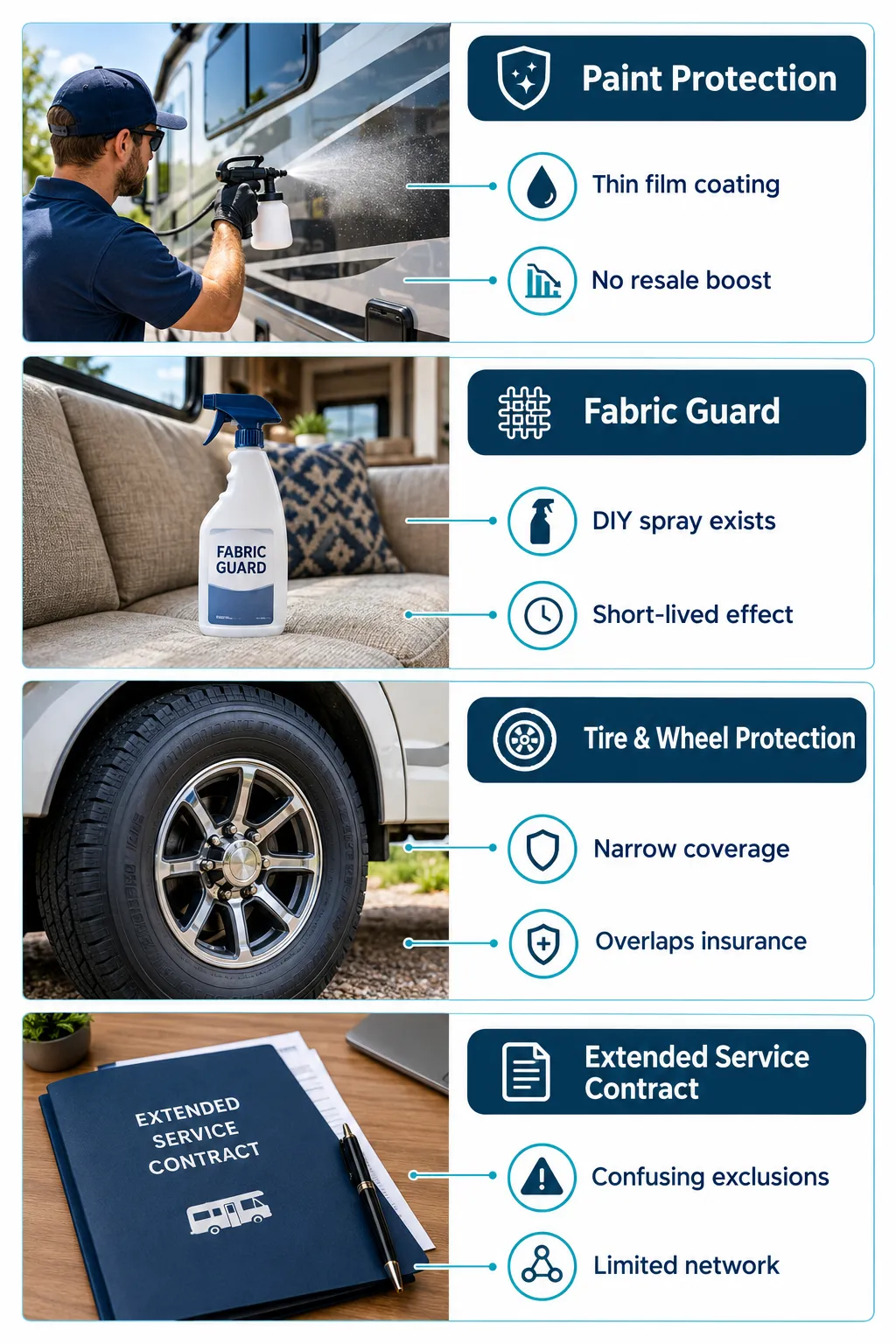
This is the big one. Paint protection, fabric guard, tire and wheel protection, and extended service contracts are often bundled together at the finance desk. Dealers present this bundle as a smart way to “protect your investment.”
In reality, these packages are some of the biggest profit centers in RV sales.[5][10] They can cost thousands of dollars, yet many buyers never fully understand what is actually covered.
Why it’s a rip-off:
- Paint protection coatings are often just a basic sealant anyone can apply at home for far less.
- Fabric guard sprays wear off fast and rarely outlast one good cleaning.
- Tire and wheel protection plans usually have narrow terms and overlap with coverage buyers already have through insurance.[5]
- Extended service contracts often come with confusing exclusions and a very limited list of approved repair shops.[11][10]
What to do instead: Ask for an itemized price on every single item in the package. Then search online for the same protection sold separately. Most of the time, a local detail shop or auto parts store can do the same job for a fraction of the dealer price.
“Buyers of Hilltop Camper & RV and other dealers have reported feeling pressured into these extras, only to conclude later they overpaid for minimal value.” [10]
2. Bundled “Premium Technology Packages”
Solar panels, tire pressure monitoring systems (TPMS), and surge protectors are genuinely useful RV upgrades. That is not in question. The problem is how dealers sell them.
Instead of letting buyers choose and price each item, dealers wrap them into one “premium technology package” with a single inflated price tag. This hides how much each piece actually costs.[5][2]
Why it’s a rip-off:
- A basic 100-watt solar panel often retails for a few hundred dollars on its own.
- A quality TPMS kit can be bought online for well under the bundled markup price.
- Surge protectors are widely available at RV supply stores for a fraction of the “package” price.
| Component | Bundled Package Feel | Buying It Separately |
|---|---|---|
| Solar panel | “Exclusive premium feature” | Standard part sold at any RV store |
| TPMS | Marketed as high-tech safety | Easy DIY install kit |
| Surge protector | Framed as luxury protection | Common accessory, widely available |
What to do instead: Keep the gear. Skip the bundle. Buy solar, TPMS, and surge protection as standalone products or have an independent RV shop install them. The same safety and convenience can come at a much lower cost.[5][9][12]
3. High-End Entertainment Systems and Outdoor Kitchens
Giant flat-screen TVs, ceiling-mounted surround sound, premium soundbars, and elaborate built-in outdoor kitchens look amazing on a showroom floor. They photograph well. They sound impressive during a sales walk-through.
But these features inflate the sticker price far more than they improve day-to-day comfort.[5][1] Worse, they rarely add meaningful resale value when it is time to sell or trade in.[5][1]
Why it’s a rip-off:
- A simple 32-inch TV and soundbar can be added later for a small fraction of the cost of a factory “home theater” package.
- Built-in outdoor kitchens add weight and extra plumbing that can leak or need repair down the road.
- Buyers shopping for used RVs rarely pay extra just because the TV is bigger or the speakers are fancier.
What to do instead: Choose a simpler factory setup, then upgrade electronics later with off-the-shelf products. This keeps the base price lower and gives full control over what gets installed.
4. Complex Auto-Leveling and Hydraulic Systems
Automatic leveling sounds like a dream feature. Push a button, and the RV levels itself. No crank handles. No blocks under the tires. It is easy to see why this upsell works so well on the sales floor.
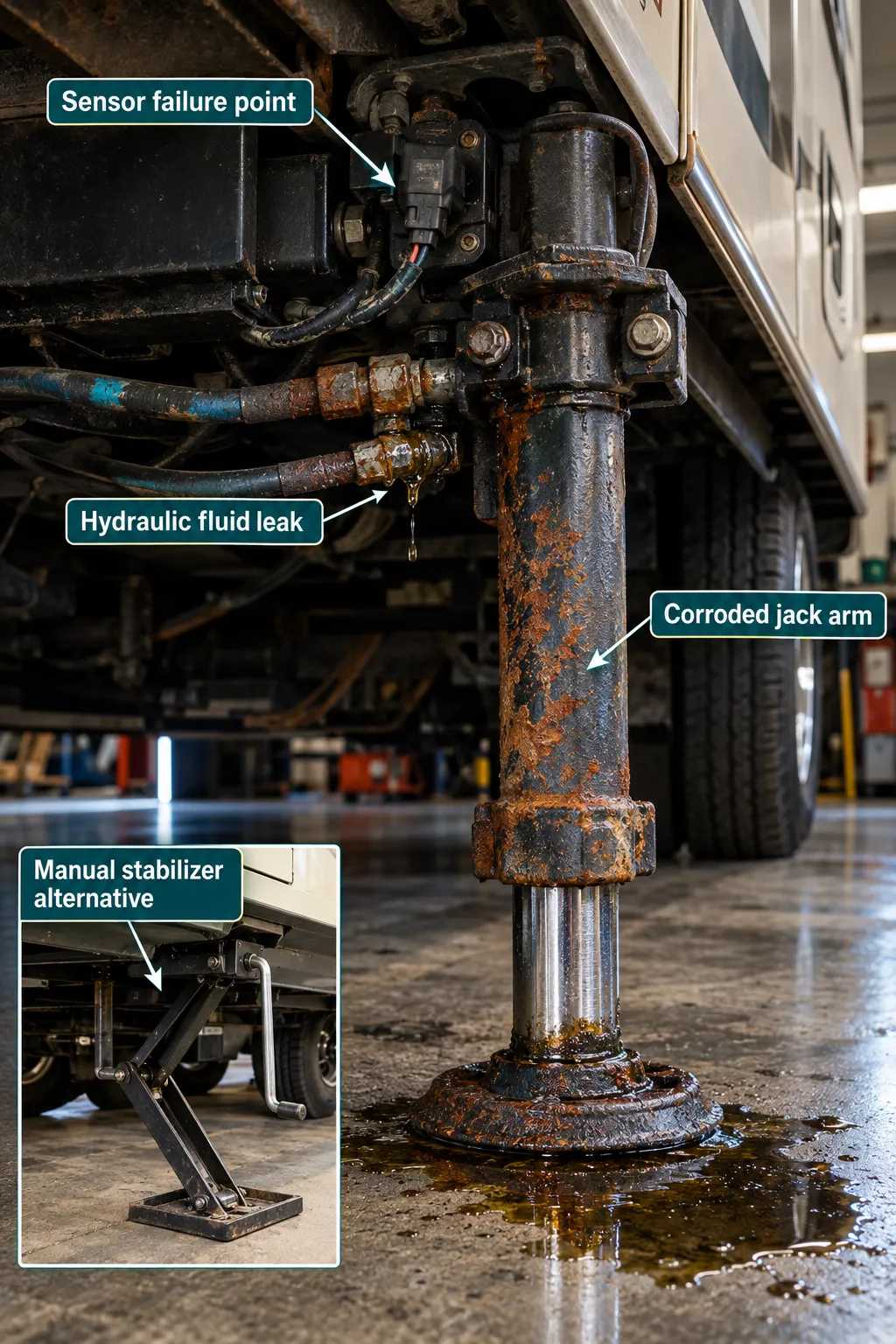
The problem shows up later. Hydraulic auto-leveling systems with multiple sensors and electronics are repeatedly flagged as one of the worst upgrades for long-term reliability.[5][11]
Owner reports from late 2024 describe hydraulic leveling systems that worked fine at first, then developed sensor failures and fluid leaks. The rig became unusable until expensive repairs were completed.[11] Simple manual stabilizers almost never have this problem, and they rarely need professional repair at all.[5]
Why it’s a rip-off:
- More sensors and hydraulic parts mean more things that can break.
- Repairs often require specialized technicians, which can mean long wait times and high labor bills.
- Resale buyers rarely pay extra for auto-leveling, especially on used units with unknown maintenance history.
What to do instead: Consider sticking with manual or basic electric stabilizer jacks. They take a few extra minutes to set up but have far fewer expensive failure points.
5. Extra Slide-Outs and “Luxury” Floorplans
More slide-outs can mean more living space. That part is true. But extra slides also mean more seals, more motors, and more potential leak points.
Dealers often use “luxury” floorplans with three or four slide-outs to justify a much higher price tag. In reality, comparisons show that one or two well-placed slides usually deliver most of the livability benefit most owners will ever use.[5][6]
Why it’s a rip-off:
- Every slide-out adds weight, which can affect towing and fuel economy.
- More slides mean more rubber seals that can crack, leak, or need replacement.
- Many owners report that after the novelty wears off, they only regularly use one main slide-out anyway.
What to do instead: Walk through a floorplan and ask: “Would two slides feel almost as spacious as four?” Often the honest answer is yes. Fewer slide-outs usually means fewer repair headaches for years to come.
6. Custom Furniture, Marble-Style Counters, and RV-Specific Mattresses
Custom cabinetry, marble-look countertops, and specialty “RV mattresses” are marketed as premium comfort upgrades. They sound like they belong in a high-end home, not a camper.
Owner reports tell a different story. One detailed account describes a custom RV mattress that sagged quickly, was hard to fit with regular sheets, trapped heat at night, and performed no better than an inexpensive mattress with a topper added on top.[11] That is a textbook example of a “premium” rip-off: a flashy price tag with a disappointing real-world result.
Why it’s a rip-off:
- High-end custom furniture adds thousands to the build price but rarely boosts resale value.[1][11]
- Marble-style counters are often a thin laminate, not real stone, despite the premium price.
- Specialty mattresses can trap heat and wear out fast, especially in smaller RV bedrooms with less airflow.
What to do instead: A quality mattress topper on a standard mattress often performs just as well, if not better, for a much lower price. Save custom furniture upgrades for after move-in, once real daily use shows what is actually needed.
Other Premium Traps to Watch Out For
The six add-ons above are the biggest offenders, but a few related traps deserve a quick mention.
“Free upgrade” pricing tricks. Dealers sometimes claim an upgrade is “free” or “exclusive.” In reality, the cost is usually baked right into a higher base price.[4][8] A detailed breakdown shows that buying similar entertainment systems, solar setups, and warranties independently can cost thousands less than the bundled “premium” version offered at the dealership.[4]
Finance office pressure tactics. Some buyers have been told their loan “was approved based on these extras,” making it sound like the add-ons are required. Banks cannot require optional products like gap coverage, paint protection, or service contracts.[8] That claim is a pressure tactic, not a rule.
Insurance add-ons that quietly inflate costs. A policy quoted around $700 a year can climb much higher once common extras like roadside assistance, rental reimbursement, and tire and roadside repair coverage are bundled in.[3] Many of these overlap with services already included in travel club memberships or credit card perks.[3]
Rental add-ons for borrowed RVs. For anyone renting instead of owning, watch for loss damage waivers, mileage overage rates, generator-hour surcharges, premium roadside assistance, cleaning and prep fees, and waste-tank dump charges. These are major profit levers for rental companies, and mileage, generator use, and dump fees are some of the most common places renters overpay.[15]
The Depreciation Problem Nobody Talks About
Here is the number that ties this whole list together: RVs commonly lose around 20% of their value in the very first year of ownership.[14][5]
That means almost none of the money spent on cosmetic or entertainment upgrades comes back at resale. A $4,000 “premium package” does not add $4,000 to the resale price. In many cases, it adds very little at all.
Experts recommend a simple rule: skip the costly cosmetic and entertainment upgrades at the time of purchase. Instead, focus spending on durable, safety-focused improvements like tires, brakes, and basic electrical safety gear. Those items hold their practical value even as the RV’s book value drops.[14][2]
How to Avoid These 6 “Premium” RV Add-On Rip-Offs
Here is a simple checklist to use before signing any RV purchase or rental agreement:
- Ask for an itemized price list. Every add-on should have its own clear price, not just a bundled total.
- Research the same product sold separately. A quick search often reveals the real market price.
- Say no to pressure. No loan requires optional add-ons like paint protection or extended service contracts.[8]
- Compare DIY vs. dealer installation. Solar, TPMS, and surge protectors are often easy DIY projects.[5][9]
- Think about resale before buying “luxury.” Ask whether an upgrade will actually bring back its cost later.[5][14]
- Read the fine print on warranties. Check what is excluded and which repair shops are actually in network before paying extra.[11]
Frequently Asked Questions
Are all RV upgrades a bad idea?
No. Some upgrades, like basic solar, TPMS, and surge protection, are genuinely useful.[5][2] The issue is paying a huge markup for a bundled “premium” version instead of buying the same gear separately.
What is the single biggest rip-off on this list?
Dealer protection packages tend to cause the most buyer regret, since they can cost thousands of dollars with unclear real-world benefit.[5][10]
Should a buyer ever walk away from a deal over add-ons?
Yes, if the dealer refuses to remove unwanted add-ons or claims a loan requires them. That is a known pressure tactic, not a real lending rule.[8]
Conclusion
Premium does not always mean valuable. In RV sales, it often means “marked up.” The 6 “Premium” RV Add-Ons That Are Total Rip-Offs covered here, dealer protection packages, bundled tech packages, flashy entertainment systems, complex auto-leveling systems, extra slide-outs, and custom furniture or mattresses, show a clear pattern. They look impressive in the moment but rarely pay off in comfort, reliability, or resale value.
The good news is that knowledge is the best defense. Before the next RV purchase or rental, slow down. Ask for an itemized breakdown. Compare prices online. Say no to pressure in the finance office. A little homework now can save thousands of dollars, and it keeps the RV lifestyle focused on what really matters: time on the road, not time arguing about add-ons.
References
[1] Upgrading Used Rv Features Whats Worth It Vs Whats Not – https://www.bentsrv.com/blog/upgrading-used-rv-features-whats-worth-it-vs-whats-not
[2] Rv Camper Upgrades That Actually Improve Your Trips – https://motorsportsland.com/blog/rv-tips-guides/rv-camper-upgrades-that-actually-improve-your-trips
[3] Best Rv Insurance – https://rvownerhelp.com/best-rv-insurance/
[4] Rv Dealers Scams – https://rvtroop.com/rv-dealers-scams
[5] 9 Features Rv Builders Add Just To Jack Up The Price – https://rvshowoff.com/9-features-rv-builders-add-just-to-jack-up-the-price/
[6] Rv Upgrades – https://blog.goodsam.com/rv-upgrades
[8] Rv Dealer Scams That Could Cost You Thousands – https://rvshowoff.com/rv-dealer-scams-that-could-cost-you-thousands/
[9] Best Rv Mods – https://www.rvezy.com/blog/best-rv-mods
[10] Hilltop Camper And Rv Alexandria Mn Exposed Add On Pressure Pdi Defects Title Warranty Delays – https://rvreports.ai/report/hilltop-camper-and-rv-alexandria-mn-exposed-add-on-pressure-pdi-defects-title-warranty-delays/