A ten-foot stick of 4-inch PVC pipe costs less than a tank of diesel. Yet it can solve more storage headaches in an RV than almost any gadget sold at a camping store. Once you see what dedicated RVers are building with this cheap plumbing material, you will never look at the hardware store aisle the same way again. This guide covers 9 unusual uses for PVC pipe that will change your RV life, from sewer hose carriers to knife blocks hiding inside your kitchen wall.
PVC pipe is light, waterproof, cheap, and easy to cut with a regular hand saw. That combination makes it perfect for small rigs where every inch of space matters. Whether towing a travel trailer, driving a fifth wheel, or living full-time in a motorhome, these ideas can help you organize gear, protect your rig, and travel smarter.
Key Takeaways
- PVC pipe makes a durable, low-cost sewer hose carrier that mounts under the RV or along the bumper, keeping messy hoses out of your main storage bay.[1][3]
- 5-inch PVC fits modern hoses better than the old 4-inch standard, since today’s hoses often have bulkier connector fittings.
- Suspending a PVC tube from the ceiling of a storage bay frees up floor space for bigger gear like chairs and grills.[5][9]
- Square PVC fence posts work as an alternative carrier when round pipe is hard to mount to your rig’s frame.[5]
- Scrap PVC can organize your interior too, from hairdryer holsters to knife blocks, turning spare pipe into smart cabinet storage.[8]
Why Every RV Owner Needs PVC Pipe On Their Radar
Storage space is the number one complaint among RV owners, especially those in smaller travel trailers or camper vans. Factory-installed compartments fill up fast with chairs, tools, and leveling blocks. That is exactly why so many RVers have turned to PVC pipe as a flexible, build-it-yourself solution.
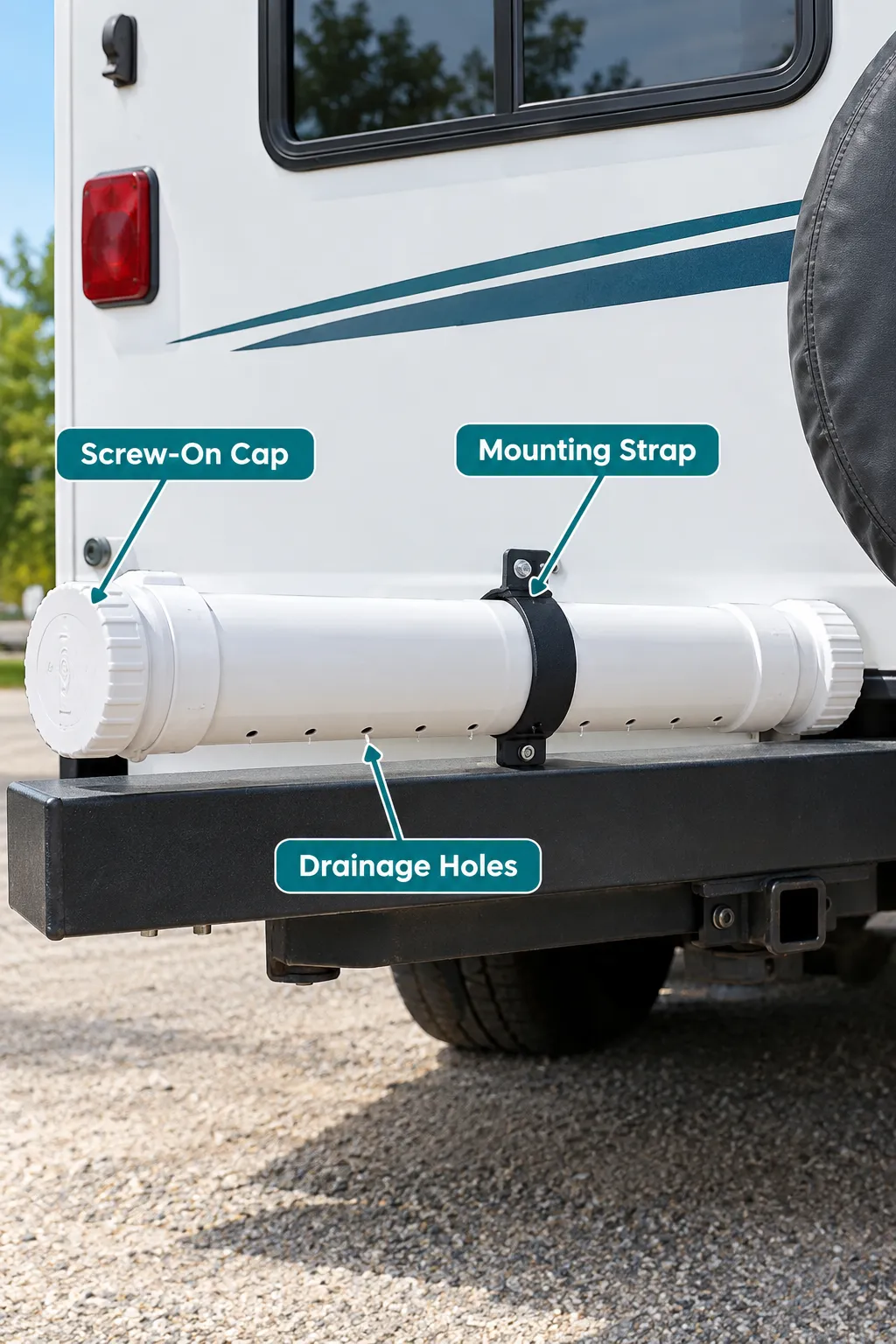
PVC pipe shows up again and again in RV storage guides because it checks every box: it is waterproof, rot-proof, lightweight, and sold at any hardware store for just a few dollars a foot. It also cuts cleanly with basic tools, so there is no need for a workshop full of equipment. A capped length of pipe can become a sewer hose tube, a tool tunnel, or even a kitchen organizer, depending on how it’s mounted and sized.[3]
Most of these setups remain DIY projects rather than factory features, though a few RV manufacturers have started adding capped bumpers and built-in tube storage that copy the same basic idea.[9][10] Until that becomes standard across the industry, PVC pipe is still the most reliable way to build the exact storage solution your rig is missing.
9 Unusual Uses for PVC Pipe That Will Change Your RV Life
These are the most practical and creative ways RV owners are using PVC pipe right now. Some are classics worth revisiting, and a few are genuinely surprising.
1. Build a Slide-Out Sewer Hose Carrier Under Your Bumper
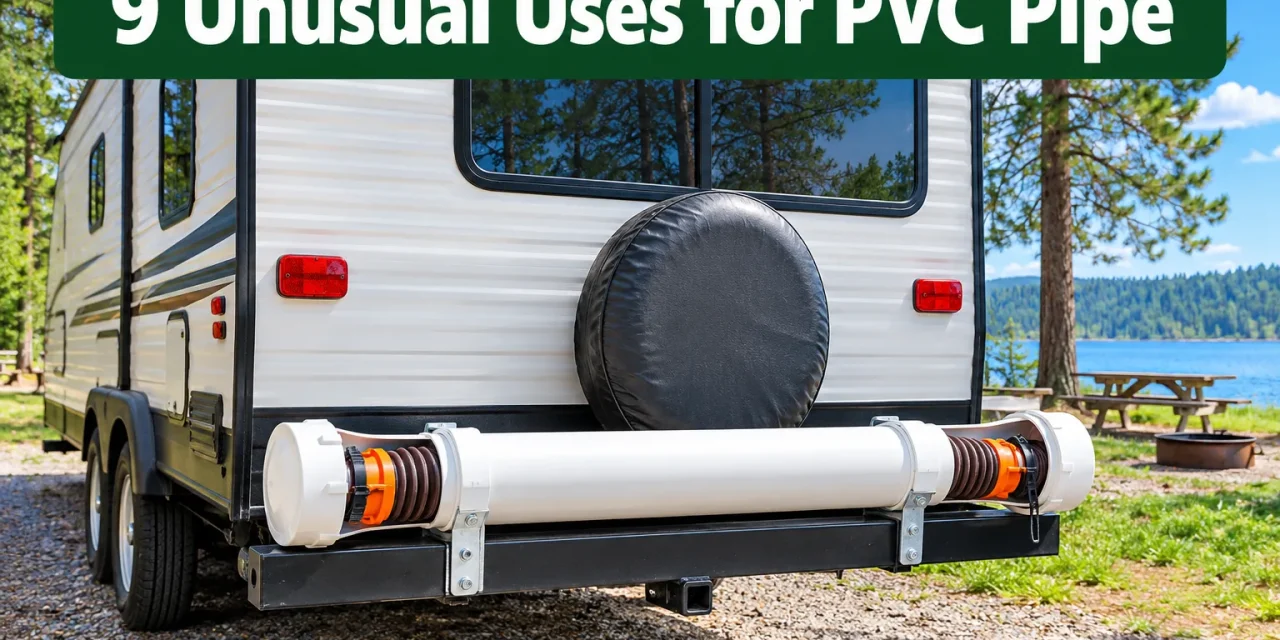
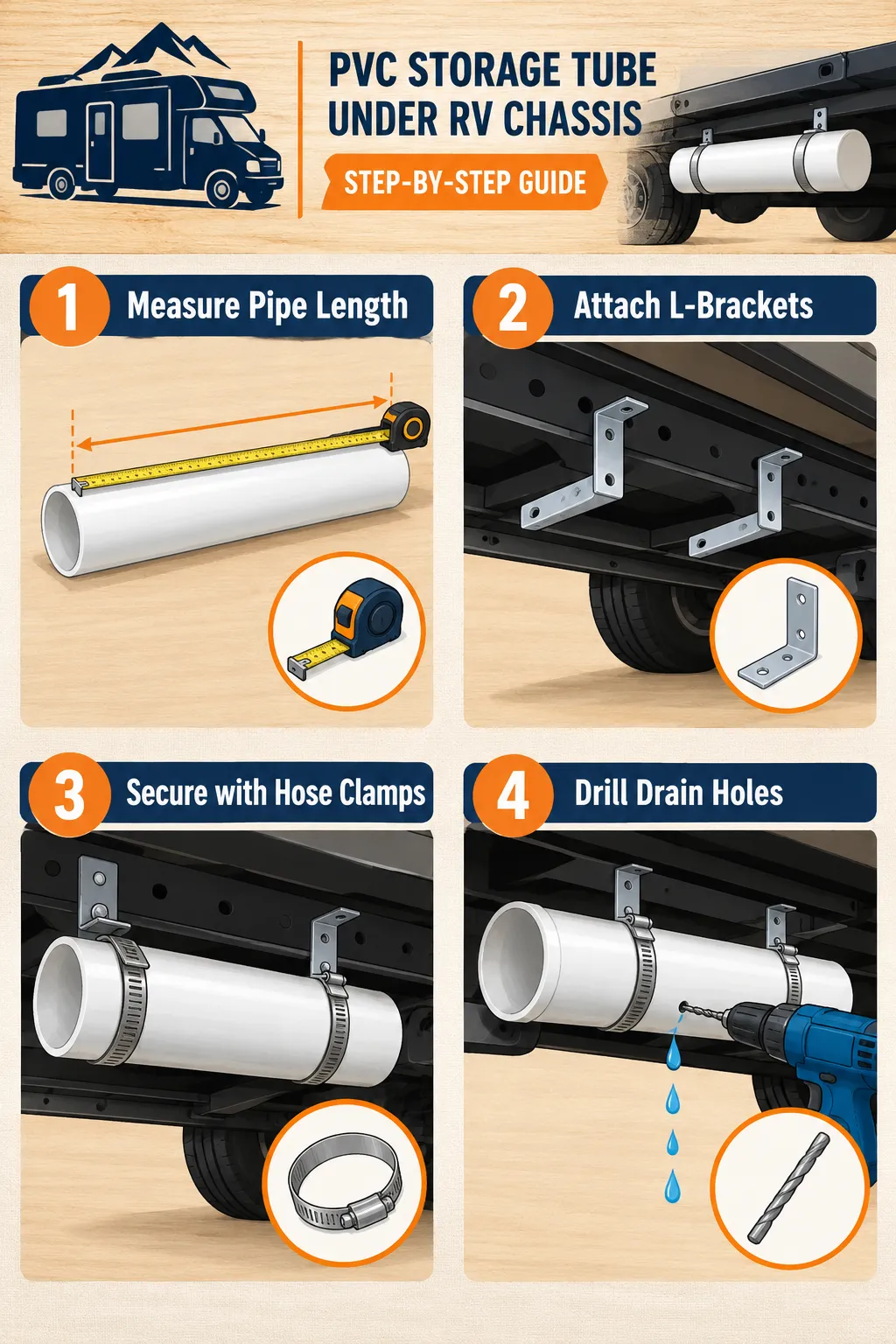
This is the project that started it all. Take a length of 4- to 6-inch round PVC pipe, add screw-on caps at both ends, and drill a few small drainage holes along the bottom. Mount the tube under the chassis or along the rear bumper using brackets or straps.[1][3][4]
The screw caps let you slide the sewer hose in and out without touching it directly. The drainage holes stop water from pooling inside, which cuts down on odor and corrosion over time.[4] This single project solves one of the messiest storage problems in RVing.
2. Upgrade to 5-Inch PVC for Bigger Hoses
Older RV bumpers were often built for standard 4-inch hoses. But many popular sewer hoses today, especially 15-foot models, have bulkier end fittings that simply will not fit through a 4-inch tube. If your current carrier feels too tight, step up to 5-inch PVC pipe. It is only slightly bigger, but it makes a world of difference when you’re trying to shove a hose through in the dark after a long travel day.
3. Hang a PVC Tube From the Ceiling of Your Storage Bay
Floor space inside a storage bay is “prime real estate.” Instead of letting a sewer hose eat up that space, suspend a capped PVC tube from the ceiling or side wall using brackets, straps, or even bungee cords.[5][9]
This keeps the hose fully contained and off the floor, while leaving room below for bigger items like folding chairs, grills, or leveling blocks. It is a simple change that makes a cramped bay feel noticeably roomier.
4. Try a Square PVC Fence Post Instead of Round Pipe
Round pipe is not always easy to mount flush against a flat bumper or frame rail. That is where square PVC fence posts come in. These housings use the same basic cap-and-tube design but mount more securely against flat surfaces, which makes them a smart swap when round pipe feels wobbly or awkward.[5]
“A square housing with end caps mounts flatter and tighter against the frame, which means less rattling on rough roads.”
5. Store Fishing Rods and Awning Poles in a PVC Tunnel
The sewer hose tube concept works for more than just hoses. A 6- to 8-inch PVC tube with screw caps makes an excellent long-gear tunnel for fishing rods, awning support poles, tent stakes, and other oddly shaped tools that never fit neatly into a drawer.[8][10]
Mount it under the RV or along the bumper, just like a hose carrier. Label each end so family members know what’s inside before digging in at the campsite.
6. Turn Scrap PVC Into a Hairdryer and Curling Iron Holster
This one surprises a lot of RV owners. Short vertical segments of PVC pipe, mounted to a cabinet wall near an outlet, make perfect holsters for a hairdryer or curling iron.[8]
Cut the pipe a few inches shorter than the appliance handle, mount it with screws or strong adhesive strips, and slide the tool in nose-first. It keeps hot styling tools off the counter and away from little hands, all for the cost of a scrap pipe offcut.
7. Build a Knife Block With Capped PVC and Bamboo Sticks
RV kitchens rarely have room for a bulky knife block. A clever workaround uses a larger-diameter capped PVC section filled with bamboo skewers or sticks. Slide knives down between the sticks, and the bamboo grips each blade safely in place.[8]
This project turns a few dollars of leftover pipe into a custom knife organizer that holds knives upright, visible, and away from little fingers rummaging through a drawer.
8. Add a Gutter Downspout Tray for Smooth Hose Sliding
If you’ve ever fought a sewer hose that snags halfway out of its tube, a gutter downspout tray can fix that. Pair your PVC carrier with a short section of plastic downspout positioned under the opening. The hose slides out smoothly across the tray instead of dragging across dirt or gravel.[5][9]
This small addition saves time at the dump station and keeps your hands cleaner during what is already nobody’s favorite RV chore.
9. Mount It Right: Straps, Clamps, and Drain Holes for Safety
None of these builds work well without solid mounting. Use plumbers’ tape, stainless steel straps, hose clamps, or L-brackets to fasten any PVC tube firmly to your RV’s frame.[4][7]
Also remember the drainage holes. Drilling a few small holes along the bottom of any tube that holds a wet sewer hose prevents standing water, which reduces both odor and long-term corrosion risk on your frame and mounting hardware.[4][12]
Tips for Building Your Own PVC Pipe Storage
Before heading to the hardware store, keep these practical tips in mind. They come straight from experienced RVers who have built and rebuilt these projects more than once.
- Measure twice before cutting. Account for the caps on both ends, plus a little clearance so the tube doesn’t drag on the road.
- Choose schedule 40 PVC for better strength and durability on rough roads.
- Pick the right diameter. Go with 4-inch pipe for older, slimmer hoses, or 5-inch for newer hoses with bulky fittings.
- Always add drainage holes if the tube will store anything wet, like a sewer hose.
- Use real mounting hardware. Zip ties are fine temporarily, but straps, clamps, and brackets hold up far better over thousands of miles.
- Label interior organizers. A quick label on a hairdryer holster or knife block keeps things tidy, especially in a shared family RV.
Frequently Asked Questions About 9 Unusual Uses for PVC Pipe That Will Change Your RV Life
Is PVC pipe strong enough for RV storage?
Yes. Schedule 40 PVC is tough, waterproof, and resists cracking from sun exposure far longer than many plastic storage bins. It is a trusted material for this exact purpose across dozens of DIY RV guides.[1][3]
What size PVC pipe is best for a sewer hose carrier?
Most RVers start with 4-inch pipe, but 5-inch is a smart upgrade if your hose has larger connector fittings that won’t slide through the smaller size.
Can I use PVC pipe storage on a travel trailer and a motorhome?
Absolutely. These builds work on travel trailers, fifth wheels, camper vans, and motorhomes alike, since most mount to a bumper or frame rail rather than a specific chassis type.
Do I need special tools to build a PVC storage tube?
Not really. A hand saw or hacksaw, a drill, screws, and basic mounting hardware are usually enough to complete most of these projects in an afternoon.
Conclusion
PVC pipe may be one of the most overlooked tools in the entire RV world. It is cheap, easy to find, and flexible enough to solve problems big rigs and small trailers both face every single trip. From a slide-out sewer hose carrier to a bamboo-filled knife block, these 9 unusual uses for PVC pipe that will change your RV life prove that smart storage doesn’t always require an expensive product.
Start small. Pick one project from this list, like the classic bumper hose carrier or the hairdryer holster, and build it this weekend. Once the first one is done, it won’t take long before another scrap of PVC finds a new job somewhere else in the rig.
References
[1] Rv Sewer Hose Storage – https://www.thervgeeks.com/rv-sewer-hose-storage/
[2] Rv Sewer Hose Storage Guide The Best Ways To Keep Your Hoses Clean Contained – https://www.thecrazyoutdoormama.com/rv-sewer-hose-storage-guide-the-best-ways-to-keep-your-hoses-clean-contained/
[3] Rv Sewer Hose Storage – https://www.doityourselfrv.com/rv-sewer-hose-storage/
[4] Adding Sewer Hose Storage To Your Rv – https://tinylifeconsulting.com/adding-sewer-hose-storage-to-your-rv/
[5] Rv Sewer Hose Storage – https://campaddict.com/rv-sewer-hose-storage/
[6] Hose Storage – https://www.reddit.com/r/GoRVing/comments/m5jxuw/hose_storage/
[7] Rv Sewer Hose Storage Ideas – https://thecampingadvisor.com/rv-sewer-hose-storage-ideas/
[8] Unique Rv Storage Ideas – https://northtexasjellystone.com/rv-park/unique-rv-storage-ideas/
[9] Rv Sewer Hose Storage – https://www.mortonsonthemove.com/rv-sewer-hose-storage/
[10] Exterior Rv Storage Solutions How To Maximize Space Outside Your Rig – https://rvlife.com/exterior-rv-storage-solutions-how-to-maximize-space-outside-your-rig/