Sixty percent of travelers say they’re planning an RV trip in the next year, and nearly two-thirds would consider renting one just to try the lifestyle out.[1][2][3] That’s not a niche hobby anymore, that’s a movement. But here’s the twist most road-trip guides miss: the RVers who report the best trips aren’t the ones with the tightest itineraries. They’re the ones who leave room to breathe.
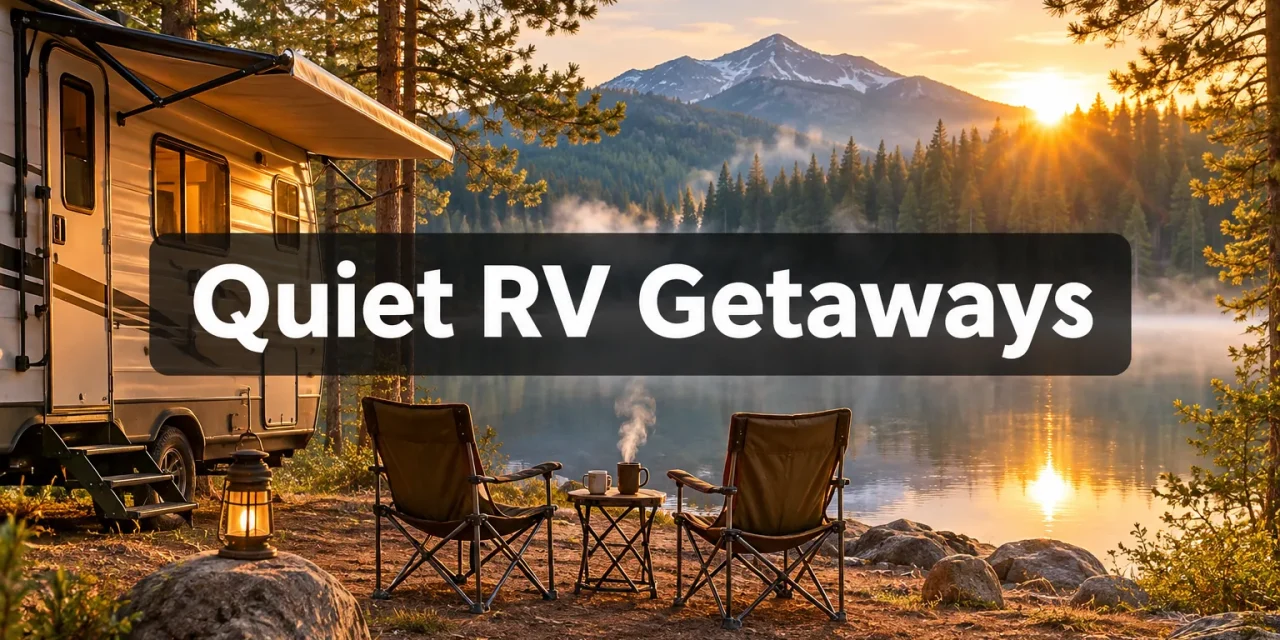
Quiet RV getaways are becoming the antidote to over-scheduled travel. Learning how to plan a low-structure camping trip without losing adventure means building a trip around a few solid anchors, then letting the rest unfold. This guide breaks down exactly how to do that, step by step, so your next trip feels relaxed instead of rushed.
Key Takeaways
- Quiet RV getaways work best when you book a few “anchor” nights early and leave the days around them open.
- Campground availability is tight, about half of RVers cite it as a top frustration, so plan key stops 2+ months out.[4][5]
- Low-structure doesn’t mean boring: hikes, paddling, and stargazing fill the open hours with real adventure.
- Quality over quantity is the 2026 travel mood, 63% of travelers plan fewer but more intentional trips.
- Quieter regions like the Northeast and small-town campgrounds are rising in popularity as alternatives to crowded hotspots.[4][5][6]
Why Quiet RV Getaways Are Replacing Packed Itineraries
For years, the “successful” RV trip meant checking off as many parks and towns as possible. That’s changing fast. RVIA’s Year in Search 2025 data shows nearly 4 in 10 leisure travelers plan an RV trip soon, and interest in RV ownership is climbing too. At the same time, outdoor participation overall is rising 4.1% annually, even as the average number of trips per person drops slightly.
Translation: people are choosing fewer, better trips. RVshare’s trend research calls this “passion-driven travel” and “splurgecations”, vacations built around what actually recharges you, not a checklist.[1][7]
That’s the heart of a quiet RV getaway: pick a peaceful place, settle in, and let adventure happen around a loose daily rhythm instead of a schedule. If you’ve ever felt wiped out halfway through a trip, this approach also helps with overcoming travel fatigue in an RV, fewer moving parts means less exhaustion.
How to Plan a Low-Structure Camping Trip Without Losing Adventure
Low-structure doesn’t mean “no plan.” It means a smart skeleton with soft edges. Here’s the framework.
Step 1: Book a Few Anchor Nights Early
Campground competition is real. Roughly half of RVers say lack of availability is one of their biggest frustrations, and experts recommend booking two or more months ahead for popular regions like the Northeast and Northwest.[4][5]
Pick 2-3 “anchor” stays, quiet, well-reviewed campgrounds, and lock those in first. Everything else stays flexible.
- Look for campgrounds known for calm, clean sites (reviews matter here). A southwest Colorado campground earned national praise specifically for being “clean and quiet,” with spacious sites and a tranquil feel.[8]
- Small-town spots, like Beacon Hill Campground in Pennsylvania’s Amish Country, show how peaceful settings and a set, predictable season can anchor a relaxed trip.[9]
Step 2: Leave the Middle Days Open
Once your anchor nights are booked, resist the urge to fill every day in between. Younger travelers already lean this way, 38% of Gen Z and millennial RVers plan trips just 2-3 weeks out, favoring spontaneity over rigid planning.[5]
Open days give you room for:
- 🥾 A spontaneous hike you spot on a drive
- 🛶 An afternoon paddle if the lake looks calm
- ⭐ A night that turns into stargazing instead of sleeping early
- ☕ A slow morning with no alarm
If this sounds appealing, you’ll probably enjoy the reasoning behind why your next RV trip should be spontaneous, it’s the same philosophy, just applied region by region.
Step 3: Choose Quieter Regions, Not Just Famous Ones
The Grand Canyon remains a top 2025 RV destination, but Acadia National Park in Maine is rising fast as a “new” favorite, a sign that travelers want variety beyond the usual western hotspots.[1] The Northeast overall is pulling 24-25% of RVers as a top choice, likely because it offers wooded, coastal, quieter alternatives to crowded desert parks.[4][5][6]
If your trip goal is peace, consider:
| Region Type | Why It Works for Quiet Trips |
|---|---|
| Northeast forests/coast | Shoulder-season quiet, scenic variety |
| Small-town campgrounds | Lower crowds, personal service |
| Shoulder-season national parks | Fewer visitors, same views |
| Boondocking-friendly public land | Total control over noise and neighbors |
Step 4: Travel Midweek and in Shoulder Seasons
Timing does more work than any app. Weekday travel and shoulder-season stays dodge the worst of the reservation crunch and the loudest crowds. This pairs well with early anchor-booking, lock in weekday stays first, since they’re easier to get and quieter by default.
Filling Low-Structure Days With Real Adventure
A loose schedule isn’t an empty one. The goal is intentional downtime, not boredom. Here’s how to make unstructured days feel full without overplanning them.
Build a “Menu,” Not an Itinerary
Instead of scheduling activities by the hour, make a simple list of 4-6 things available near your anchor site:
- A nearby trailhead (short and long options)
- A lake, river, or coastline for paddling or fishing
- A scenic drive within 30 minutes
- A farmers market or small-town main street
- A dark-sky spot for stargazing
- A “do nothing” option, hammock, book, campfire
Each morning, pick one. No pressure, no FOMO.
Make Food Simple So It Doesn’t Eat Your Day
Low-structure trips fall apart fast when meal planning turns into a chore. Keep it light with easy prep and minimal cleanup. Browsing no-mess camping food ideas, stocking a few camp pantry staples, and leaning on simple camping food ideas frees up hours you’d otherwise spend prepping or cleaning.
Protect the Quiet
Quiet getaways only stay quiet if you plan for the small stuff that disrupts peace:
- Check reviews for site spacing and noise before booking
- Know what pests to expect, a quick look at camping pests you don’t want to see saves a surprise freakout later
- Have a backup plan for common hiccups by skimming common RV trip problems to avoid
- If traveling with a dog or cat, check ahead, pets are a top travel priority for many RVers, according to the Harvest Hosts 2025 trends report[4], and it’s worth seeing what pets RVers usually travel with
“The best RV trips aren’t the ones with the most stops. They’re the ones where you actually remember how the air smelled.”
Solo, Small-Group, and Family Versions of Quiet RV Getaways
Low-structure travel isn’t one-size-fits-all. Solo camping has moved from niche to mainstream, with more travelers choosing minimalist, quiet outings on their own terms. At the same time, more than half of travelers say an annual trip with family or friends, built around quality time, not busy agendas, is a top priority.[7]
For solo travelers: Pick one anchor site in a calm region, skip the day-by-day plan entirely, and let instinct guide each morning.
For couples: Split the “menu” idea, one activity each picks per stay, so neither person feels dragged along.
For families: Build in one open afternoon per anchor stop. Kids (and adults) often enjoy unplanned exploring more than a packed schedule, and it’s a good excuse to check nearby family-friendly festivals if one happens to line up.
Common Questions About Quiet RV Getaways
Do I need a specific RV setup for low-structure trips? Not necessarily, but flexibility helps. Industry analysis notes travelers are increasingly configuring rigs to support varied routes and semi-structured, off-grid stays rather than fixed park-to-park routes. A self-contained setup with good battery capacity and water storage gives you more freedom to linger.
How far ahead should I book if I want flexibility? Book your 2-3 anchor nights at popular or quiet-but-sought-after campgrounds at least two months out.[4][5] Leave everything else open, since many RVers, especially younger travelers, now plan secondary stops just 2-3 weeks before departure.[5]
Will I get bored without a full itinerary? Unlikely. The “menu” approach (Step 4 above) keeps options available without locking you into a schedule. Most RVers report the opposite problem, not enough time to do everything on the list.
Is this style of travel actually growing? Yes. Ninety-two percent of surveyed RVers planned to travel the same amount or more in 2025 compared to 2024[6], and with outdoor participation rising 4.1% annually while average trip counts per person decline slightly, the shift toward fewer, more intentional trips looks set to continue through 2027.
Troubleshooting a Low-Structure Trip Gone Sideways
Even a loose plan needs a safety net. Keep these quick fixes handy:
- Campground full on arrival? Have a backup region in mind, this is where early anchor booking pays off.
- Weather ruins the “open day” plan? Default to your menu’s indoor-friendly option (market, scenic drive) instead of scrapping the day.
- Feeling overwhelmed by too much freedom? Pick one activity the night before, just enough structure to remove decision fatigue.
- Unexpected mechanical or site issue? A quick review of common RV trip pitfalls can help you catch small problems before they become trip-enders.
Conclusion
Quiet RV getaways prove that adventure and structure don’t have to be the same thing. By booking a few anchor nights, leaving the middle open, choosing calmer regions, and filling free time with a flexible “menu” of hikes, paddles, and stargazing, you get the best of both worlds, peace of mind and real spontaneity.
Next steps: Pick one quiet region you’ve been curious about, book two anchor nights two months out, and leave the rest of the calendar blank. That’s it. That’s the whole plan, and it’s exactly the kind of trip 2026’s travelers are chasing.
References
- Rvshares 2025 Travel Trend Report Finds That Quality Experiences Passion Driven Travel and Splurgecations Take Center Stage 302320735. prnewswire.com.
- Rv Travel Trends 2025. rvshare.com.
- Rvshares 2025 Report Highlights Shift to Quality Travel and Rv Adventures. moderncampground.com.
- Travel Trends 2025. harvesthosts.com.
- Road Travel Should Be Strong in 2025 New Research Shows. rv-pro.com.
- Rvers Share Travel Spots Stresses and Factors for 2025 in Survey. rvtrader.com.
- Article 11e6fe83 E0ef 5130 A48b Effe77047aa1. bismarcktribune.com.
- Article 0483ec6a 4128 5a8e 8dab 84b7750ddac2. gazette.com.
- Beacon Hill Campground Peaceful Rving in Amish Country. rvlife.com.