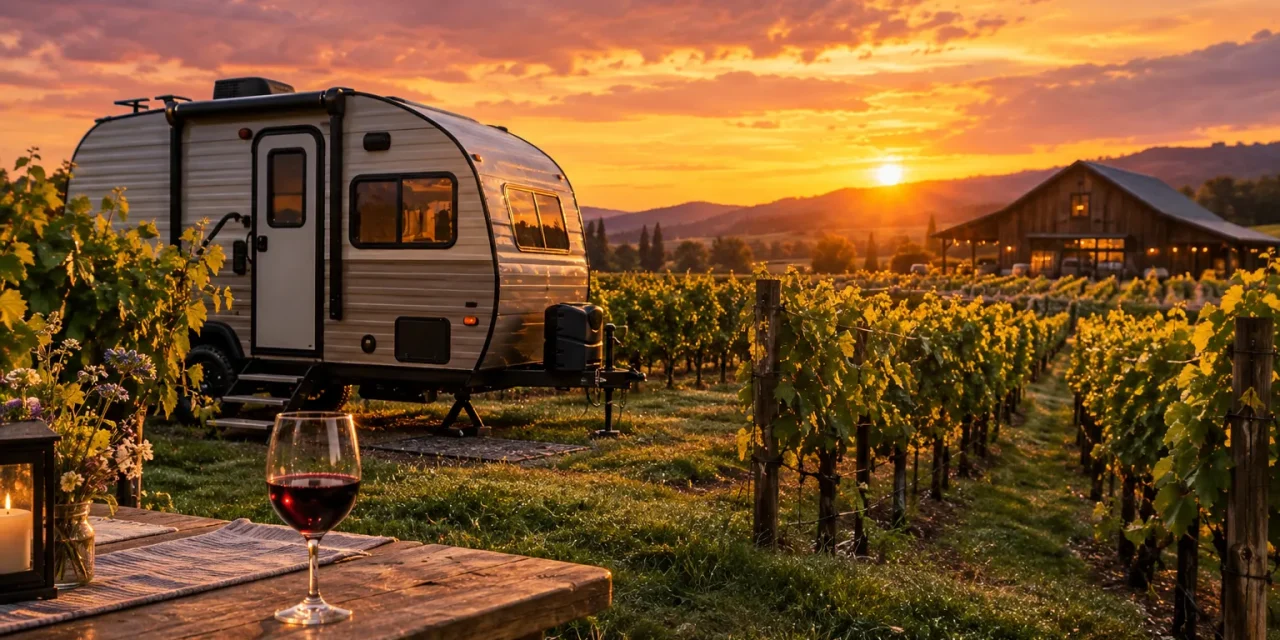
Here’s something wild: thousands of RVers park overnight at vineyards and craft breweries every week and pay zero dollars for the campsite. No campground fee. No reservation charge. Just a quiet spot near the grapevines or the hop yard, often with a glass of something local waiting nearby.
That’s the real magic behind learning how to get free camping at wineries and breweries. It isn’t a secret loophole or a shady trick. It’s a simple, member-based system that connects small wineries and breweries with RV travelers who are happy to shop, sip, and support the business in exchange for a peaceful place to park. This guide breaks down exactly how the system works, what it costs, what your rig needs, and how to make the most of it in 2026.
Key Takeaways
- Free camping at wineries and breweries usually comes through membership networks, not public land or random luck.
- Members get access to thousands of hosts, including wineries, breweries, farms, and small businesses across the country.
- “Free” means no campsite fee, but hosts expect guests to buy something, like a bottle of wine or a pint of beer.
- Your RV must be self-contained (has its own bathroom and holding tanks) to qualify at most locations.
- 2026 brought new brewery-focused travel tools, fuel discounts, and connectivity perks that make this style of travel even easier.
What “Free” Camping at Wineries and Breweries Actually Means
Let’s clear up the biggest misunderstanding first. “Free” doesn’t mean a winery owes you a free night just because you showed up. It means the campsite itself has no fee. There’s no charge for the parking spot, no hookup fee, and no reservation cost tied to the stay.
In exchange, hosts expect one simple thing: a little support for their business. That could look like:
- Buying a bottle of wine or a six-pack to go 🍷🍺
- Ordering a flight or tasting during your visit
- Grabbing a souvenir glass, shirt, or snack
- Simply spending some time and money at the tasting room
Most travelers spend somewhere between $20 and $50 during their stay, which is still way cheaper than a $40-$60 campground fee. Think of it less like “free camping” in the purest sense and more like a trade: your business for their driveway.
“You’re not just parking for free. You’re becoming a temporary customer who happens to sleep in the parking lot.”
This model has stayed steady even as more travelers have discovered it in 2026. The core deal hasn’t changed: park quietly, buy something, be a good guest, and leave happy.
How to Get Free Camping at Wineries and Breweries With Membership Networks
So how do you actually find these spots? The answer is membership networks. These are private clubs that connect thousands of small businesses (mostly wineries, but also breweries, farms, and distilleries) with RV owners who want a unique, low-cost place to stay.
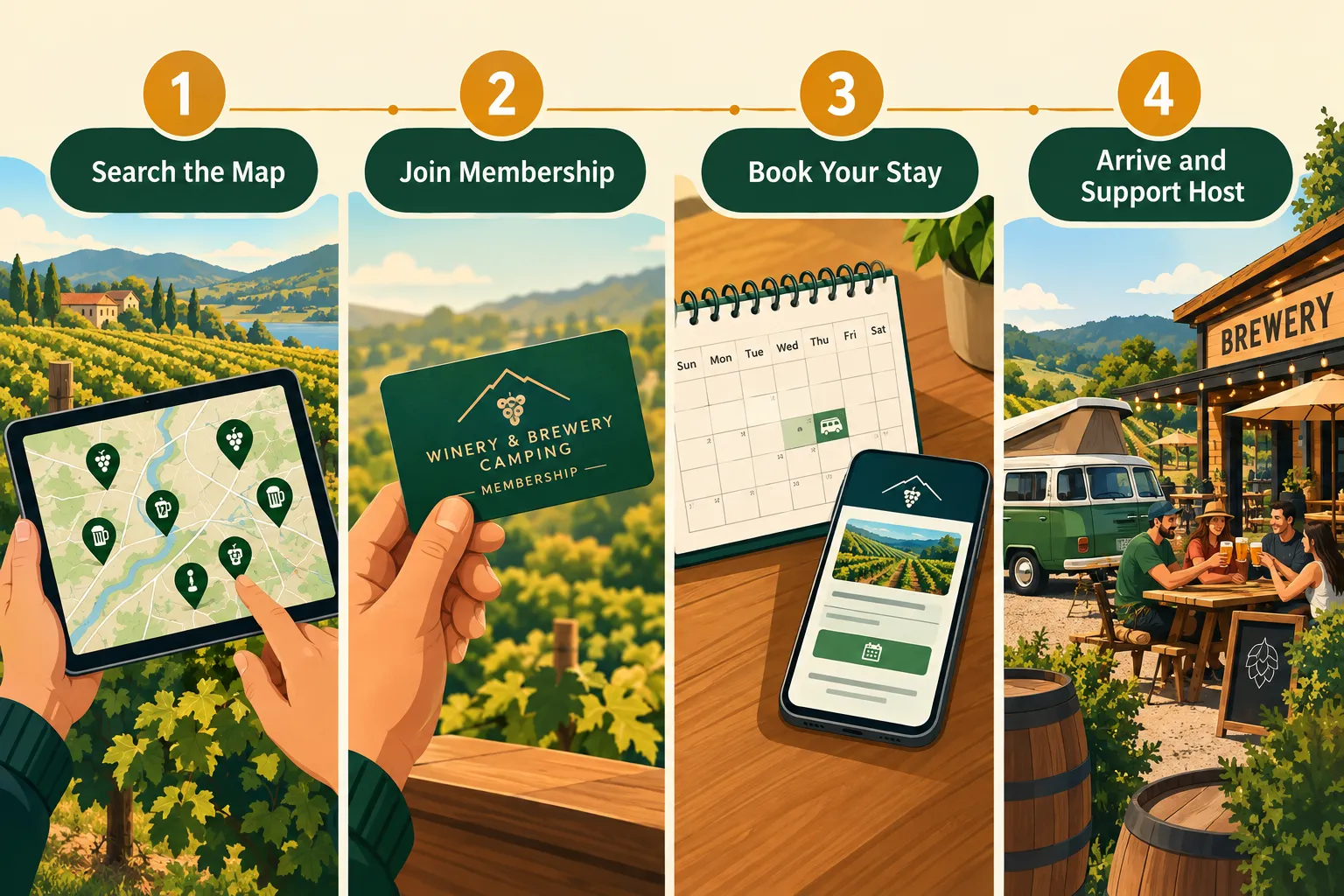
Here’s how the process usually works, step by step:
- Join a membership network. You sign up online and pay a yearly fee.
- Search the map. The network’s app or website shows every host location near your route.
- Call or message ahead. Most hosts want a heads-up, usually the same day or a day before you arrive.
- Arrive and check in. Some hosts want you to stop at the tasting room first; others just want a friendly wave.
- Buy something and settle in. Grab a bottle, chat with the owner, and park for the night.
- Leave a nice review. This keeps the host happy and keeps the spot open for future travelers.
These networks are the main reason this type of travel has grown so fast. Without them, you’d have to cold-call random wineries and hope for a yes. With a network, you get a map full of pre-approved hosts who already agreed to welcome RV guests. It’s a great way to explore off the beaten path camping spots that most travelers never even know exist.
How Many Wineries and Breweries You Can Actually Visit
This isn’t a tiny club with a dozen locations. The biggest membership networks list thousands of host locations across the United States, and a growing slice of those are wineries and breweries specifically.
Coverage tends to be strongest in:
- California wine country
- The Pacific Northwest (hello, hop country)
- Texas Hill Country
- The Finger Lakes region of New York
- Growing pockets across the Midwest and Southeast
Because the list keeps growing every year, planning a cross-country trip almost entirely around wineries and breweries is now realistic. It pairs well with other rv camping destinations planning, since you can string together a route that mixes free winery nights with a state park or two along the way.
Membership Costs and Plans in 2026
Nothing in life is truly free, and that includes these networks. You pay a yearly membership fee to unlock access to the full map of hosts. As of 2026, most networks offer a few plan tiers, usually based on:
- How many nights per host location you can stay
- Whether you get access to the full network or a smaller regional list
- Extra perks bundled in, like fuel discounts or trip-planning tools
Here’s a simple way to think about the value trade-off:
| What You Get | Why It Matters |
|---|---|
| Yearly membership fee | Unlocks the full host map for 12 months |
| One night per host (typical) | Keeps hosts happy so they keep welcoming guests |
| Bundled perks | Fuel discounts, hotspot data deals, trip tools |
| Refund window | Try it and get money back if it’s not for you |
Even after paying the yearly fee, most members break even after just two or three nights compared to paying for regular campgrounds. Everything after that is essentially free lodging for the rest of the year.
Rules for RVs: Self-Contained Requirements
Here’s the part that trips up a lot of newcomers. Not every camper qualifies. Almost every membership network requires your rig to be self-contained, meaning it has:
- Its own bathroom (toilet, not just a bucket)
- A fresh water tank
- A gray water and black water holding tank
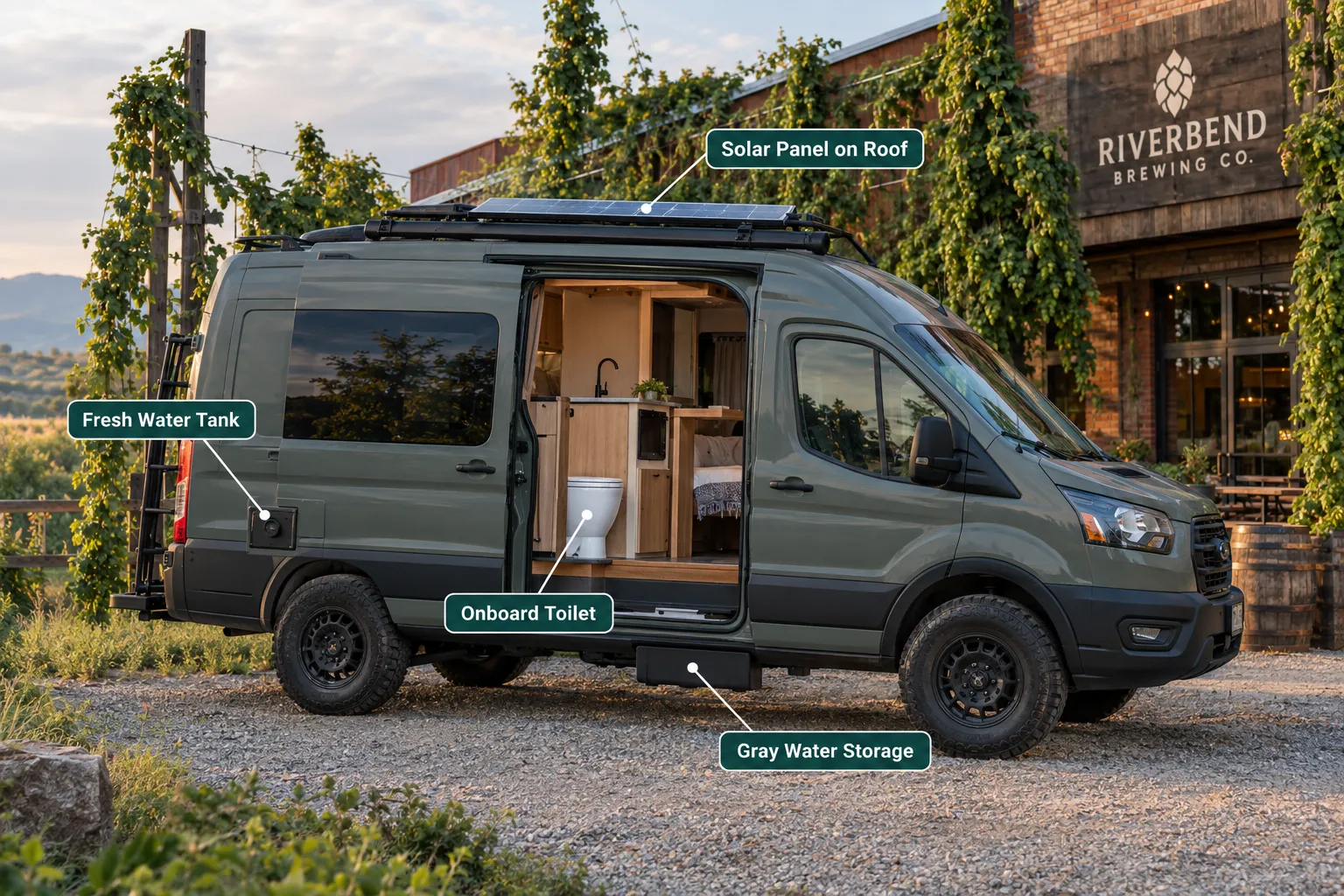
Why the strict rule? Wineries and breweries usually don’t have public restrooms or dump stations set up for overnight guests. If your rig can handle its own waste and water needs, you won’t create extra work or mess for the host. Tent campers and non-self-contained trailers generally don’t qualify at most locations, though a few hosts make exceptions.
This is the same mindset behind off grid rv camping: the goal is to be fully independent so you’re not a burden on the location hosting you. If your current setup isn’t quite there yet, checking out some solid rv camping gear can help you get fully self-contained before your first winery stop.
What’s New in 2026: Breweries Join the Fun
Wineries used to get most of the attention, but 2026 has been a big year for brewery-focused travel. Membership networks have leaned into what’s now being called “Brew with a View,” a push to add more craft breweries to the host map, especially ones with scenic patios, mountain views, or riverside seating.
This shift matters for a few reasons:
- More variety. Beer lovers now have almost as many free-camping options as wine lovers.
- Younger traveler appeal. Craft brewery culture tends to draw a younger RV crowd, and networks are adjusting host lists to match.
- Regional growth. States known for craft beer, like Colorado, Michigan, and Oregon, have added noticeably more brewery hosts this year.
If your travel style leans more “hoppy” than “fruity,” 2026 is shaping up to be the best year yet to plan a brewery-hopping road trip using these membership maps.
Extra Perks That Make Membership Worth It
Beyond the free camping itself, most networks throw in extra perks that make the yearly fee feel like an even better deal. Common ones in 2026 include:
- Fuel discounts at partner gas stations, which add up fast on long road trips
- Trip-planning tools built into the app, so you can map out a whole route of wineries and breweries in one go
- AT&T hotspot data discounts for members who need reliable internet while parked at rural vineyards, since cell service can be spotty out in wine country
These perks tie in nicely with the broader trend of AI and RV tech shaping the future of smart camping, where apps and connectivity tools are making it easier than ever to plan a smooth, tech-friendly trip.
Try It Risk-Free: Trials and Refund Guarantees
Not sure if this lifestyle is for you? Most networks offer a trial period or a refund guarantee, often within the first 30 to 60 days. That means you can:
- Sign up
- Try a few winery or brewery stays
- Decide if it’s a good fit
- Get your money back if it isn’t
This low-risk setup is a big reason so many first-time RVers give it a shot. There’s very little to lose, and the potential savings on lodging costs are significant if you travel even a handful of weekends a year.
Tips for a Great Winery or Brewery Camping Stay
Good manners go a long way in this world. Since hosts are opening up private property out of goodwill, here’s how to be the kind of guest who gets invited back:
- Arrive with daylight left. Don’t roll in after dark unless the host says it’s fine.
- Buy something, always. Even a small purchase shows respect for the arrangement.
- Keep quiet hours. Just like any campground, be mindful of noise once the sun goes down. Reviewing basic quiet hours camping etiquette can help you avoid awkward moments.
- Watch your nighttime habits. Dim your lights, keep generators off if possible, and be respectful of neighboring properties. Good nighttime camping habits make a real difference in how welcome you feel.
- Ask before bringing pets. Many wineries are pet friendly, but always confirm first. A quick look at general pet friendly camping tips can help you prep for a smooth stay with your furry travel buddy.
- Leave the place spotless. Pack out your trash and leave zero trace behind.
How This Fits Into the Bigger Free Camping Picture
Winery and brewery camping is just one slice of the free camping world. Public land options like national forests and certain BLM areas also offer no-cost camping, but they come with different rules, fewer amenities, and sometimes stricter length-of-stay limits. Winery camping trades a bit of that wild, off-grid freedom for convenience, safety, and, frankly, better wine.
It’s worth comparing this option against other free or low-cost styles of travel, like rv camping destinations at public parks, or checking whether rv camping at national parks fits your route better for certain trips. Many seasoned travelers mix both styles: public land for scenic wilderness stops, and winery or brewery hosts for social, comfortable nights in between.
The core model has stayed remarkably consistent through 2026. Even with new brewery partnerships and added tech perks, the basic deal remains the same: join a network, find a host, buy something nice, and enjoy a free night surrounded by vines or hops instead of asphalt.
Industry events have taken notice too. RV shows and trade events have started hosting sessions specifically about best practices for this kind of camping, covering everything from host etiquette to picking the right self-contained rig setup. That’s a sign this isn’t a passing trend. It’s becoming a normal, respected part of the RV travel world.
Conclusion
Learning how to get free camping at wineries and breweries really comes down to three simple steps: join a trusted membership network, treat every host location like a customer relationship, and travel in a fully self-contained rig. Do those three things well, and you’ll unlock a huge map of scenic, quiet, and genuinely free overnight stops across the country.
Ready to get started? Pick a membership network, check the trial or refund policy, and map out your first weekend trip to a nearby vineyard or brewery. Bring a self-contained rig, arrive with some daylight to spare, and don’t forget to grab a bottle on your way out. That small purchase is what keeps this whole generous system running for every traveler who comes after you.