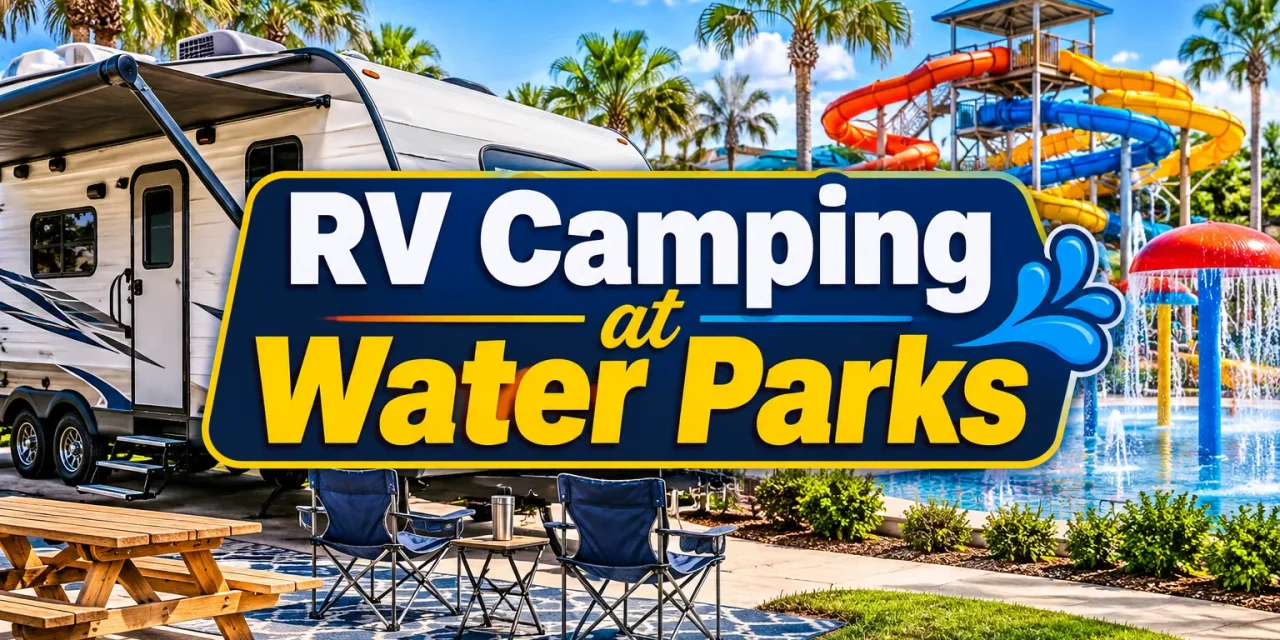
Florida campgrounds added heated pools with 147-foot slides and tiki bars for the 2025 season, and Wisconsin parks installed floating obstacle courses the same year.[1][2] Water-focused RV camping isn’t a side trend anymore, it’s becoming the main event for family road trips across the country.
Planning RV camping at water parks takes more than picking the closest campground with a pool. The right site, the right gear, and a weather backup plan make the difference between a smooth family trip and a soggy, stressful one.
Key Takeaways
- On-site water resorts and nearby water-park basecamps are different categories, know which one you’re booking.
- Check drive times, parking rules, and gear storage before locking in a reservation near a major water park.[3]
- Pack quick-dry clothes, dry bags, and a water filter; campground tap and pool water quality can vary.[4]
- Always confirm pool status, lifeguard hours, and rainy-day backups directly with the campground.[1][3][5]
- Build flexibility into the itinerary, floods, closures, and weather can change plans fast.[5][6]
Choosing the Right Campground for RV Camping at Water Parks
Not every “water park RV trip” looks the same. Some campgrounds build the water park into the property. Others simply sit close to a big public attraction. Understanding the difference helps set expectations before arrival.
Option 1: RV parks with built-in water features. Places like Camp Margaritaville RV & Cabana Resort in Auburndale, Florida, pair full-hookup sites with a heated pool, 147-foot slide, and splash pad.[1] Splash RV Resort and Waterpark in Milton, Florida, adds a lazy river and tiki bar.[1] Jellystone Park in Wisconsin Dells recently debuted its “Downpour Derby” feature and even offers virtual site tours so families can preview the campsite and water amenities before booking.[2]
Option 2: Campgrounds near standalone water parks. These sites don’t have their own slides, but they sit a short drive from a major attraction. One coastal example lets guests spend the day at Ocean Breeze Waterpark or the Virginia Aquarium, then return to a quieter campground at night.[3] This setup works well for families who want high-energy days balanced with calmer evenings.
Option 3: Lake and waterfront campgrounds. Destinations like Lake Livingston, Lake Tahoe, Lake of the Ozarks, Flathead Lake, and Lake Mead offer RV sites with direct access to boating, fishing, and kayaking instead of formal slides.[7] These are great for families craving outdoor water recreation without the crowds.
Questions to Ask Before Booking
- Is the pool or splash pad open this season? (Municipal pools sometimes close unexpectedly, Tarrant Park in Wisconsin closed its community pool for 2025 even though RV sites stayed open.[5])
- Are lifeguards on duty, and what are the posted hours?[1][3]
- Are there height or age restrictions on slides?[1]
- What’s the cancellation policy if weather or closures change plans?[3][8]
- How many pets are allowed per site, and are they barred from pool areas? Many parks cap it at two pets and keep them away from water features.[3][8]
For families weighing whether this is even the right season to buy an RV before planning trips like this, it’s worth reviewing current RV pricing and inventory trends before committing to a purchase.
Parking, Gear Storage, and Logistics Near Water Parks
This is the part most families overlook, and it’s often what makes or breaks the day.
Parking matters more than people expect. Big rigs and tow vehicles don’t always fit standard water park lots. Before arrival:
- Call ahead to ask if the water park has RV or oversized vehicle parking.
- Check whether the campground offers a shuttle to the attraction, some do, which saves the hassle of driving a tow vehicle through crowded lots.[3]
- Note the walking distance from parking to the entrance if anyone in the group has mobility needs.
Gear storage inside the RV is its own challenge. Wet swimsuits, soggy towels, and sandy shoes can turn a tidy rig into a mess fast. A few practical fixes:
- Hang a compact clothesline under the awning or in the shower stall for quick-dry items.[4]
- Use a dry bag for phones and cameras near pools or splash pads.[4]
- Keep a bin by the door for wet shoes and sandals so they don’t track water through the RV.
- Store sunscreen, swim goggles, and pool toys in one labeled tote so mornings move faster.
These small habits save real time, especially with kids who want to get back in the water as fast as possible. For more general packing and setup shortcuts, the camping hacks tag is worth a browse.
Packing for Wet Days: Gear Every Family Needs
Pool decks, splash pads, and humid Florida afternoons call for a packing list that’s different from a typical camping trip.
The essentials:
- Multiple quick-dry swimsuits per person, one is never enough for a multi-day water park trip.[4]
- Waterproof sandals that grip wet concrete and pool decks.[4]
- A dry bag for phones, wallets, and electronics.[4]
- Sun protection, reef-safe sunscreen, hats, and rash guards to limit reapplication breaks.[4]
- An RV water filter, since not every campground’s tap or pool water is guaranteed safe to drink, especially important for kids who may swallow water during play.[4]
Rainy-day backups. Water parks close or restrict slides during storms, so pack a few indoor activities: card games, a tablet with downloaded shows, or a puzzle. Many resort-style campgrounds also offer mini golf, arcades, or covered play areas as built-in rainy-day options.[1][9]
Food planning. Busy water days mean less time cooking. Simple foil packet meals or make-ahead breakfasts like overnight oats with seasonal fruits keep mornings quick so the family can get to the pool sooner. Stocking a few camp pantry staples ahead of time also cuts down on mid-trip grocery runs.
Weather Planning and Safety for RV Camping at Water Parks
Weather is the biggest wildcard in any water-park trip, and it can shut down more than just the slides.
Check flood and closure history before booking. One Hipcamp property near Avon, Indiana, had to limit sites after a “late winter double-flood” damaged parts of the property in 2025.[6] This is a reminder that water-adjacent land is more exposed to flooding and erosion than a standard inland site. Always ask the campground directly about recent weather events and current site availability.
Watch for seasonal closures, not just weather closures. Tarrant Park’s community pool stayed shut for the entire 2025 season even though RV hookups remained open.[5] A campground can look fully operational online while a key water feature is unavailable. Confirm directly with the park office, not just through third-party listings.
Carbon monoxide and generator safety still matter on rainy days. When storms push everyone indoors, generators and heaters run more, and ventilation habits can slip. It’s worth reviewing a real carbon monoxide scare from an RV family as a reminder to keep detectors working and vents clear, especially during extended indoor stretches.
Build in buffer days. If storms are forecast, don’t schedule the water park visit on the only full day available. A flexible itinerary absorbs weather disruptions without ruining the trip. Families who prefer loose plans over rigid schedules may also enjoy reading about why a spontaneous RV trip can work better than an overly rigid one.
Family Trip Planning Tips for RV Camping at Water Parks
A great water-park RV trip comes down to pacing, not just picking a cool pool.
Mix high-energy days with low-key days. Waterfront RV roundups suggest alternating a big water-park day with a quieter lake or beach afternoon.[7][10] This keeps younger kids from burning out and gives parents a break too.
Compare reservation and pass systems early. Some resorts bundle water-park access into the site fee; others require separate wristbands or day passes.[8] Knowing this ahead of time avoids surprise costs or long entry lines on arrival day.
Think about trip length realistically. A three- or four-night stay usually gives enough time for one full water-park day, a recovery day, and one outdoor activity like kayaking or a nature trail. Families planning their very first RV outing may want to start with a shorter trip, the first RV trip tag has beginner-friendly tips worth reading before a water-heavy itinerary.
Consider location variety. Florida remains a hub for RV parks with built-in water attractions,[1][8] but families chasing lake access or quieter settings might explore options under the Florida RV camping tag or look at scenic campground loops for a change of pace between water-park stops.
Respect quiet hours even at resort-style parks. Big water features don’t mean anything-goes energy at night. Reviewing quiet hours camping etiquette helps keep things friendly with neighboring sites, especially in family-packed resort parks.
Conclusion
RV camping at water parks works best when the planning happens before the trip, not during it. Decide early whether an on-site water resort, a nearby water-park basecamp, or a lake-access campground fits the family’s style. Confirm hookups, pool hours, parking logistics, and cancellation policies directly with the park. Pack for wet days with quick-dry gear, dry bags, and a water filter, and always keep a rainy-day backup ready.
National coverage shows water-centric RV trips are now a mainstream family vacation choice, not a niche idea.[11] With the right campground and the right gear packed, that kind of trip can be relaxing instead of chaotic. Start by shortlisting two or three campgrounds that match the family’s pace, call ahead to confirm current water features, and build a packing list a few days before departure, that small bit of prep pays off the moment the kids hit the slide.
rv camping, water park campgrounds, family RV trips, RV packing list, waterfront RV resorts, Florida RV camping, splash pad campgrounds, RV travel planning, campground amenities, RV safety tips, summer RV trips, lake access campgrounds
References
- Florida Campgrounds Rv Parks Draw Families with Expansive Summer Amenities. moderncampground.com.
- Wisconsins Campgrounds Expand with New Attractions Sites and Accommodations for 2025 Season. moderncampground.com.
- Best Family Friendly Rv Destinations. streamsideparks.com.
- Rv Parks with Water Parks Splash Pads Family Summer Trip Guide. rvshowoff.com.
- Index. durand-wi.com.
- Rv. hipcamp.com.
- 10 Great Waterside Camping Destinations for Rvers Who Love to Fish. winnebago.com.
- Waterparks. campspot.com.
- Top 5 Family Friendly Campgrounds to Visit This Summer. emberrv.com.
- 20 Wonderful Waterfront Rv Parks and Campgrounds. rv.com.
- Planning Family Rv Vacation. usatoday.com.